
Why Rick Steves Says, 'When I Get Ripped Off, I Celebrate' While Traveling

Most travelers, when they get scammed or shortchanged on a trip, will take it as a setback. Rick Steves, the travel expert behind dozens of guidebooks, is a different kind of traveler, though, one who takes the Samuel Beckett adage "fail better" to its furthest extent. For Steves, traveling is about overcoming fears and anxieties, so rather than build up a sense of dread around potential rip-offs, he considers it a chance to learn how to prevent it from happening in the future. "When I get ripped off, I celebrate — I learned a scam and can now share it with my readers," Steves shared in his blog. Travel is a learning experience, even when things go wrong.
Above all, Steves is a researcher. While the casual traveler might be less optimistic about getting ripped off, travel mishaps are part of Steves' field research, and they make it into his guidebooks in the form of advice and practical warnings. "I can learn that scam, go home, and tell my readers so they'll be prepared," Steves said in an interview with Ingram Advance Travel (via Rick Steves' Europe). "[I]f you're not on the ball, you are likely to be conned, or simply waste some time or money." It's part of a broader philosophy that, while useful for Steves' guidebooks, can also make travelers more vigilant: The goal isn't to avoid every mistake, but rather to build up more awareness and move confidently through unfamiliar places.
Steves' lessons for preparing for the most common travel rip-offs
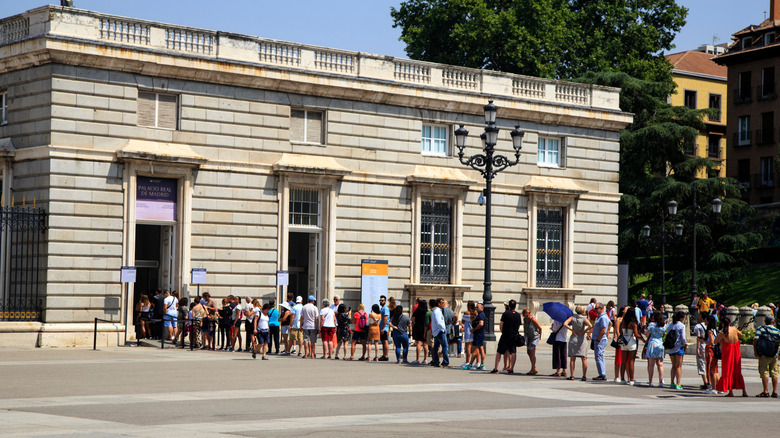
In the interview, Steves named what he considers one of the biggest rip-offs when traveling: lines. "A very common mistake is simply waiting in lines needlessly. I find there are two IQs of European travelers: those who wait in lines, and those who don't," Steves put it bluntly. Not only is there often an alternative to waiting in line that could save you time, but Steves also noted that pickpockets frequently target the lines at popular attractions and tourist zones. While Steves has numerous tips for avoiding lines, one that applies to many of the biggest attractions is simply to pre-book tickets well ahead of time. Meanwhile, Steves' best secret to avoiding crowds in European museums is to time your visit during less-popular hours.
There are boundless specific scams that catch travelers off guard when they're strolling a new destination or buying food and accommodations. Steves has compiled over a dozen on his website, ranging from vendors making you a "friendship" bracelet to an upsetting hotel scam, which can easily be avoided, where people pretend to be room inspectors. "Scam artists come in all shapes and sizes. But if you're cautious and not overly trusting, you should have no problem," Steves wrote.
For all the cautionary tales and preparations you can make, sometimes rip-offs just can't be avoided. "No matter how careful, any traveler can get ripped off or lose a bag," Steves wrote. In the event that something unfortunate happens, Steves' advice is simple: File a report, take the time to replace anything missing, and make a good story out of it.