
Texas' Newest Nature Preserve Is A Unique Canyon Destination Near Jacob's Well
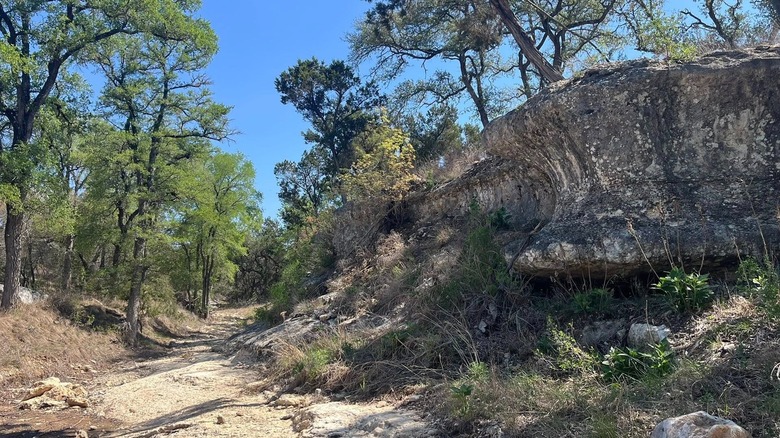
The Texas Hill Country stretches across the central part of the state for tens of thousands of square miles. The scenic corridor is beloved for its rolling hills, rustling springs, and river-cut canyons, drawing millions of visitors each year – many of whom come just for the parks. If you're up for roaming off the beaten path, Karst Canyon Preserve is a new addition to the Hill Country's rugged recreation spots, tucked away in the wilderness of Hays County.
Texas' newest nature preserve opened its gates at the tail end of March 2026. The ribbon cutting ceremony culminated years of conservation efforts to protect the unique terrain by nixing plans to turn the lush landscape into a sprawling housing development. Karst regions, such as the Yucatán Peninsula in Mexico and the Nullarbor Plain in Australia, are pretty special because their soluble bedrock acts as a natural underground drainage system.
Karst Canyon Preserve, previously known as Coleman's Canyon, is dotted with fragile sinkholes and caves that feed water to the lands beyond, including the nearby Jacob's Well Natural Area, which is home to one of the best swimming holes in Texas. The protected area covers about 175 acres just outside of Wimberley, an outdoor paradise that's one of Texas' prettiest towns. The patch of wilds is open daily from 8 a.m. to 5:30 p.m. Although you may be tempted to stay and watch the sun go down, if you linger past 6 p.m., you may get locked in or have your car towed.
Endangered birds, bats, and other cool perks of the Karst Canyon Preserve
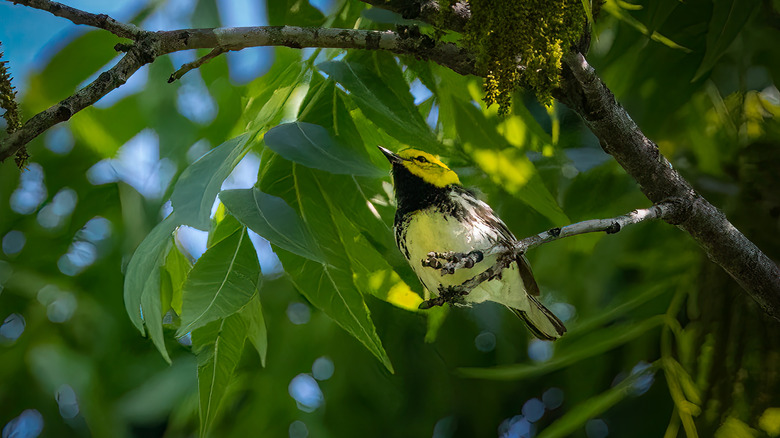
You'll find plenty of critters around this part of Texas Hill Country, including the feathery winged varieties. Many bird species have already been recorded in the protected area over on eBird, from merlins and crested caracaras to black-bellied whistling ducks and blue jays, putting the Karst Canyon Preserve in the running for one of the best birdwatching destinations across the country. The grounds also safeguard more than 100 acres of forested habitat for the endangered golden-cheeked warbler, a type of migratory songbird native to Central Texas.
Karst Canyon is favored by tricolored nocturnal flyers, too. A major highlight of the preserve is the Wimberley Bat Cave, a karst feature that's situated on the southern end of the park near the entrance. Needless to say, be sure to bring a pair of binoculars. If you want to set out on a trek, the preserve has carved out a small portion of trailway so far, with plans to add more hiking paths at a later date. The Cave Trail covers almost 2 miles, taking you past the bat cavern and deeper into the wilds. There's a handy trail map online if you want to get a lay of the land before you visit.
Reaching the wilds of the Karst Canyon Preserve
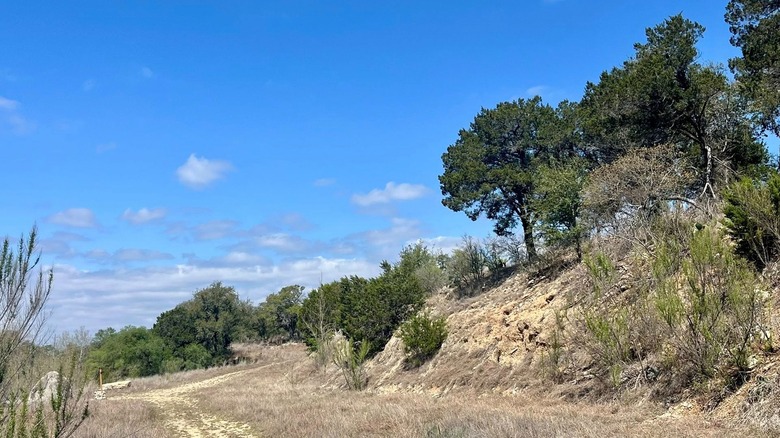
Karst Canyon Preserve is so new that plugging its name into your GPS might not turn up any results. The nature escape shares the same address as the Jacob's Well Natural Area: 1699 Mt. Sharp Road, in Wimberley. From the main entrance, you actually meander through a small section of the 81-acre natural area. It's a quick jaunt, covering about half a mile of ground via the North 40 Trail. The main park entrance does have bathroom facilities nearby; just be sure to bring along ample water to stay hydrated in the Texas sun.
Looking at Karst Canyon's trail map, there does appear to be a parking area and trailhead on the west side of the preserve, too, which takes you onto the Cave Trail. But it's unclear if that access point is open to the public yet. A few other things to know before you visit: Since Karst Canyon is a protected area, no pets are allowed, so be sure to leave your pups at home. And doing pretty much anything that might disrupt the preserve is a no-no — e.g., littering, smoking, fishing, wandering off the marked trails, or disturbing the vegetation. So, respect the wilds while you're out there — leave no trace, and enjoy the view.