
Between Jacksonville And Tallahassee Is A Florida State Forest With River Paddling, Fishing, And Trails
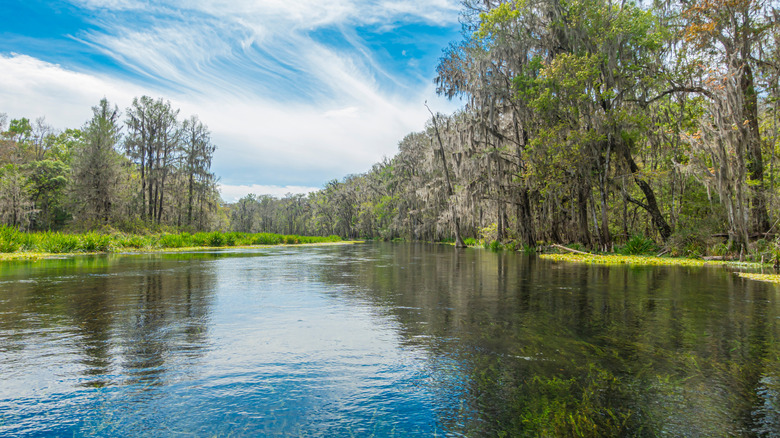
The stretch of land across the very top of Florida, from Jacksonville on the East Coast to the state capital of Tallahassee at the mid-point of the state, is void of any major metro areas. However, it is filled with a variety of natural wonders, including underrated natural areas such as the woodland wonder of Osceola National Forest and the serene Holton Creek Wildlife Management Area. Another tract of public land which fits this mold is Twin Rivers State Forest, which is situated about halfway between Jacksonville and Tallahassee and offers river paddling, fishing, and trails, along with a variety of other outdoor activities.
Covering over 16,000 acres, Twin Rivers State Forest is actually a conglomeration of over a dozen separate tracts of land which are not connected to one another. The majority of these tracts also serve as the Twin Rivers Wildlife Management Area (WMA). The forest gets its name from the fact that these tracts of land stretch along portions of the Suwannee and Withlacoochee rivers. The waters and bottomland contained within the boundaries of the forest are filled with a diverse array of flora and fauna.
Because of the noncongruent nature of Twin Rivers State Forest and WMA, there are multiple entrances. Regardless of where you enter, there is a $2 entry fee for the forest (at the time of writing), which is open from sunup to sundown each day. Although there are a handful of primitive campsites, overnight options are limited in the forest. However, it is an easy day trip down I-10 from either Tallahassee to the west or Jacksonville to the east. Each city is less than an hour-and-a-half drive away.
Paddling and fishing in Twin Rivers State Forest
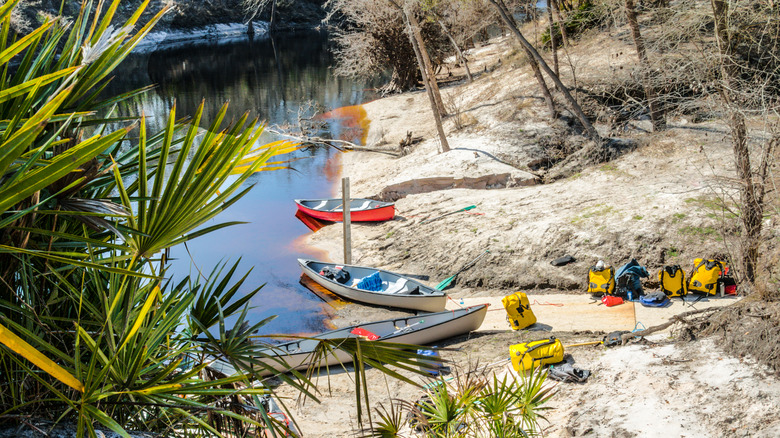
Given that it encompasses stretches of two major rivers, it is little surprise that Twin Rivers State Forest offers excellent paddling and fishing opportunities. The forest includes a good portion of the Withlacoochee North Paddling Trail. This trail actually terminates at Suwannee River State Park, an artsy haven for folk music at the confluence of the Suwannee and Withlacoochee rivers. A long stretch of the Suwannee River Wilderness Trail also winds through the state forest.
Paddlers will also find plenty of water access in the various tracts within the forest, whether they are starting out to follow a paddling trail or just looking for a quick paddling excursion. At the north end of the forest, the Sullivan Tract has a dedicated canoe and kayak launch along the Withlacoochee River, as well as shore access. Paddlers can also launch at the Westwood West Tract, as well as in both the east and west Chitty Bend tracts. On the Suwannee River, paddlers can put in at a number of tracts, including the Anderson Springs, Black, Mill Creek North, and Mill Creek South recreation areas. The Ellaville Recreation Area offers access to both rivers.
Fishing is allowed at each of the tracts that have access to either river. Some portions, such as the Anderson Springs Recreation Area, offer parking near the river, while others require fishers to walk or hike to the riverbank. The primary species found within the waters of these rivers include largemouth bass, channel catfish, bluegill, and sunfish. The Suwannee River also holds a unique species, the Suwannee Bass. This strain of largemouth bass is found in its namesake river and others nearby, including the Withlacoochee.
Twin Rivers State Forest offers miles of trails
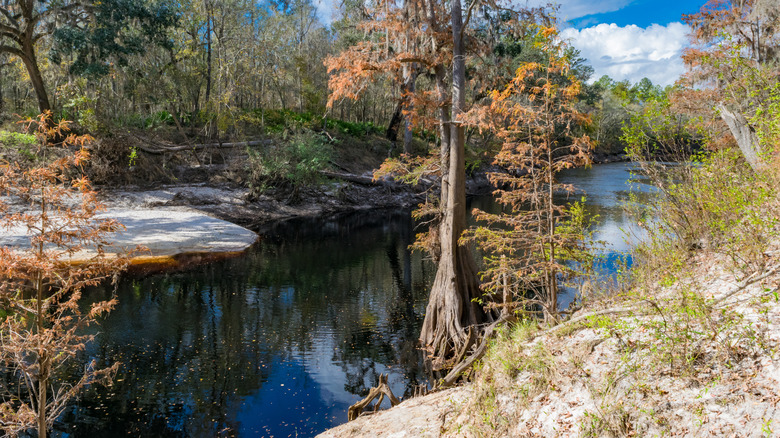
There are a number of ways to explore Twin Rivers State Forest on land as well, including trails for hikers, bikers, and horseback riders. At the top of the list for hikers are a pair of trails that are part of the Florida State Forest Trailwalker Program. Both the Ellaville and Anderson Springs trails are rated as easy by AllTrails, so they can be enjoyed by hikers of all ages and experience levels. Each offers views of the Suwannee River at various points. The Ellaville Trail is 5.5 miles long, while the Anderson Springs Trail covers 5 miles. Hikers should expect it to take close to two hours to complete either.
The Florida National Scenic Trail also cuts through portions of the state forest. Sections of this 1,500-mile path can be found in the Black, Damascus, Ellaville, and Mill Creek North recreation areas. In fact, visitors can only reach the Damascus Recreation Area via the trail or water. Numerous other trails — many of which are multi-use and can be used by hikers, mountain bikers, and horse riders — exist in various tracts. Additionally, a number of the tracts have no designated trails, but are open for hiking, as well as mountain biking and horseback riding.
While horseback riders have access to multiple trails throughout the state forest, a few sections stand out. The Blue Spring-Longleaf Trail is associated with the Florida Trailtrotter program. All together, the Blue Spring Longleaf Recreation Area contains 12 miles of horse-riding trails. Other notable horse trails in the forest include a 5-mile loop in the Black Recreation Area and a 7-mile trail in the Withlacoochee Recreation Area.