
Tucked Between Houston And The Gulf Is A Texas Haven For Fishing, Hiking, And Alligator Spotting
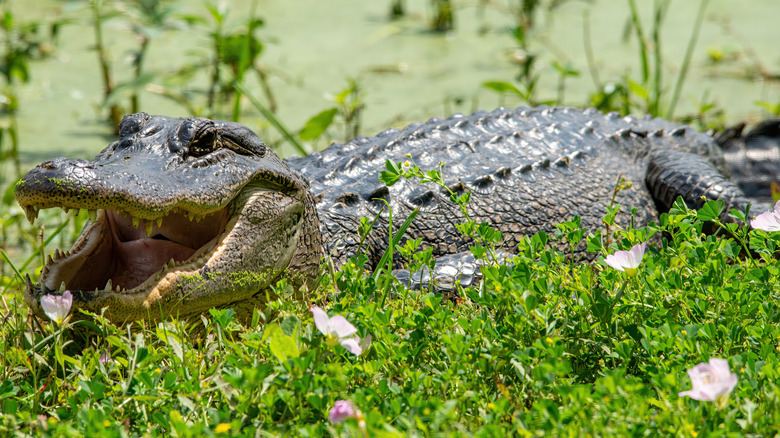
Texas is a big state, with vast expanses of desolate spaces and open land. However, you don't need to drive to its far-flung reaches to gain a sense of seclusion. Tucked between Houston and the Gulf is a state park that is a haven for fishing, hiking, and alligator spotting — Brazos Bend State Park. Often cited as one of the best Texas state parks, it is nearly in sight of the skyline of Houston, the state's largest city, yet it feels a world away from the modern world.
Not to be confused with the beachy haven of Brazos Island State Park (which is 360 miles south), Brazos Bend is in southeast Texas, some 40 miles southwest of downtown Houston via Highway 288 and Lockridge Road. It is only around 20 miles outside the suburb of Sugarland and about 26 miles from the town of Needville. Despite its proximity to these areas, Brazos Bend is remote, rugged, and teeming with wildlife, including some fascinating and dangerous species. Because of this, it is best to visit during the spring or fall, when temperatures are mild, and the park's wildlife is active.
Although it is on the opposite side of Houston from Anahuac, the "Alligator Capital of Texas," Brazos Bend has plenty of these large reptiles. Texas Parks & Wildlife estimates around 250 mature alligators over 6 feet long call this nearly 5,000-acre park home. Spotting alligators has actually become a popular activity at Brazos Bend, with many visitors printing alligator census forms prior to visiting to help track how many gators they spot in each portion of the park. However, it is important to follow the park's alligator safety protocol, which includes rules such as staying at least 30 feet from alligators and not feeding them.
Spend a day fishing at Brazos Bend State Park
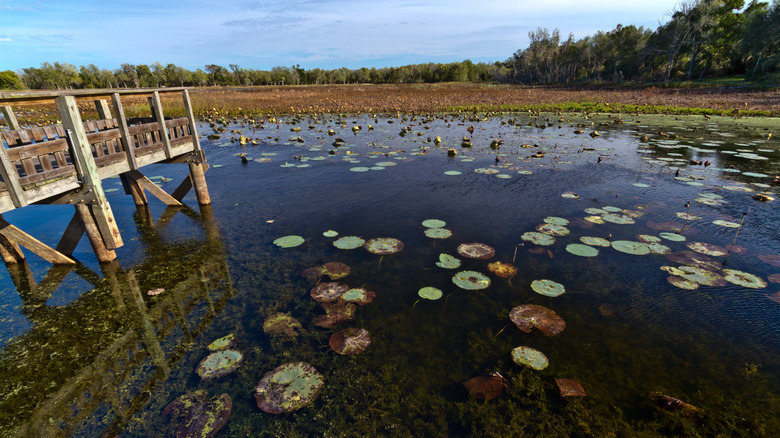
As a rule, where you find alligators, you will find fish, as these carnivorous reptiles eat lots and lots of fish. To that end, the various waterways within Brazos Bend State Park are filled with bass, bluegill, sunfish, catfish, and crappie. This provides not only a meal plan for gators, but also angling opportunities for fishermen. Only shore and pier fishing is allowed within the park – no wade fishing, boats, or paddle craft. However, no license is required to fish inside the park, although state size and bag limits still must be followed.
According to BrazosBend.org, the park's primary lakes for fishing are "40 Acre Lake, Elm Lake, Hale Lake and New Horseshoe Lake." New Horseshoe Lake only has bank fishing access, while the other three have fishing piers. The piers at 40-acre and Hale are handicap accessible. Elm Lake has multiple fishing piers along its south shoreline. Some bank fishing access is also available along the shores of Big Creek. Fishing from the piers on the lakes that have them is not a requirement, but it can help with avoiding alligators. When bank fishing, be sure to stay alert and to not linger too close to the water's edge. You should also avoid using a stringer to hold your catch, as that can attract gators.
Brazos Bend State Park is a great spot for hiking
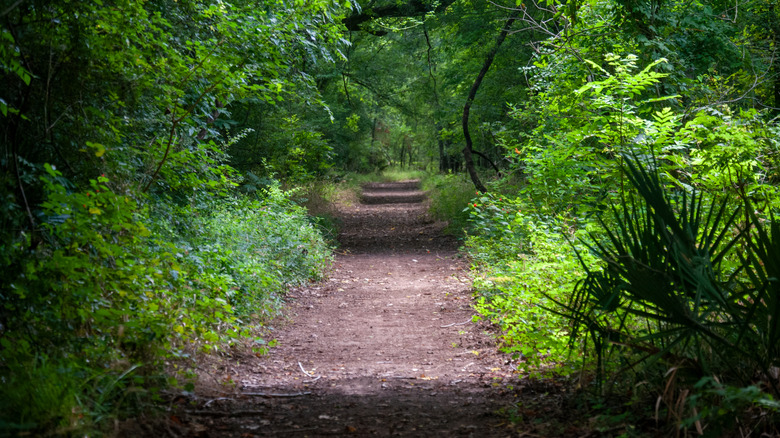
One of the best ways to take in the amazing flora and fauna of Brazos Bend State Park is to hike along one or more of its two dozen trails. These pathways vary in length from less than a quarter of a mile to nearly 2 miles. However, many of these trail sections connect to one another, allowing hikers to make much longer forays. All told, there are 37 miles of trails within the park. A number of these paths are wheelchair accessible, and the park has all-terrain wheelchairs available for visitors to use.
Most of the more popular trails in Brazos Bend SP wrap around various water features. Among these are Elm and Horseshoe Lake Loop, 40-Acre Lake Trail, and Riverview Trail, as well as several others. Many of the trails also feature additional points of interest, such as viewing platforms, observation towers, and even an observatory. The nearby George Observatory is only open on Saturday nights, and tickets must be purchased prior to your visit, as they are not sold by the park.
Before heading out on a hiking excursion here, it's a good idea to print out the park trails map or, even better, access the interactive park trails map to plan your route. As is the case throughout Brazos Bend, it is necessary to be aware of alligators when hiking on the trails. You should also take plenty of water, as Houston-area weather can be hot and humid throughout the year. Don't forget that it's always best to hike with a partner, too. Additionally, while pets are allowed, they must remain on a leash (not longer than 6 feet) and are not allowed to get in or drink water from the lakes.