
Big Changes Could Be Coming To This Popular National Park In 2026, Leaving Campers With Fewer Options
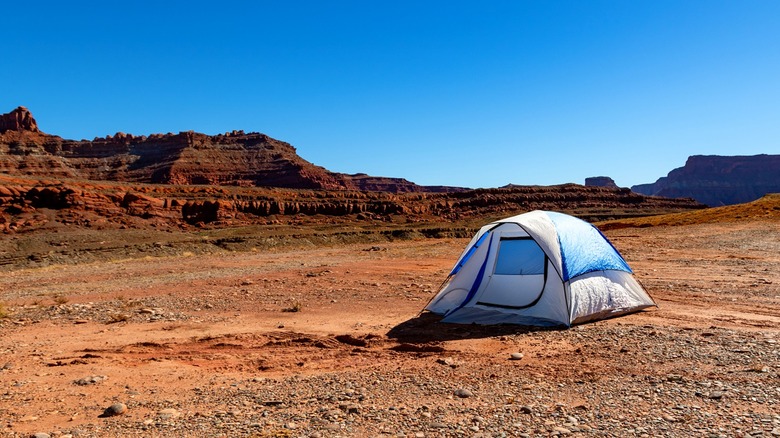
Dispersed camping, or staying overnight on public lands, outside of designated campsites, has always been a popular option out West for those wanting to skip the fees, rules, and lines associated with traditional campgrounds. It allows adventurous travelers to set up camp in spots of their own choosing, away from populated areas and convenient amenities to ensure peace and privacy ... and maybe to test their survival skills a bit. Want a campfire? Go gather wood from the surrounding forest and use nearby stones to assemble your own fire ring. Nature's calling? Head to that rock over yonder for a poo with a view. They don't call it the Wild West for nothing!
Sadly, in March of 2026, the branch of the government that regulates public lands, the Bureau of Land Management (BLM), announced its decision to ban dispersed camping on public lands around one of Utah's "Mighty 5" national parks — Zion National Park, which receives around 5 million visitors every year. The BLM decision affects around 14,000 acres in total, including areas near the Hurricane Cliffs Recreation Area, the Canaan Mountain Wilderness, and the Smithsonian Butte National Back Country Byway. Also affected is the camping spot at Gooseberry Mesa, whose prime location on top of the mesa offers miles of uninterrupted red rock scenery.
Up to now, these dispersed camping areas have served as free alternatives to the fee-based campgrounds in Zion National Park. They have also increased the area's capacity to accommodate campers from mid-March through late November, when Zion's campgrounds fill up on an almost nightly basis. Given the popularity and importance of these dispersed camping areas, the BLM's decision has stirred significant controversy.
The rationale behind the BLM decision
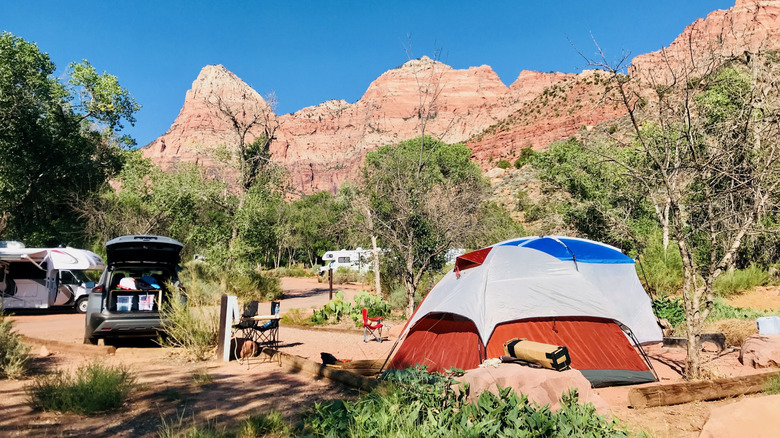
The BLM explains that eliminating dispersed camping around Zion National Park will protect fragile desert landscapes from further damage. It claims that dispersed camping in the area has destroyed vegetation, compacted soil, and contributed to waste disposal problems, especially near vulnerable water sources. To address ongoing issues around camping capacity in and around Zion, the BLM plans to retain a limited number of dispersed campsites and establish new fee-based campgrounds near the park, one of which would be located in an abandoned quarry.
Some folks are not pleased with this proposition. "If you want to come and camp down in shady cottonwood groves by a river, you will no longer be able to do that. Instead, they are turning an old industrial rock quarry into a paid designated campsite, where you can go camp right next to a whole bunch of other people," said a spokesperson for the Blue Ribbon Coalition, the organization leading the fight against the BLM decision. The coalition fears that the decision is part of a larger BLM effort to reduce dispersed camping nationwide and enforce fee-based camping, which may be out of reach for some people.
While the dust is settling on these new developments, fee-based camping continues to be available at two campgrounds inside Zion National Park — the Watchman Campground and the Lava Point Campground — while a third (the South Campground) is closed for rehabilitation at the time of this writing. The fees for single campsites at these campgrounds range from $25 to $45 per night. Another option would be to stay at the Zion Wildflower Resort, which some consider to be Zion's dreamiest glamping resort.