
5 Things You Could Do On An A Cruise Ship Years Ago But Can't Anymore
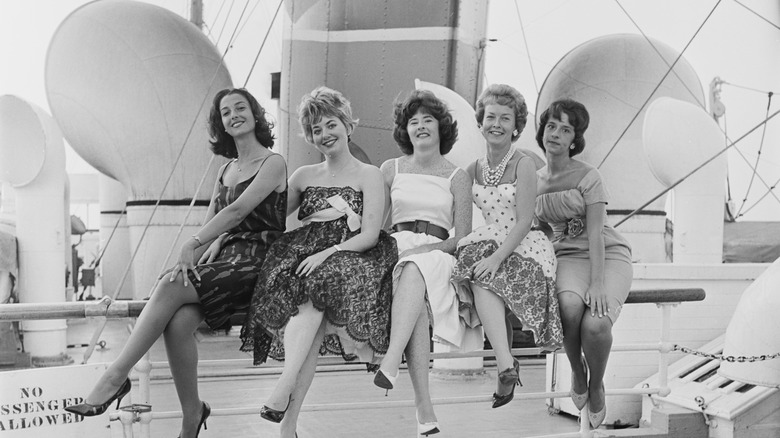
While the first cruise ship, the Prinzessin Victoria Luise, was launched in 1900, it wasn't until the 1960s that leisure travel on ships began emerging as a new way to take a vacation. For centuries, ships provided the only way to travel between countries, and it was nothing more than a means of transportation. The thought that people might spend days at a time on a ship merely for the enjoyment was a novel concept. But as air travel became faster, safer, and more affordable, it gradually replaced ocean travel as the preferred mode of transportation. Thus, the act of "cruising" as a leisure activity was born.
Today, passengers can choose from over 300 cruise ships and analysts predict 21.7 million Americans will travel on a cruise ship in 2026. While several once-thriving cruise lines may no longer exist, the cruising industry on a whole isn't going anywhere. The same, unfortunately, cannot be said of a few once-popular onboard activities. While many of the shipboard traditions of yesteryear remain, such as formal nights and champagne toasts at sail-away, several once-common shipboard practices have been discontinued, mainly due to environmental or safety concerns. Here, we'll look at a few activities that are no longer permitted onboard, and examine some of the possible reasons why.
Skeet shooting
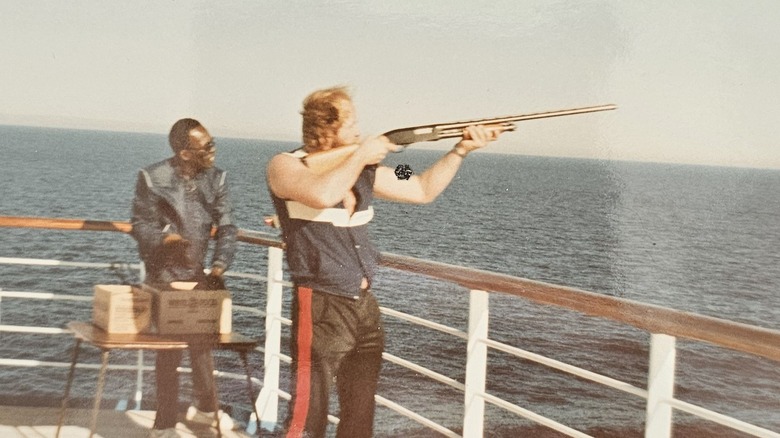
Back in 1990 and earlier, one of the onboard activities cruise lines offered passengers was target practice. Interested passengers would gather at the back of the ship, where crew members would toss clay pigeons overboard for the passengers to try to shoot. Given today's strict safety and environmental regulations, it can be hard to imagine how letting passengers play with loaded shotguns on a commercial cruise was common practice as recently as 35 years ago, but a lot of rules were more lax then. No one thought twice about hitting golf balls into the ocean either, as golfing off the cruise ship deck was another common sea day activity.
In the 1990s, the International Maritime Organization banned ships from dumping plastics, garbage, and "goods in packaged form" into the ocean. This, along with concerns for passenger safety and noise impacts, put an end to the tradition of shipboard skeet shooting. These days, if you're hoping to squeeze in some target practice while you cruise, you'll have to look for laser tag, which is offered on some cruise lines.
Midnight buffets
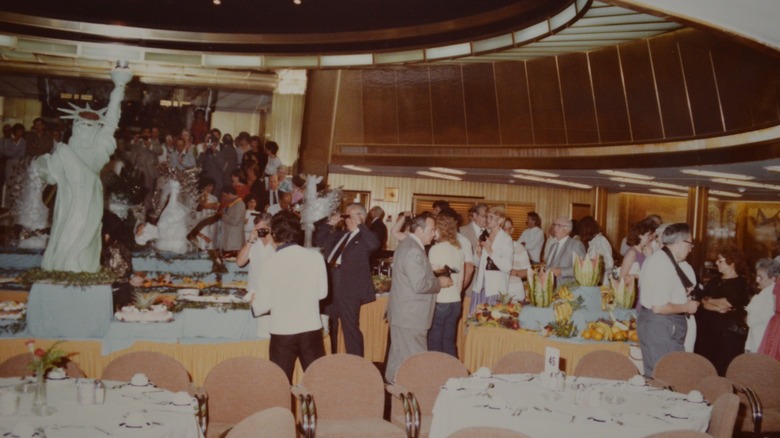
Back before cruise buffets were available 24/7, passengers were served three meals per day. Some cruise lines had an additional midnight buffet, which featured quite the spread, according to former passengers. Midnight buffets included chocolate fountains, ice sculptures, intricately carved fruit and bread, and a seafood display that included whole lobsters. They were so lavish, people would line up to take photos.
But by the early 2000s, as more cruise lines started offering food around the clock, passenger interest in the Midnight Buffet waned. Why stay up until midnight when you could get an ice cream sundae on the Lido deck at 9 p.m. instead? Food sat uneaten, and the witching hour feasts were eventually phased out. While having access to pies and pizza at all hours is certainly convenient, there was probably something special about waiting in excited anticipation with your fellow passengers for the big reveal.
Visitor days
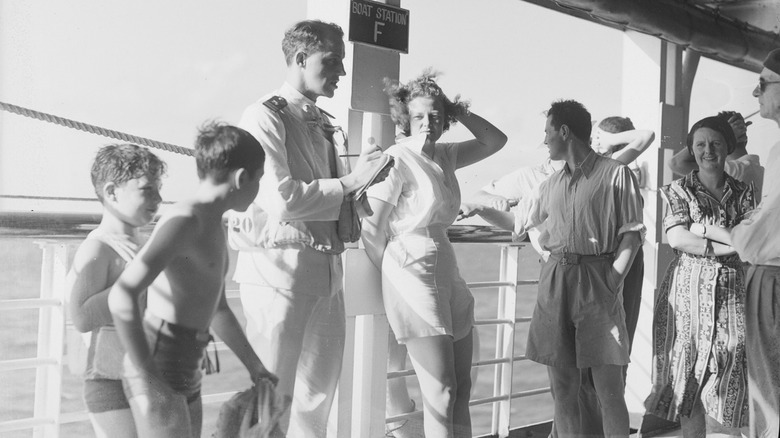
Like it is with flying, cruising is safer now than it ever was before. But advancements in safety protocols have also meant fun perks like "Visitor Days" had to be nixed. Back in the 1980s and earlier, friends and family could freely walk on the ship with you and wander the decks, visit your room, chat with the crew, and attend Bon Voyage parties. An announcement was made prior to departure to ask those who were not sailing on the cruise to exit the ship.
While Princess Cruises brought back the "Bon Voyage Experience" in 2010, allowing passengers to have guests on board for lunch and a ship tour, the practice was once again discontinued in 2019. Today, you are generally not allowed to have visitors or visit other ships while in port unless you get special permission to do so, and this requires submitting your passport info ahead of time. Cruise lines discontinued the practice of allowing friends and family to visit passengers onboard due to security concerns.
Hanging out on the bridge
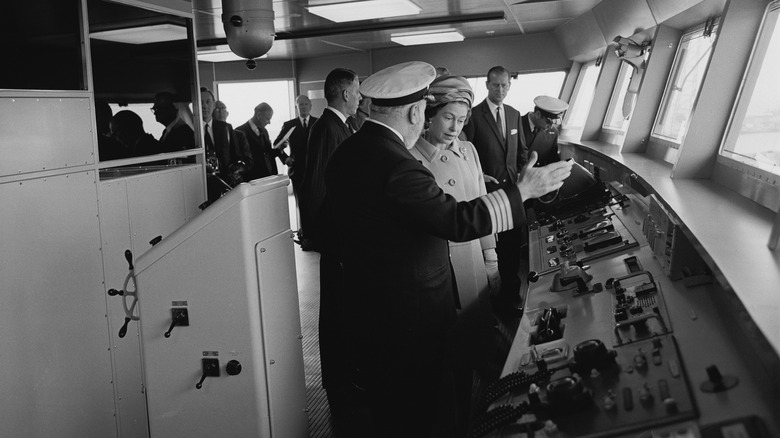
Similar to how you used to be able to tour the cockpit on an airplane, it was once far easier to visit the bridge on a cruise ship, say hello to the officers and chat with the captain. Now, with the exception of a few smaller vessels, it's nearly impossible to go near the bridge at all unless you're a VIP passenger or on a paid tour, and even those are less common these days.
When the average cruise liner has capacity for 3,000 passengers and massive ships like the 8,000-passenger Icon of the Seas, the world's largest cruise ship, are setting sail, it's easy to understand how allowing passengers to freely roam in and out of crew areas would likely get in the way of operations. Today, if you want to chat with the captain, you can check if your ship offers paid tours, or you can try to score a coveted invitation to the Captain's Table.
Messages in bottles and streamer traditions
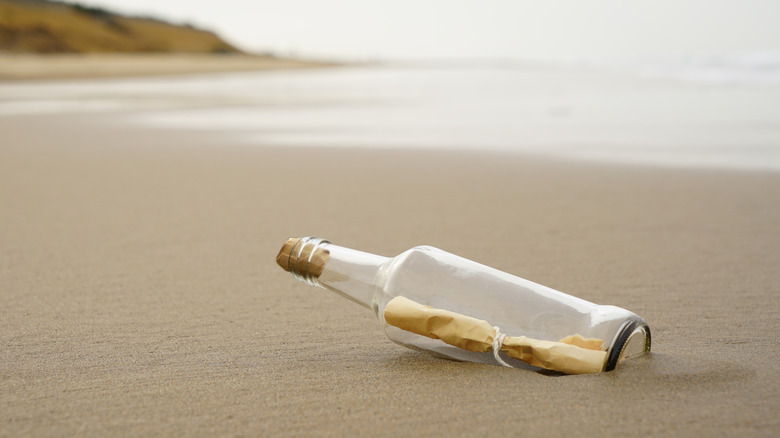
Before the 1990s, people could put a note in a bottle and chuck it overboard in the hopes that it would wash up on some faraway land, and someone would find it and read it. The occasional news story still features tales of messages found long after they were written by ship passengers, like the story of a family in Australia that discovered a message in a bottle that was written by a German sailor way back in 1886.
But this practice was discontinued with the tightening of maritime regulations around littering. Today, throwing anything overboard is forbidden, for both environmental and safety concerns (no one wants to get hit by a flying glass bottle).
Even throwing streamers and confetti at Bon Voyage parties is no longer allowed. Once upon a time, when friends and family were still allowed to stand on the dock and wave goodbye as the ships sailed away, it was customary to have a friend hold one end of a streamer while the person on board held the other end. As the ship pulled away from the dock, rows of colorful streamers would break as passengers, crew and those on shore cheered and bands played. Nowadays, we have to make do with celebratory emojis via text messages, as friends and family are no longer allowed to gather on the docks. To discover more once-common ship customs, check out 10 discontinued Carnival Cruise experiences passengers wish would make a comeback.