
What Happens If Your Rental Car Breaks Down (And Who's Responsible)

Planning your vacation is half the battle, and transportation ties the itinerary together. In many cases, rental cars remove the stress of public transportation. However, if the vehicle breaks down, it could throw a wrench in your travel plans. In the event of a car breakdown, staying calm and clear-headed is key.
Preparation matters, and it starts before you even put the keys in the ignition. Before stepping into the vehicle, write down all of the emergency phone numbers you may need — this includes the roadside assistance numbers provided by the rental company. With these phone numbers accessible, you won't have to scramble to find them when you need them most.
From Enterprise – 2025's highest-ranked travel company for customer satisfaction– to Hertz, companies advise actions like turning on the hazard lights and steering the vehicle away from traffic to be safe. Then, call roadside assistance. The goal is to get you back on the road as soon as possible, which could mean towing the malfunctioning car and finding a replacement, or fixing it onsite. Most major rental companies, like Enterprise and SIXT, have 24-hour roadside assistance. If you find yourself in a dangerous situation, call emergency lines, such as 911, to assist. Do not attempt to fix the car on your own, but document the problem with photos and videos of both your car and any others that were damaged. Once the immediate issue is resolved, what happens next and who is responsible is where it can get a bit complicated.
Who is responsible if a rental car breaks down?
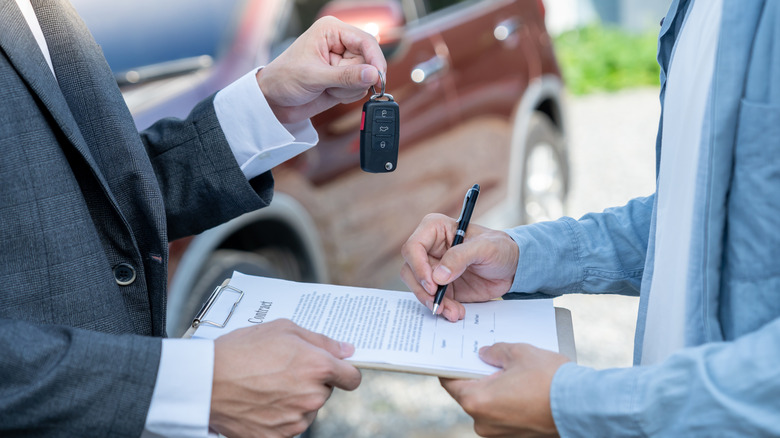
At this point, you've read the fine print, signed the dotted lines, and have found yourself dealing with the unexpected. While roadside assistance can provide an immediate solution, the next step is who takes responsibility. The answer isn't always black and white. Mechanical issues with the vehicle usually fall on the rental company. User error — such as reckless driving and negligence – typically falls on the driver. A crash-related breakdown is dependent on the crash circumstance.
If the rental company is responsible, such as in cases of mechanical failure or normal wear and tear, the provider typically covers repairs and arranges a replacement vehicle. Look for the "Loss of Use" clause in your rental car agreement, which allows renters to potentially receive refunds for lost rental time – though note that you often need to add this clause, as it's not always included in a standard contract. You may even receive a complimentary vehicle upgrade.
If the damage results from the driver misusing the car after agreeing to the rental terms, the driver may be held financially responsible for repairs. In accidents, liability depends on fault, and insurance coverage, if purchased, can help reduct out-of-pocket expenses.
To protect yourself, always inspect the vehicle before driving off and document it with photos and videos as proof of its condition, both inside and outside of the vehicle. Think of this step as personal protection in case disputes arise later. If renting doesn't feel like the right fit, alternatives like ridesharing or car-sharing services may better suit your travel needs.
Trying to save some money on your next trip? Check out our feature on the best place to book your rental.