
The Once-Thriving Former Capital Of Illinois Is Now A Nearly-Abandoned 'American Atlantis' With Eerie Vibes
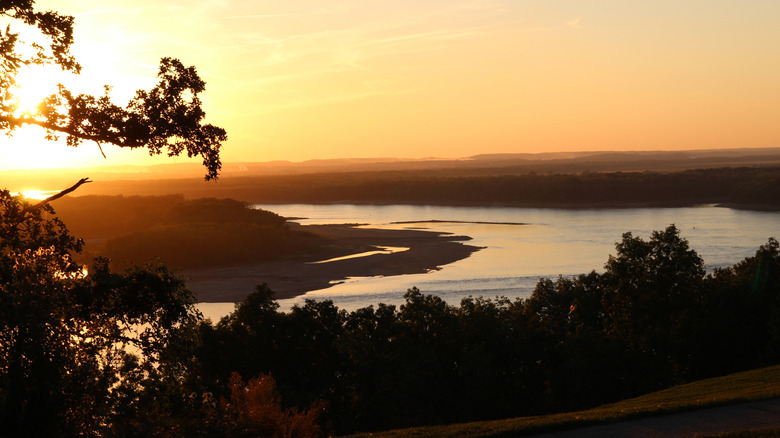
No river in the United States has played a larger role than the mighty Mississippi. Cutting through the heartland and forming a remarkably fertile basin, it has long been central to trade, agriculture, and transportation – a vital artery for Indigenous communities as well as the earliest European settlers. Yet its grandeur has often been matched by its volatility when human involvement goes unchecked, as seen in the cautionary tale of Kaskaskia, Illinois' first state capital.
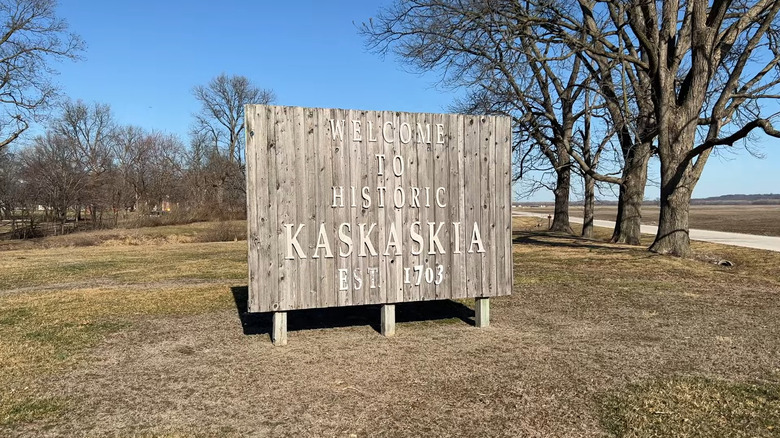
Sitting near the meandering confluence of the Mississippi and Kaskaskia rivers, the town's history began more than 70 years before the Declaration of Independence. Founded in 1703, it was a remote frontier settlement known to fur traders, the Indigenous Kaskaskia people, and Jesuit missionaries. With westward expansion, Kaskaskia bloomed into a bustling commercial and political hub, becoming the territorial capital in 1804 and Illinois' first state capital in 1818.
Church bells from France, old forts, and early settler manors are part and parcel of the locale. As you follow Interstate 55 south from Missouri's hub of St. Louis, the drive to Kaskaskia takes a little more than an hour. You'll notice that the only viable access to the small village is via a bridge through the hamlet of St. Mary, Missouri, as the original town site was largely submerged by the Mississippi, prompting settlers to relocate farther south – a shift that earned it the nickname the "American Atlantis." Now practically an island, both by state line and by geography, Kaskaskia adds its name to the list of once-thriving historic towns in Illinois worth visiting, along with New Philadelphia, the first U.S. town founded by a freed African American.
Kaskaskia as a capital
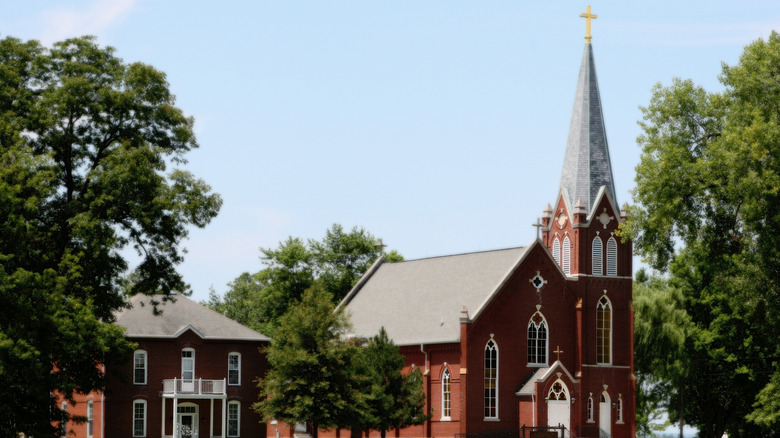
Relics of the now-submerged Kaskaskia can still be found throughout the village. A natural starting point is the Kaskaskia Bell State Memorial, which houses a tangible link to the Old World. Cast in France in 1741, the bell was a gift from King Louis XV to the Church of the Immaculate Conception. Also known as the "Liberty Bell of the West," it was rung to celebrate the town's liberation from British rule. Today, it stands as one of the oldest surviving objects associated with early Illinois history and is located at 302 First Street.
Nearby, the site of Fort Kaskaskia adds to the eerie vibes of this quiet neck of the woods. Designated a state historic site, this fort was built by the French in 1759 to defend the village from raids. While little of the original structure remains, the hilltop location offers sweeping views of the Mississippi River, along with interpretive plaques detailing the site's history. You can also stroll through the relocated Garrison Hill Cemetery, where the graves of the earliest settlers were moved to save them from floods. You can plan your stay or guided tour of the fort and surrounding grounds via its website.
At the base of the same hill stands the Pierre Menard Home, a French Creole–style residence built in 1802, with its white walls and green window shutters. Once home to Illinois' first lieutenant governor, the house provides insight into early state politics and frontier life. Surrounded by forest and preserved as a state historic site, it is open for tours from mid-May through mid-November. It is located at 4230 Kaskaskia Road. By the mid-19th century, Kaskaskia's decline seemed a premonition of the flooding that would follow, a fate not so different from that of Point Fermin, the "Atlantis of California."
Kaskaskia's fate as the American Atlantis
At its peak in the mid-18th century, the town was home to nearly 700 residents and served as the region's primary commercial and political center. It housed the territorial government and functioned as a hub for trade and community life. Over time, however, the once-thriving town of fur traders, loggers, and farmers struggled to sustain its growth amid wars, political instability, earthquakes, and ultimately, flooding. So how did this small but significant frontier settlement nearly vanish from the map?
The answer lies in both human activity and natural forces, with the Mississippi River playing a decisive role. While the river has always been prone to shifting and flooding, the scale of these events was amplified by the great population boom and increased river traffic. Steamboat travel drove demand for wood, leading to widespread deforestation along the riverbanks. As vegetation disappeared, the lack of rooted soil caused severe erosion, unbridling the Mississippi's fury.
By the 1820s, the state capital had already moved to Vandalia. In the decades that followed, repeated flooding steadily eroded the town. Between the 1860s and 1881, the Mississippi exacted its revenge, forcing the dwindling population to rebuild the village further south, with most of the original town already underwater. Some historic elements — including the church bell and altar — were salvaged, but much of the town was lost. Now sparsely populated, with only a small number of residents remaining, Kaskaskia sits about an hour south of St. Louis, Missouri. You can extend your trip to explore the region's history with a visit to the vibrant neighboring city of Ste. Genevieve, the state's oldest permanent European settlement.