
This Lonely California Town Is An Almost Abandoned Desert Outpost With Wild History
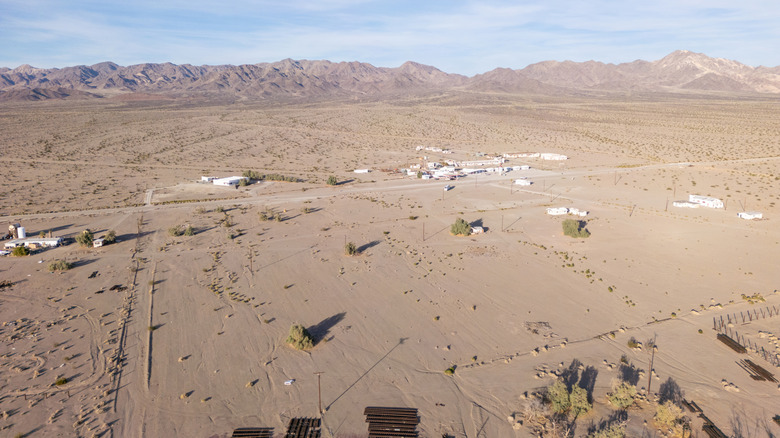
California is the most populous U.S. state out there, counting upwards of 39 million people between its borders. However, roughly 68% of those folks reside in counties that spread along the coast, leaving huge tracts of inland country where things get a little more, well, lonely. Take the haunting ghost town at the Bodie State Historic Park, once home to 10,000 people but now more like a Western movie set. Then there's Loyalton, hailed as America's loneliest town, which sits amid the forests and peaks of the distant Sierra Nevada. And then there's Death Valley Junction...
Also known as Amargosa, or DVJ for short, it's but a pinpoint on the map of the big, wide, dust-billowing Mojave Desert. Just a touch to the west, the whopping 3.4 million acres of the largest national park in the Lower 48 — the Death Valley National Park — unfold in a mosaic of shifting dunes and sandy canyons. To the east, the NV-CA state line cuts across the largely unexplored heights of Shadow Mountain. Meanwhile, U.S. Route 127 runs to the north and south, leading through the badlands and peaks to equally remote outpost towns like Shoshone and Amargosa Valley in under 30 minutes.
If all that sounds like it's going to be a journey into the remoter, emptier side of California, that's because it most certainly is! Death Valley Junction is home to under four residents in total, and, according to Destination DVJ, is a place people visit specifically to disconnect from modern life. Others pass through for the intriguing history, to unravel the story of a boom-and-bust borax mining town, for hikes and adventure, and — of course — to visit the famed Amargosa Opera House, a supposedly haunted old hotel stuck out in the Mojave.
The enthralling history of Death Valley Junction
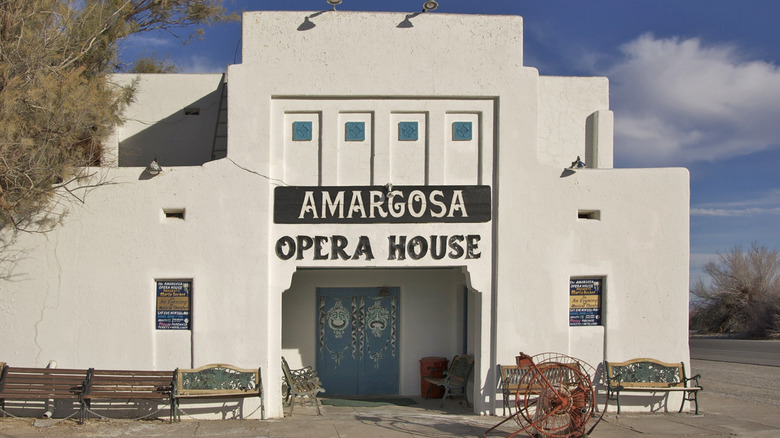
Death Valley Junction might count just a handful of permanent residents these days, but it once bustled with life. It all started back in the early years of the 20th century, when the town was established as a borax milling station along the railroad leading into the mountainside mining operations of Ryan a little to the west.
This soon transformed into a proper settlement of around 300 people, complete with accommodation, shops, and even a brothel. Most remarkable of all, though, was surely the construction of a fully-fledged, adobe-style cultural and wellness hub complete with an ice-cream parlor and even a movie theater; an effort by the Pacific Coast Borax Company to improve the lives of its workers way back in 1924.
It's those very buildings that would later give Death Valley Junction a new lease of life, for they inspired a certain dancer from New York named Marta Becket to create the Amargosa Opera House. The story goes that she happened upon the town during a chance visit in the 1960s, was enamored, and chose to stick around. Her creation is now a hotel and one of the most iconic features of the town, where visitors come for guided tours of a whole theater painted with unique murals inspired by the likes of a 16th century Spanish court. Guests and workers alike claim that it's haunted, which you may want to bear in mind before booking your stay.
Entering the desert at Death Valley Junction
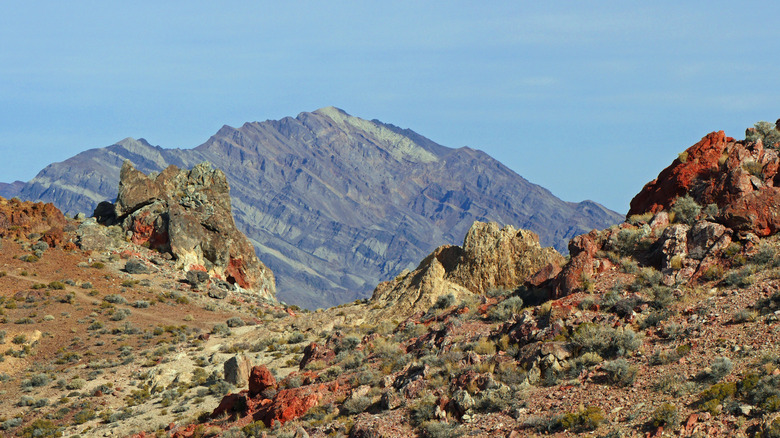
You won't have to venture far from Death Valley Junction to get a taste of the wild. The town serves as a gateway to Death Valley National Park for those coming in from Las Vegas — the city's Harry Reid International Airport is the closest major aviation hub, sitting some 1.5 hours away to the east. The upshot? In under 30 minutes from town, you can be standing at Zabriskie Point, one of the most scenic vistas in Death Valley, surveying the salt flats and, if you time it right, the snow-capped Panamint Range in the distance.
Going that way also opens up some seriously incredible hiking adventures, because it puts you in proximity of the Amargosa Range. That same string of mountains hosts the 3.8-mile Desolation Canyon Trail, a part-scramble outing through one of the lesser-known gorges of the national park, and the Golden Canyon Trail, a 3-miler that outdoors app AllTrails ranks as the second-top hike in the region!
The town itself sits in the shadow of the Funeral Mountains Wilderness Area, a 25,708-acre plot of BLM land that's truly remote and under-the-radar. That hovers to the northwest and barely sees any hiker footfall. There is an unmarked route leading down the barren tops of Pyramid Peak to the west, though, rewarding with sweeping views of the Mojave and Death Valley — just be ready for 10-plus miles of hiking on scree and across rocky ridges.