
Wisconsin's 'Everglades Of The North' Is A Gem For Birdwatching, Fishing, And Hiking
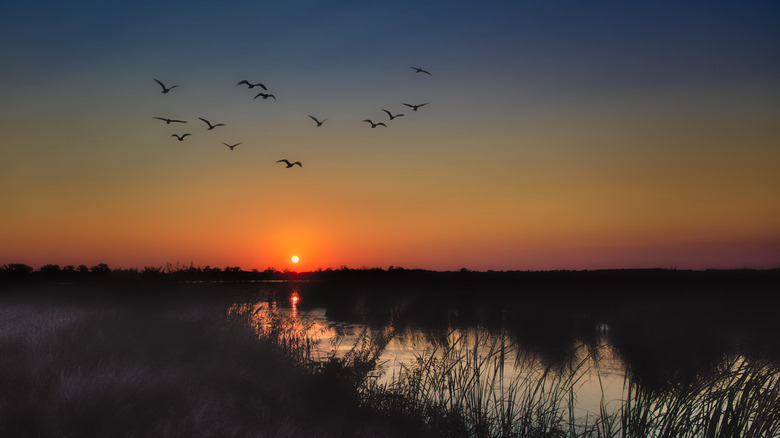
Wisconsin has more than 400 different species of birds that can be spotted around the state. One of the top spots for birdwatching is Horicon Marsh, an area that spans 33,000 acres and is one of the biggest freshwater marshes in the U.S. The marsh is 14 miles long and about 5 miles wide, and managed by both national and state departments — the U.S. Fish and Wildlife Service manages 22,000 acres as the Horicon National Wildlife Refuge, while the Wisconsin DNR oversees 11,000 acres of the Horicon Marsh State Wildlife Area.
Horicon Marsh is known as the "Everglades of the North" because it's a similar wetland landscape to Everglades National Park in Florida. Created by the last Ice Age, the marsh basin is fed by the Rock River, which eventually flows through to the Mississippi River. Canoeing and kayaking are only allowed in the state-run portion of the marsh, and it's possible to take a boat tour or rent canoes and kayaks from Blue Heron Landing.
There are three visitor centers — two in the national area and one in the state area — and a 3-mile driving area, which is open seasonally. The marsh is a good place for seeing wildlife such as frogs, turtles, muskrats, red foxes, but it's really the migrating waterfowl and birdwatching that draw visitors here. There are also excellent opportunities for fishing and hiking around Horicon Marsh, too.
Birdwatching and fishing at Horicon Marsh
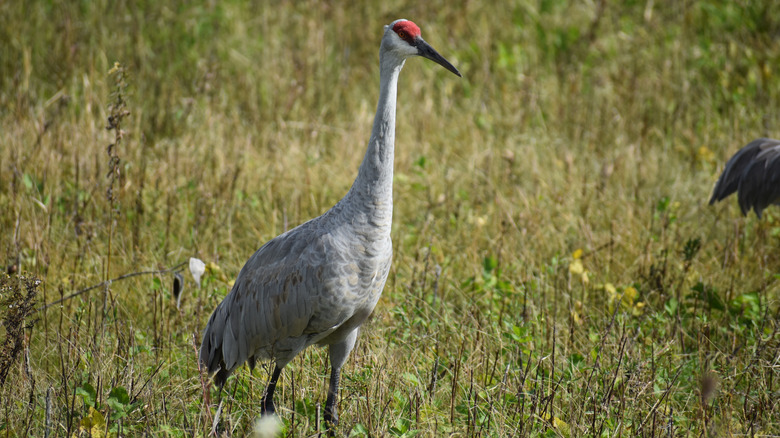
One of the best things to do at Horicon Marsh is birdwatching — the area is home to an impressive 300 species of birds. You may see redhead ducks, Canada geese, sandhill cranes, songbirds, trumpeter swans, American pelicans, bitterns, herons, egrets, and wrens, along with larger birds of prey such as bald eagles, osprey, northern harriers, and snowy owls. It's also possible to see the rare whooping crane at Horicon Marsh — there are only about 830 of these birds in the world, so spotting one is a treat. Fall, particularly from late October to early November, is the best time to visit Horicon Marsh to see the 350,000 geese and ducks in migration.
Fishing is also popular at Horicon Marsh. There are three main areas for fishing in the northern part (managed by the U.S. Fish and Wildlife Service), which are bank fishing only: Peachy Road and Main Dike Road, which both have fishing piers, and Ledge Road. While the lake is open for ice fishing in winter, no motorized vehicles are allowed. Fishing is also allowed in the southern state area run by the Wisconsin DNR, but note that boats, canoes, or kayaks are not allowed in the national section. Anglers can cast a line for perch, carp, pike, and bullhead here.
Where to go hiking at Horicon Marsh
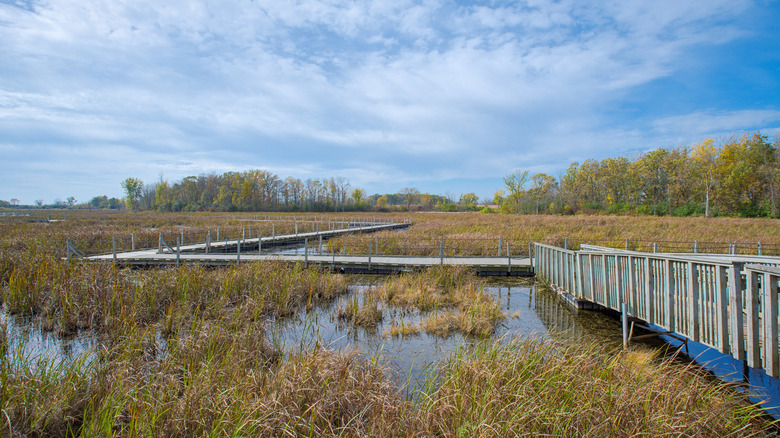
There are 5 miles of trails in the state portion of Horicon Marsh, and 10 miles of trails in the national section. The wetland and forest landscapes offer scenic views, along with boardwalks out on the marsh to see birds and other wildlife. The 2.3-mile Bachhuber Loop is an easy trail in the state area, with pretty scenery and opportunities for birdwatching. Quick's Point Loop is a more moderate trail covering 1.9 miles, and also a good pick for seeing wildlife and birds. Wander along a boardwalk through the marsh and forest on the 1-mile Egret Trail in the national part of the marsh — visit in spring to see gorgeous wildflowers in bloom around this trail.
Horicon Marsh is in southeastern Wisconsin, about a 25-minute drive from Fond du Lac. It's about 1 hour and 10 minutes from Madison, which was crowned Wisconsin's happiest city, and just over 1 hour from Milwaukee, known as the culinary capital of the Midwest. Madison's Dane County Regional Airport (MSN) is the closest airport, but Milwaukee Mitchell International Airport (MKE) isn't much further away, and has a better range of flight options. Horicon Marsh is in a rural area, so having access to your own vehicle is essential for a trip here.