
Hidden On North Carolina's Border Is A Scenic Mountain Lake With Trophy-Sized Catches And Forested Peace
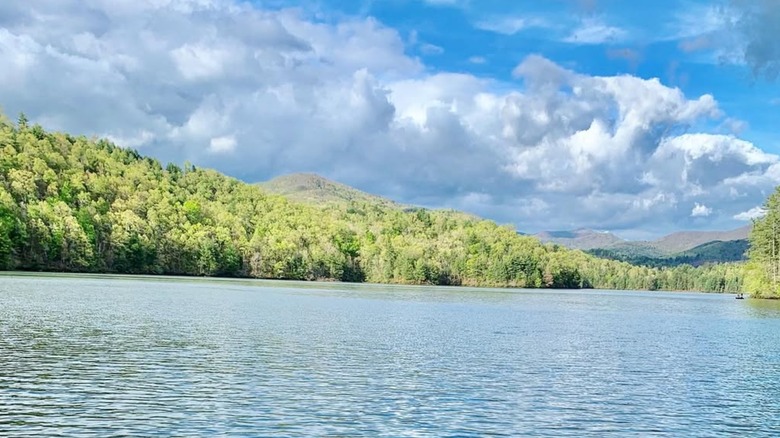
The Appalachians are not just one of America's great mountain ranges, they're also the oldest, having weathered the ages for a good 480 million years. These rugged and ancient peaks are home to deep valleys, thick forests, and lofty ridges that can be explored via epic road trips or trekking, such as along this fiendish trail that challenges even expert hikers. While the iconic range stretches through 13 states, some of the wildest and most idyllic spots in the Appalachians can be found in eastern Tennessee and western North Carolina, including the aptly-named Apalachia Lake.
Created by a dam on the Hiwassee River, the reservoir is in North Carolina with a western edge abutting the Tennessee border. This nearly 1,100-acre manmade lake stretches for 10 miles and is classified as a run-of-the-river reservoir. This means that the dam merely slows the river water rather than stopping it completely. Water levels fluctuate up to 8 feet daily. Sitting at an elevation of 1,273 feet, the lake is exceptionally remote, occupying North Carolina's undeveloped far western finger, about 25 miles from the town of Murphy. Visitors are drawn to its secluded beauty, as well as its angling opportunities, as this beautiful mountain lake is full of feisty fish, including trophy-sized brown trout.
Part of Apalachia Lake's appeal is its remoteness. It's more than four hours from Charlotte, North Carolina, but about two to three hours by car from both Atlanta and Chattanooga. Both cities are home to airports receiving non-stop flights from some U.S. cities. From either city, rent a car or hire a rideshare to the lake.
Soak up the serenity at Apalachia Lake
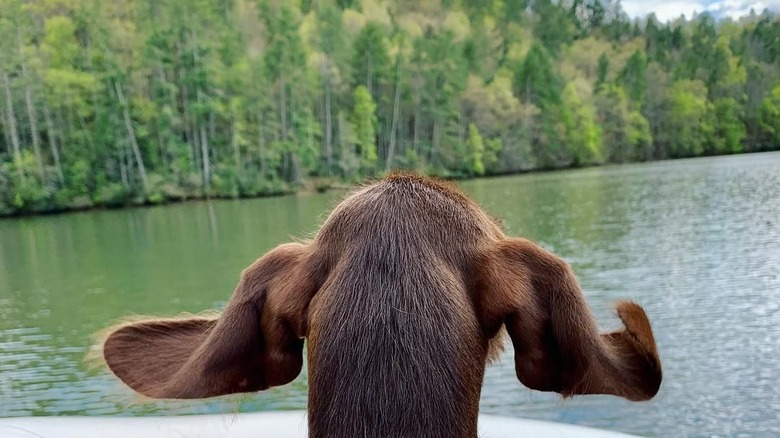
Apalachia Dam was constructed by the Tennessee Valley Authority (TVA) in the early 1940s to create hydropower for the region. The lake it created also provides plenty of opportunities for outdoor recreation, and is enjoyed by visitors today for its natural, unspoiled vibes. "It's hard to believe that a place like this still exists, especially since Atlanta is so close by. It's like having your own private lake in the mountains to boat on because no one else is out there," wrote a visitor on Google.
Given the steep woodsy shoreline, the narrow lake can be hard to access. "With few visible banks, the forest appears to plunge directly into the water," wrote Megan Banker in an article in Carolina Traveler. That said, there is a wildlife ramp at Hiwassee Dam on the lake's eastern end where you can launch a boat, and one of the best ways to experience this lake is by cruising along its surface.
However, if you don't bring a boat, kayak, or canoe, there are hiking trails that wind through the local forest, and if you're feeling adventurous, you can also make the jaunt to North Shoal Creek Falls, though the old trail is blocked off, so it requires a bit of bushwacking. And for those who brought a picnic lunch, the nearby Hiwassee Dam Recreation Facility has spots to sit down, eat, and relax in the pleasant surroundings. But if you'd rather stick closer to Chattanooga, visit Tennessee's first state park, Harrison Bay, offering camping and fishing.
Hook into a lunker at Apalachia Lake
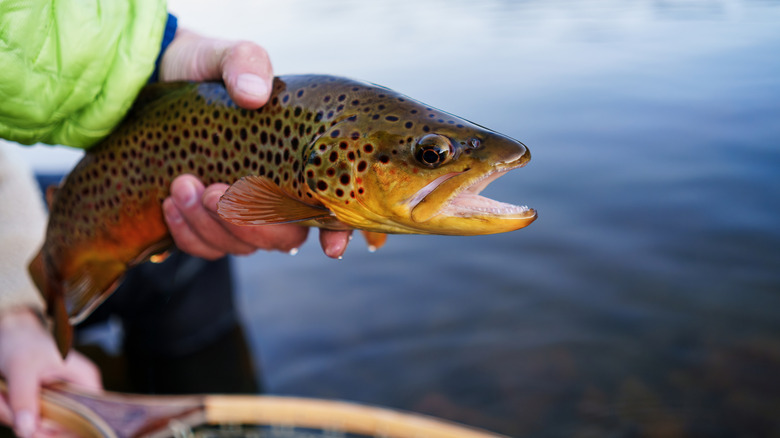
The most popular activity at Apalachia Lake is fishing, and for good reason. The reservoir is home to a good number of smallmouth, largemouth, white, and spotted bass, along with redbreast sunfish. However, the real star of the show is the brown trout, which was introduced along with rainbow trout in 2011 to reduce the numbers of blueback herring, an invasive species. The state now stocks 5,000 trout a year, which, given their steady diet of baitfish, can grow to enormous sizes.
In an article about Apalachia Lake in The Angler Magazine, fisher/journalist Aaron Kephart wrote, "My personal best is a brown that was just under 10 pounds. I also know of other trout in the 10 pound range that have been caught, and even rumors of a couple of 12 pounders." The rainbow trout haven't grown as big as the browns, but they can reach nearly 4 pounds.
This all makes Apalachia Lake an enticing angling destination. But to enjoy success it pays to know its idiosyncrasies, including the current, so it's best to start out by fishing with someone who knows the lake. For fly-fishers, anything that mimics a herring will tempt a big brown to bite, such as a white streamers. Also, fishing is best near Hiwassee Dam, which sucks herring through the turbines and spits out the stunned little fish into Apalachia Lake, which ravenous browns pick off one-by-one. "A brown trout is an eating machine," fly fisher David Woody told Carolina Sportsman. "If your fly looks like an injured herring, he is going to take it." For more Appalachian magic, check out Elizabethton, a quaint and historic city in Tennessee's forested foothills.