
Michigan's Once-Thriving Lumber Town Is Now An Abandoned Lakeside Beauty With Rustic Midwest Charm
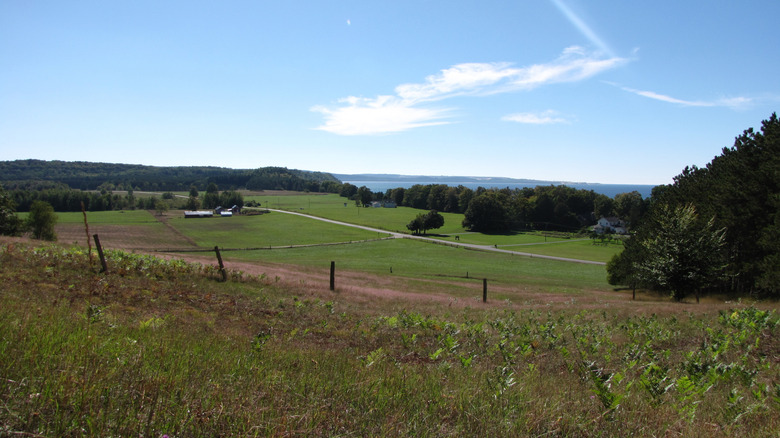
Sleeping Bear Dunes National Lakeshore is one of the most popular destinations in Michigan. Its 35 miles of gorgeous coastline attract more than 1.5 million visitors each year, according to the National Park Service. Those visitors come to see the towering bluffs, waterfront towns, and historic lighthouse along Lake Michigan, but they often miss Port Oneida. Tucked in the heart of the area's booming lumber industry at the end of the 19th century, it's now a picturesque ghost town that might become your favorite spot along this national lakeshore.
Located in what is now Northern Michigan, the area was formed when the glaciers retreated. Then the Anishinaabe people, who thought a sand dune in their fishing and hunting grounds looked like a reclining mother bear, named it Sleeping Bear Dunes. The name stuck as French explorers arrived, lumber mills were built, and ports were constructed.
Port Oneida, near the northern tip of Sleeping Bear Dunes, was part of this settlement. German immigrants, who arrived in the mid-19th century, were soon joined by a New Yorker, whose cargo ships navigated Lake Michigan. Together, they built a dock and started chopping down hardwood forests to sell as firewood. As the lumber industry rapidly grew, so did Port Oneida. The booming town soon had a blacksmith shop, a boarding house, a general store, and a post office. By the end of the century, the trees were gone and steamships needed coal instead. Because of this shift, Port Oneida was largely abandoned by 1908.
How to experience the Port Oneida Rural Historic District
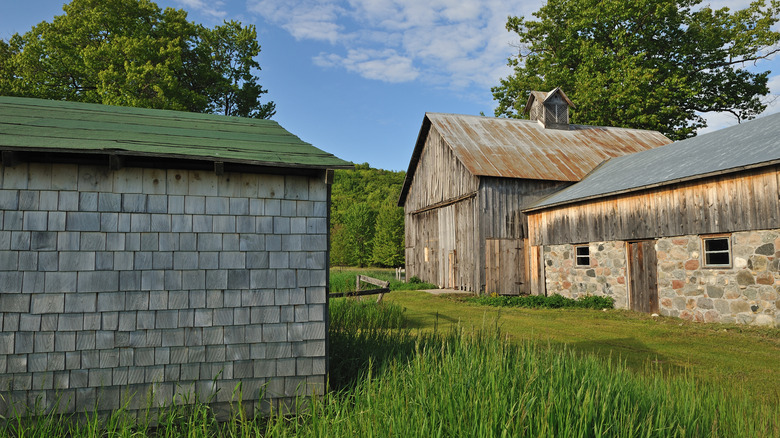
By the 1920s, the dunes had become a tourist destination, and the more than 70,000-acre area was eventually protected as a national lakeshore in 1970. Port Oneida, by then a ghost town, was included in it, and the Port Oneida Rural Historic District later joined the National Register of Historic Places in 1997. The rural Midwest area now spreads across 3,400 acres and includes 121 buildings, 20 structures, and 18 farmsteads that look much like they did at the turn of the 20th century. Meanwhile, Sleeping Bear Dunes National Lakeshore is now one of the Midwest beaches that could pass for the Caribbean.
When you visit the Port Oneida Rural Historic District, you'll start at the Charles & Hattie Olsen Farm, which was turned into the Port Oneida Heritage Center. The timber-framed barn has exhibitions about the original Native American and pioneer settlers. You can then take a map to start exploring Port Oneida's first homestead, a one-room schoolhouse, cemeteries, and numerous farms on the grounds. You can also join a horse-and-buggy tour on Thursdays during the summer.
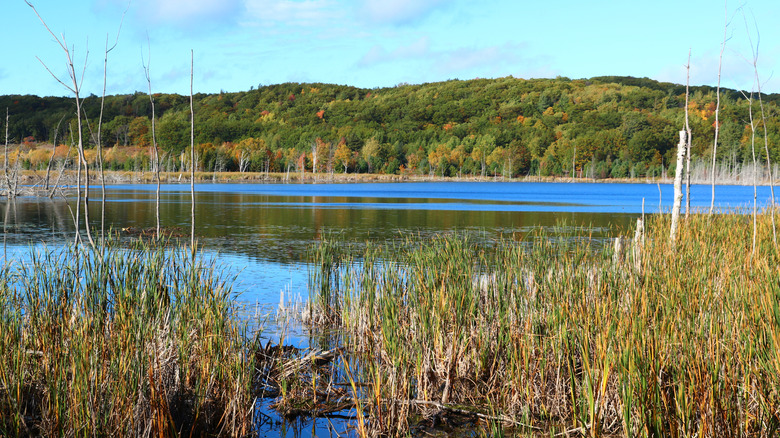
You can see a number of the historic buildings in the Port Oneida Rural Historic District along the Port Oneida Trailhead, a crushed stone trail that winds through wetlands and forests. It passes the Kelderhouse Farm, the Port Oneida School, the Kelderhouse Cemetery, and the Lawr Farm before reaching Narada Lake's boardwalk.
More things to do near Port Oneida
The Port Oneida Trailhead isn't the ghost town's only trail. Another option is the Bay View Trail, which combines the Farm and Ridge Loops. The 8-mile trail might be steep at times, but its panoramic views of farmland, wildflower fields, and Lake Michigan are among the most beautiful spots in Michigan. At one point, you can even see the Manitou Islands, two islands that are part of the national lakeshore. Both the Port Oneida Trailhead and Bay View Trail also connect to the longer Sleeping Bear Heritage Trail (SBHT). The 22-mile scenic trail, which currently extends from Empire to Bohemian Road, is used by runners, bikers, and skiers during the winter.
To visit Sleeping Bear Dunes National Lakeshore, you must purchase an entrance pass ($25 for up to seven days per vehicle). It is easy to reach the area from Traverse City, a scenic Michigan lake city with an underappreciated wine scene. From its Cherry Capital Airport (TVC), Northern Michigan's largest airport, the drive is only about 30 miles.
Though you probably won't find any ghosts in the abandoned town, Port Oneida's history lesson should help shape the rest of your journey through the national lakeshore. So will the stunning beaches you'll see as you head south. Empire Beach, Michigan's outdoor adventure paradise with a wildly scenic beach, is only 13 miles away. Then another option, Platte River Point Beach, where the Platte River flows into Lake Michigan, is just a bit farther.