
What Does 'Y' Mean On An Airplane Ticket?
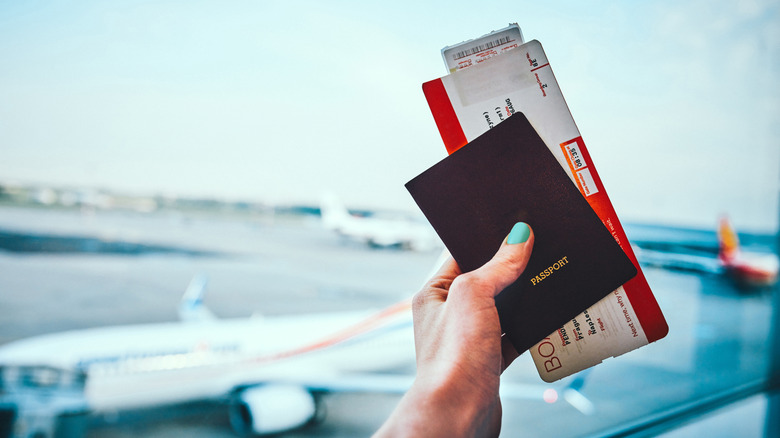
Next time you're standing around at an airport gate, waiting to board a flight, take a look at your plane ticket. You'll see plenty of names and numbers you'll recognize — your destination, the departure time, your assigned seat — along with several others that may be less obvious. One of them might be the letter "Y." What does it mean? Well, "Y" is part of a fare basis code, and typically indicates that you're traveling on a full-fare economy ticket.
When it comes to the differences between airfares, there's more nuance than many travelers realize. In the process of purchasing a plane ticket, you often have the option to pay for first, business, or economy class. But before you enter your credit card information, you may also be asked to make other choices, such as whether your ticket is refundable or whether you're eligible for upgrades. To help airline staff quickly understand the terms of any ticket, the International Air Transport Association (IATA) established an alphabetical coding system to manage pricing and restrictions for individual airfares.
"Y" isn't the only letter that could appear on your ticket. There's some variation between U.S. airlines, and not all adhere to IATA standards. Generally, "F" means First Class, "A" and "P" refer to Premium First Class, and "J," "C," and "D" represent Business Class. "W" and "E" mean Premium Economy, and several letters — including "B," "M," "K," "Q," "L," "V," "T," "S," "H," and "G" — stand for some variation of discount economy fares, each with its own rules.
Flying full-fare economy means flexibility and possibly an upgrade
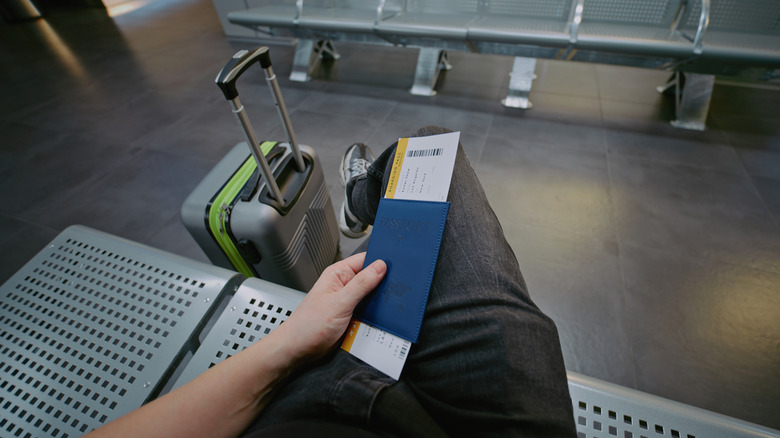
A "Y" means full-fare economy class, but what does that actually get you? In short, it means you're flying economy, but not the cheapest version. If you bought a full-fare economy ("Y") ticket, you're normally granted more flexibility. You can make same-day changes, receive easier refunds, and enjoy better eligibility for upgrades. A Basic Economy ticket, in contrast, is usually marked with a "B" and has a lower price tag, but the terms are comparatively restrictive: travelers in this category might not be able to choose seats, bring even a single carry-on bag, or earn frequent-flyer miles, for instance.
To find your fare basis code, just look at your ticket. On a paper ticket, it appears in the "Fare Basis" box. On an e-ticket, you'll see it displayed in the "Fare Basis" or "Fare Code" section. If you see a "Y," especially if you have status with the airline in question, you might be able to snag an upgrade on a domestic flight.
No matter what fare basis code you find on your ticket, there's another important code to be aware of. If you see "SSSS" printed on your boarding pass, it could mean you're on a watchlist. The code stands for Secondary Security Screening Selection, and it means you've been selected for additional screening at the airport. No need to panic or take it personally — the selection may be random. But you'll want to make sure you arrive at the airport extra early to avoid feeling rushed or even missing your flight. Learn more about how early you really need to arrive at the airport, even if you have TSA PreCheck.