
Florida's Once-Thriving, Abandoned Zoo Near Miami Is Now A Nature Garden Where Wild Animals Roam
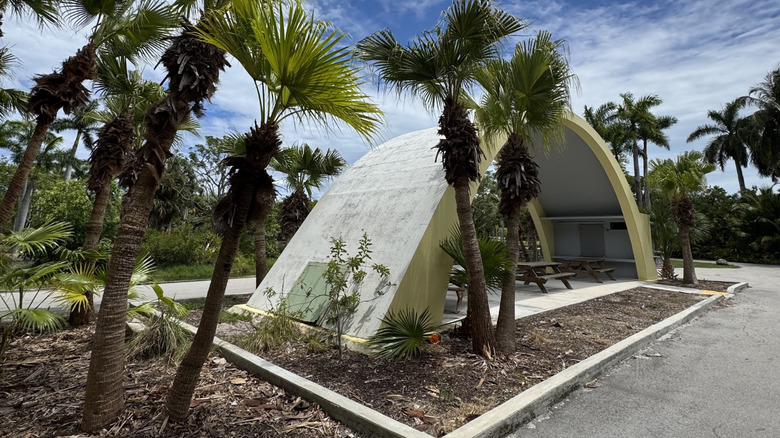
Wildlife encounters in Florida can feel almost routine, whether it's a pelican landing on your parked car or an alligator lumbering across the backyard. It just goes to show that a zoo might feel unnecessary — the whole state is practically an open-air habitat. Some might call it inevitable, then, that after Crandon Park Zoo on Key Biscayne met its fateful end, it was reclaimed by the wildlife it once caged. The once-popular zoo now stands as a scattering of barless enclosures and empty concrete pools, but its old structures serve as a historical touch to an otherwise lush landscape. The area that the zoo once occupied is now Crandon Park's botanical garden, a peaceful spot to walk through — just heed the crocodile warning signs.
In 1948, the Crandon Park Zoo opened by a chance incident and became Miami's first zoo, according to The Miami Herald. Its origin story starts with a traveling animal act that got stranded, leaving its animals wandering around Crandon Park. The animals were purchased by the county, leading it to establish the zoo. However, there was a problem: The zoo's site was a hurricane magnet. Multiple hurricanes hit the area during the zoo's active years, with numerous animals drowning due to Hurricane Betsy in 1965. The zoo closed down not long after, giving way for the present-day Zoo Miami to be built further inland. Nevertheless, the zoo's ruins remain for visitors to explore in the Crandon Gardens.
See ruins and wildlife at Crandon Gardens
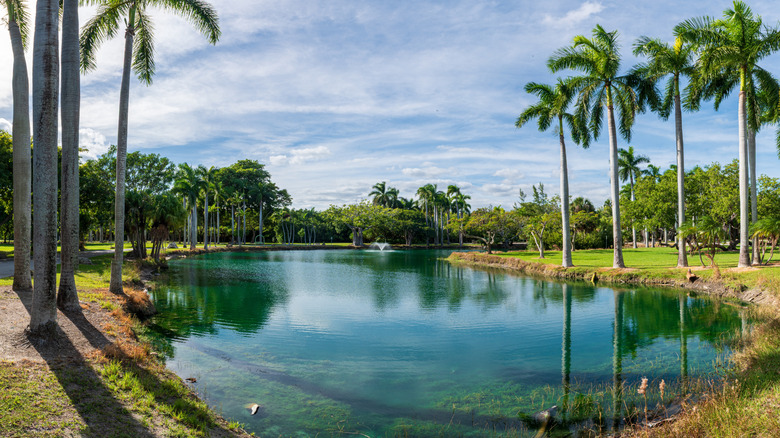
Being on Key Biscayne, one of the prettiest, must-visit islands of Florida, the Crandon Gardens are a scenic, plant-filled oasis with lots of webbing pathways. Many of the pathways are paved and easy to navigate. They wind through clearings ringed in palm trees and around ponds, all of which are well-maintained for visitors. "The whole garden is super clean and well taken care of. Multiple picnic areas on premises," a Google reviewer noted. Though many of the cages have been removed or fenced off, you can still walk among some of the concrete enclosures. One significant enclosure appears to be a former monkey cage, based on vintage photographs of the zoo shared on Instagram.
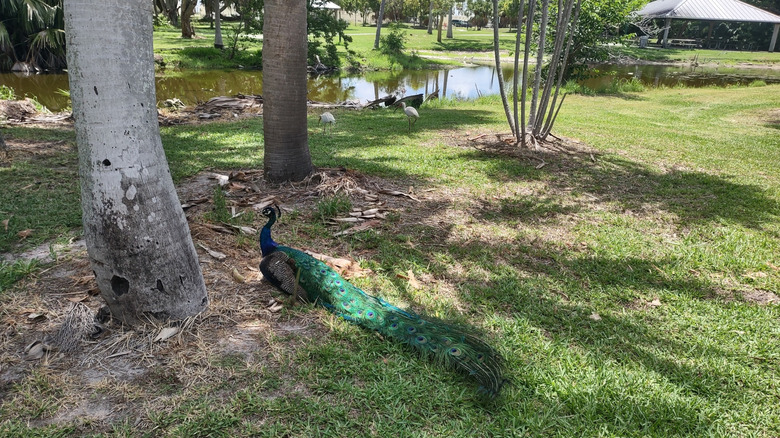
Then, of course, there's a plethora of wildlife that call the former zoo site their home today. Past visitors have reported seeing lots of exotic birds, iguanas, turtles, and crocodiles lounging in the ponds. Peacocks are some of the most abundant inhabitants, to the point that there's even a "peacock shelter" where you can often see them strutting.
How to visit the Crandon Gardens
The Crandon Gardens sit in a pocket of Crandon Park, so the park regulations apply. You'll have to pay a parking fee (it's less expensive on weekdays). Beyond the cheaper parking, it might be a good idea to plan your visit for a weekday if possible, since Crandon Park is known to get crowded on weekends. With that said, the botanical garden area is designated a "quiet garden" and is usually not as busy as other areas of the park. "In the half dozen times I visited, there were never more than a handful of other people in the entire gardens," wrote the nature blogger Reason and Nature.
Aside from its legacy garden, Crandon Park has a lot for visitors to do and see. It's home to Crandon Beach, considered a less-touristy Miami paradise. The beach has some concessions and kiteboarding equipment available to rent. Those interested in some sports by the bay can check out the park's tennis center or golf course. It's a short route to get to Crandon Park by car from mainland Miami, about 15 minutes from Downtown. While you're visiting Key Biscayne, you can soak up the authentic Florida Keys vibes at Bill Baggs Cape Florida State Park on the island's opposite end.