
5 New Hampshire Downtowns To Visit That Are Dripping With New England Charm, According To Visitors
New England is renowned for its historic town centers, but few states in the region preserve their traditional downtown districts as well as New Hampshire. Across the Granite State, travelers can still wander through streets lined with colonial-era homes, brick storefronts, and historic churches whose steeples have defined the skyline for centuries. Many of these districts developed during the 18th and 19th centuries as commercial hubs where merchants, farmers, and travelers gathered for trade, civic events, and community life. Today, those same streets remain at the heart of local culture — Except now they're filled with quaint bookshops, cafés, galleries, and restaurants.
The appeal of New Hampshire's downtowns stems from the way they marry historical authenticity with everyday life. Unlike theme-park re-creations of colonial America, these districts evolved organically over hundreds of years. Many played important roles during the Revolutionary era, when towns served as public spaces for militia organization, political debates, and early state governance. Even communities that rose to prominence later often built their downtowns around architecture and gathering places reflecting traditional New England design. Plus, unlike many modern American communities, the downtowns were designed before automobiles existed. As a result, streets are compact and easy to explore on foot.
Using visitor commentary, travel publications, and historical content, we've picked out five New Hampshire downtowns that stand out for their architecture, historical significance, and charm. If you're seeking the urban density of places like New York City, this isn't it. Rather, these slower-paced downtown districts demonstrate why New Hampshire continues to draw those seeking authentic small-town character.
Portsmouth
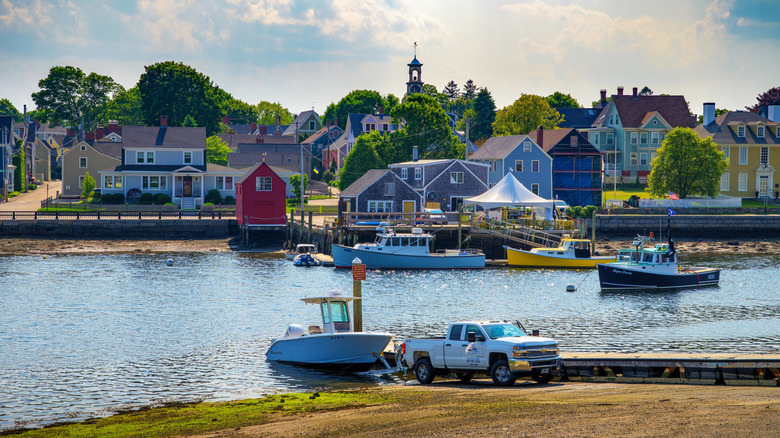
New Hampshire's oldest settlement and first capital, Portsmouth, was incorporated in 1653. The city center is shaped by its origins as a colonial port along the Piscataqua River near the Maine border. Travelers regularly praise the city's historic charm in online discussions. One Reddit review raved: "What a great town. Lively and large downtown scene ... So many old 1700s houses to see on Gates Street ... Just amazing to visit." Centered around Market Square, the city's longtime commercial hub, the compact downtown reflects centuries of maritime history through preserved homes, museums, and waterfront streets. Narrow brick-lined roads lead toward the harbor, while nearby residential blocks feature handsome Federal and Georgian homes.
Just a short walk from downtown lies Strawbery Banke Museum, an outdoor history museum that preserves dozens of buildings dating from the 17th through 19th centuries. Welcoming over 100,000 visitors each year, the museum's restored houses — from a colonial tavern to a 1940s corner store — allow you to experience how the city evolved from a colonial settlement to a thriving port community. Also near downtown is the Moffatt-Ladd House, a Georgian mansion built in 1763 that's open seasonally. The mansion was home to five generations of the same extended family, including William Whipple, a signer of the Declaration of Independence.
Want to tickle your taste buds? Head to the elegant, library-themed Library Restaurant in the historic Rockingham Hotel. Built in 1887, the establishment boasts an original Colonial Revival vaulted ceiling, three fireplaces, and a private dining space under an ornate fresco where you can enjoy succulent steaks. In addition, it was named Best Steakhouse in the 2025 Seacoast Community Choice Awards. And if you wish to work on your tan during the day, look no further than amenity-rich Wallis Sands State Beach, just outside of Portsmouth.
Exeter
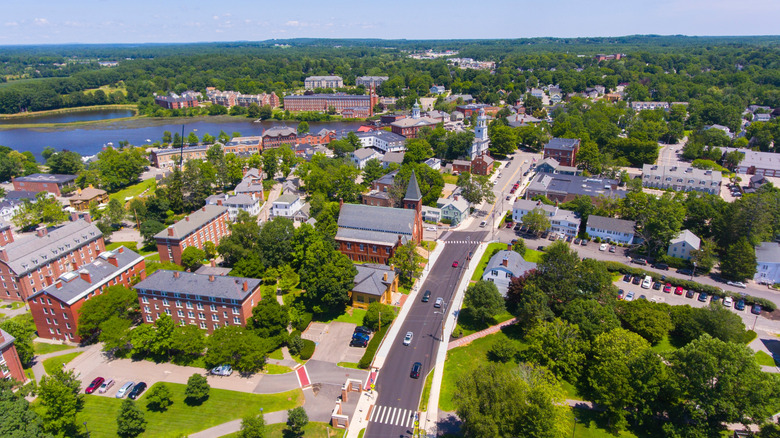
Exeter offers one of the strongest links to the Revolutionary era in all of New Hampshire. Founded in 1638 along the Squamscott River, the town later became a hotbed of political activity during the American Revolution, serving as New Hampshire's capital throughout the war. Much of that history remains visible in the town's compact downtown district. The central area is built around Water Street and the riverfront, where historic homes, small shops, and cafes occupy buildings dating back centuries. A bandstand dating back to 1916 sits near the center of town and hosts summer concerts and other events year-round, reinforcing how the area has long served as Exeter's civic gathering place.
The American Independence Center is one of downtown Exeter's most popular historic attractions, offering a compelling look at America's Revolutionary days. Over 3,000 objects from the time period are housed in the 1721 Ladd-Gilman House, including one of the rare surviving copies of the Dunlap Broadside printing of the Declaration of Independence. Nearby stands the Folsom Tavern, a pub-turned-museum which dates to 1775. Not only did George Washington visit the tavern during his 1789 tour, but the local chapter of the nation's oldest patriotic organization — the Society of the Cincinnati — was founded there in 1783.
Brick sidewalks and riverside paths make for a scenic setting, especially if you're looking to burn off some calories after a meal at Cornicello, which offers savory Italian dishes made with seasonal ingredients Wednesday through Saturday evenings. Visitors often mention the town's relaxed atmosphere and easy walkability. One Reddit commenter noted: "Exeter is a nice town with a quaint downtown. It's part of the larger seacoast area and is a great spot to stay and make day excursions."
Concord
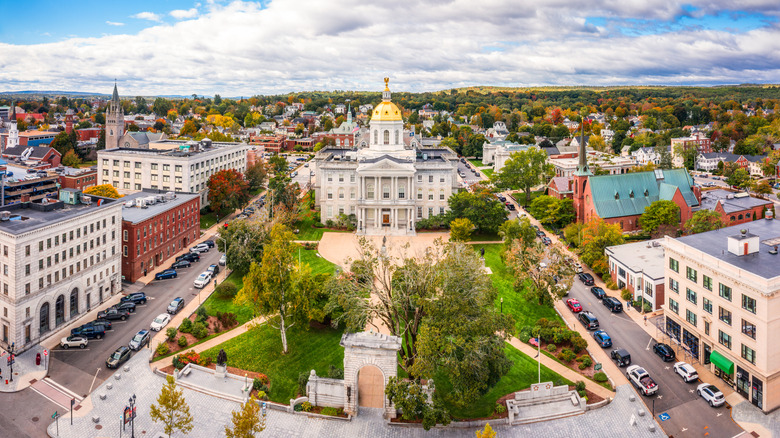
Not to be confused with Concord, Massachusetts, of "shot heard around the world" fame, is Concord, New Hampshire, which blends historic charm and nature. Settled by Europeans in the early 18th century, the town was originally known as Rumford and renamed Concord in 1765 to resolve a land dispute. Becoming the state capital in 1808, Concord evolved from a key railroad hub into a thriving commercial district punctuated by brick storefronts. Along Main Street today, you'll encounter a mixture of restored historic buildings and modern shops, public art, and verdant parks. One Reddit user remarks that downtown is "such a treat," praising the variety that goes beyond top-notch bars and restaurants like Revival Kitchen & Bar, which offers a farm-to-table menu overseen by award-winning chef Corey Fletcher.
A great way to experience this city of roughly 44,000 residents is by booking a historic walking tour that spans 2 miles and includes a number of 19th-century structures. The New Hampshire State House, opened in 1819, is the oldest state capitol in which the legislature meets in their original chambers. Catch a glimpse of statues of notable statesmen like Daniel Webster, John Stark, and Franklin Pierce, the 14th U.S. President and a New Hampshire native. Within walking distance of downtown is The Pierce Manse, the only home Pierce ever owned, which is available for tours by appointment.
Directly across from the State House is the National Register-listed Eagle Hotel, once one of the city's most famous gathering places for legislators, lobbyists, and visiting dignitaries. Though not open to the general public, its exterior is worth snapping a few photos of. Also listed on the Register is the 1911 building that houses the New Hampshire Historical Society, which preserves the city's history.
Keene
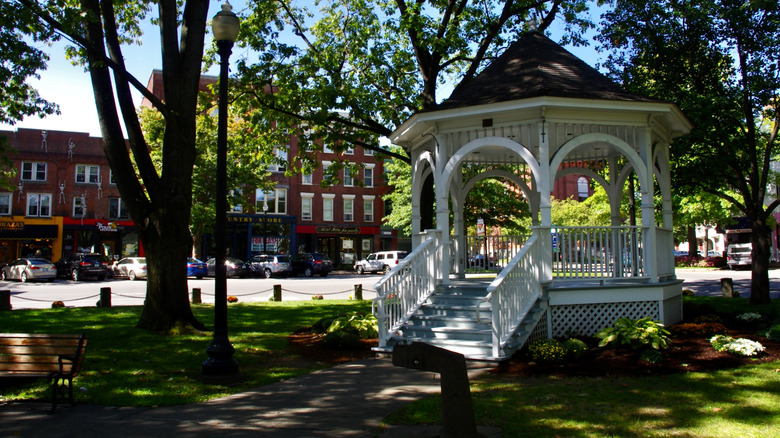
Keene, a lovely city of some 23,000 residents located along the Ashuelot River, is the birthplace of environmentalist Henry David Thoreau. Chartered in 1753, it developed during the late 18th and early 19th centuries as an agricultural and regional market town, with civic life centered around the meetinghouse and what is today Central Square, featuring a fountain, gazebo, and The Civil War Solders' Monument.
Keene's wide main street is lined with 19th‑century commercial buildings shaped by the railroad era, along with restaurants, cafés, bookstores, and galleries, creating a lively environment. Some structures date back to the 1790s and remain relatively unchanged. Nearby stands the 1762 Wyman Tavern, now maintained as a house museum representing life from roughly 1770 to 1820 and open in the summer months for reenactments and tours. Interestingly, it was from this tavern that 29 minutemen during the Revolutionary War commenced their march to Lexington and Concord (both in Massachusetts) in April of 1775 under the command of Captain Wyman, a veteran of the Indian Wars.
Catch a concert or film at the renovated Colonial Theatre, opened in 1924, or check out original furnishings and artwork at the 1806 Horatio Colony House Museum, which is described by one Google reviewer as "a lesser-known attraction, but absolutely worth the time." Visitors and residents alike on Niche.com frequently praise the city, with one commenting that "there's a lot to do, lots of opportunities for jobs, clubs, and other activities, and it's overall just a beautiful place to be," while another opines that Keene delivers "small town vibes with a cute downtown." Open Tuesday through Friday and on the first and third Saturday of the month, the Historical Society of Cheshire County features an array of exhibits across its three buildings, including the aforementioned Tavern.
Littleton
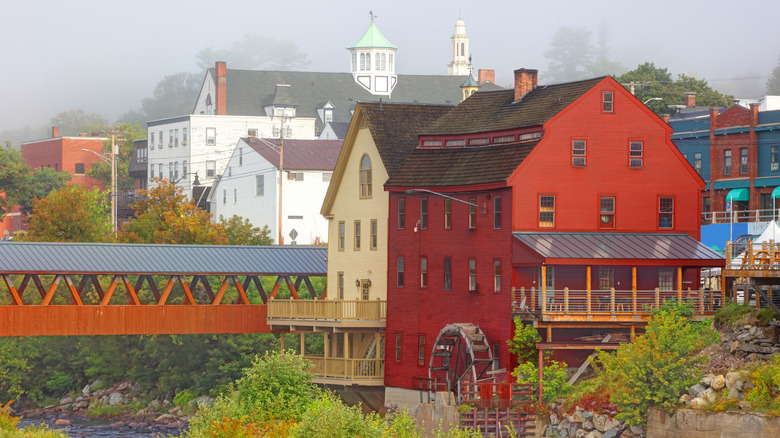
It's no surprise that Littleton — settled in the 1760s and incorporated in 1784 — was named as one of the most quintessential small towns in New England by Strategistico. Whether you want to stroll its charming Main Street, discover unique shops and bookstores, or marvel at the beautiful White Mountains, there's something for everyone in this town of a little over 4,000 residents. It was honored with the prestigious Great American Main Street Award in 2003 by the National Trust for Historic Preservation, recognizing the town's successful efforts to revitalize its historic downtown.
Developed along the Ammonoosuc River in the late 18th and 19th centuries, the town grew as a milling, manufacturing, and railroad hub, which is still visible in its brick commercial blocks, cast‑iron storefronts, and Victorian‑era streetscape along Main Street. One Reddit poster describes downtown as "adorable" thanks to its shops, restaurants, and friendly patrons. On the Littleton Walking Tour, you can explore over 20 historic sites ranging from the First Congregational Church, built in 1832, and Thayers Inn to the Littleton Public Library, the construction for which Andrew Carnegie bequeathed $15,000. You can also visit the Littleton Area Historical Society, which showcases war memorabilia, vintage toys, and much more.
Among the area's most popular dining spots are Schilling Beer Co., which offers wood-fire pizzas and specialty beers, and the Littleton Diner, which crafts scrumptious made-to-order New England meals daily. Got a sweet tooth? While in downtown Littleton, be sure to pop into Chutters. Open daily from 10 a.m. to 5 p.m., this popular candy store claims to have the longest candy counter in the world, measuring an impressive 112 feet. If you're visiting in the winter, you can pick up goods at Lahout's Ski Shop, in business since 1920.
Methodology

The downtowns featured in this article were identified through a combination of news articles, tourism websites, and historical sources. Publications highlighting charming towns and notable downtown districts in New Hampshire were reviewed to pinpoint communities consistently praised for their architecture, history, and walkability.
Historical context for each location was gathered from the websites of museums, local historical societies, and official tourism organizations, including the American Independence Museum, the Historical Society of Cheshire County, and the New Hampshire State House Visitor Center, to name a few. Visitor perspectives on the downtowns and individual points of interest were drawn from publicly available commentary on travel forums and discussion sites such as Reddit, Niche, and Google Reviews. These quotes reflect genuine impressions that the towns have made on travelers and residents alike.
This article recommends 5 downtown districts that not only have historical significance but — because of their shops, restaurants, and welcoming atmosphere — also continue to resonate with modern travelers who may be in search of new destinations to experience outside of large, urban cities. Those same factors also are part of why New Hampshire was named the best place to retire in 2025.