
Canada's Abandoned Island Is Now A Serene Nature Getaway With Scenic Hiking Trails And Beaches
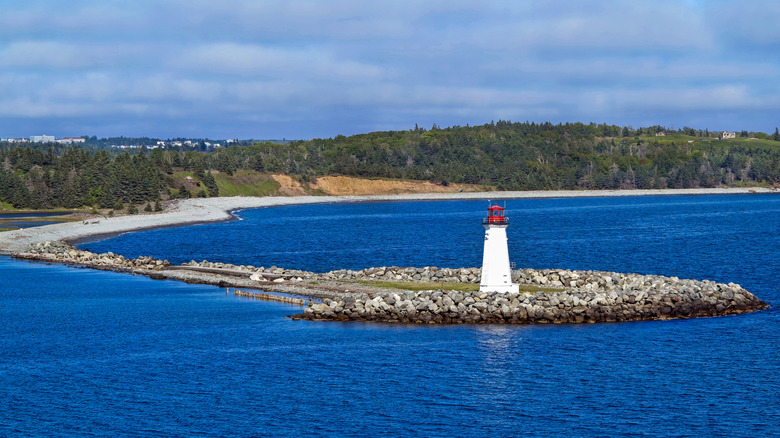
In the middle of Halifax Harbour in Nova Scotia, there's an island where some crumbling forts and abandoned homes are being reclaimed by the wilderness. On McNabs Island, your average nature walk might include coastal paths, lighthouse views, and the occasional cannon. Historically, the island was an important part of the defense system of Halifax, Canada's vibrant city with strong maritime history. Multiple military structures are scattered on its domain, left over from the 19th century and, later, the World Wars. McNabs Island has since been turned into a park and historic site, with no permanent residents left. Visitors have plenty to do on the island, though, from walking among its abandoned structures to relaxing on its beaches.
You could easily plan a full day to visit McNabs Island. With over 11 miles of hiking trails, you can reach numerous landmarks and scenic spots that you'll likely want to spend more time at: multiple forts, the Maugers Beach Lighthouse, and McNabs Pond (now an important birding site), among others. Plus, if you're looking for a quieter escape from the city, reviewers have noted that McNabs usually doesn't get crowded. "A secluded gem where you can experience the local ecology and explore several abandoned forts and lighthouses with almost no one else around," as one Google reviewer described it.
Hike the length of McNabs Island
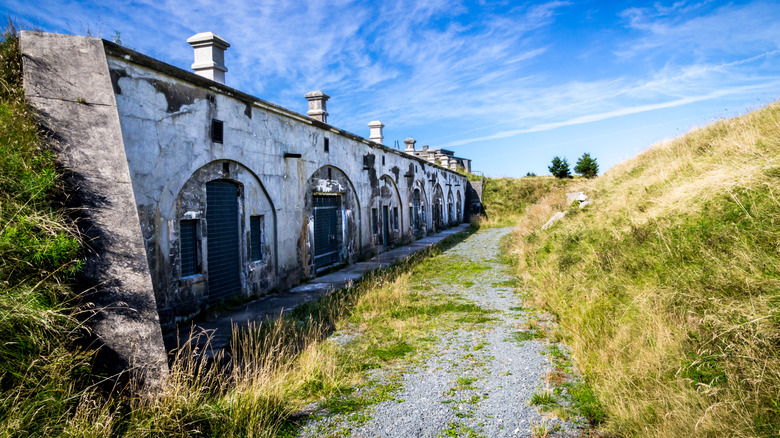
Trails cross McNabs Island from its northernmost to southernmost point. You could take in the full sweep of the island and its most significant stops on the McNabs Island Loop, totaling 5.2 miles of connected segments. At the north end, you'll see the deserted ruins of Fort Ives, the oldest surviving fort on the island, with a well-preserved battery and cannons you can wander among. Ives Point, at the north tip of the island, offers some top-notch harbor views.
Head south along the trails that trace former military roads and through Acadian forest, and you'll eventually come to the island's bottleneck, where a few interesting sites lie parallel. One is McNabs Pond, a saltwater pond cordoned off from the ocean by a causeway leading to the Maugers Beach Lighthouse. The pond is a top birdwatching spot on the island — some of the birds you might see here are plovers, crossbills, and warblers.
Flanking either side of the peninsula jutting out west from McNabs Pond are two beaches: Maugher and Hangman's Beach. Maugher Beach has some sandy stretches and dunes that were formed after the causeway was built, while Hangman's Beach has a more rocky terrain. Both beaches offer views of the Maugher Beach Lighthouse, though, unfortunately, you can't go up close to it. On the opposite shoreline from the pond, there's also a sandy beach at Wreck Cove. Notably, you can see the remains of shipwrecks here when the tide is low.
Planning your visit to McNabs Island
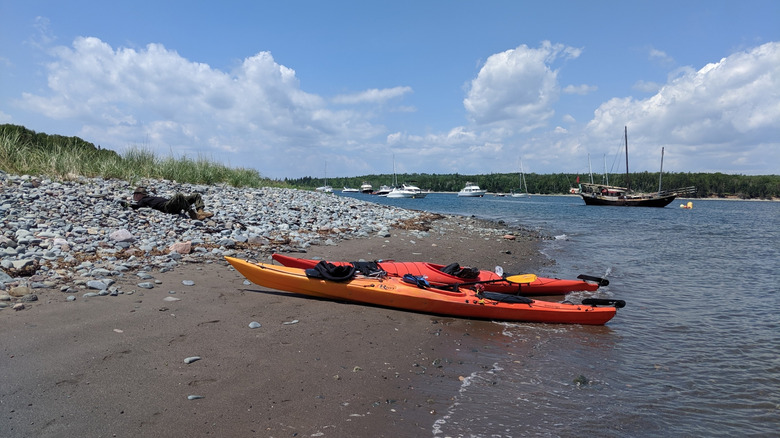
Perhaps the biggest challenge of visiting McNabs Island is that you can only get to it by boat. A few privately operated charters and shuttles that will take you to the island — one of them, Taylor Made Tours, has great reviews on Google. It departs from Fisherman's Cove, which you could reach in about a 30-minute drive from the Halifax Stanfield International Airport. Though you'll have to pay for the boat shuttle, visiting the island itself is free.
Aside from some sturdy boots for hiking and binoculars for birdwatching, you may want to bring a swimsuit for the day trip, as you can go swimming at Maugher Beach. Several past visitors have also noted that you should bring water and snacks, since there isn't anywhere on the island to get drinking water or refreshments. McNabs Island is fairly secluded, but it's not as desolate as the strange, remote Canadian gem of Sable Island. There's a picnic table at Wreck Cove, and there are some composting toilets dotted around the island, too. If you're posting up at Halifax for several nights and want to explore other Nova Scotia gems, consider driving about 45 minutes to Peggy's Cove, called the "most picturesque coastal village" in Canada.