
Forget Florida, Visit The 'World's Friendliest Island' With Dreamy Beaches And No Passport Requirements
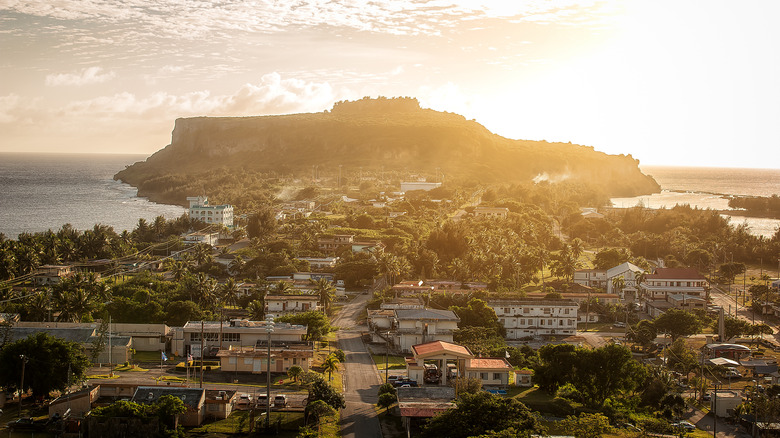
Cliffs and palm trees, beaches and seaside villages — this is the kind of tropical island you see in wall calendars. The lush vistas look like the Caribbean, or maybe the Mediterranean. Yet the island of Rota rises out of the Pacific Ocean, about 1,600 miles east of the Philippines. This place, which refers to itself as the "world's friendliest island," is about as remote as it gets, yet it's part of the Commonwealth of the Northern Mariana Islands (CNMI), a self-governing U.S. commonwealth. What does this mean for travelers? The local currency is the U.S. dollar, English is widely spoken, and U.S. citizens can visit Rota without showing a passport.
The CNMI has a political status similar to that of Puerto Rico and Guam — islands that aren't among the 50 states but aren't separate countries. The capital of the CNMI is Saipan, the most remote destination under U.S. jurisdiction and a dreamy tropical island you've probably never heard of. But for travelers who are tired of predictable destinations like Florida, Rota is even farther afield; you'll most likely fly first to Saipan, then take a small plane with Star Marianas Air to the island's small airport.
Rota is too tiny to appear on many world maps, but it does have some mass to it. How much land is 33 square miles? If you drive as far as the roads go — from the western end of the island to the eastern edge — you'll travel about 13 miles, a trip that takes a good half-hour. Rota is quiet and bite-sized; only around 3,500 people live here, and most of them reside in one of two villages, Songsong and Sinapalo (or Sinapalu). This intimacy explains why it gave itself the nickname, "the world's friendliest island."
Rota's background and things to do
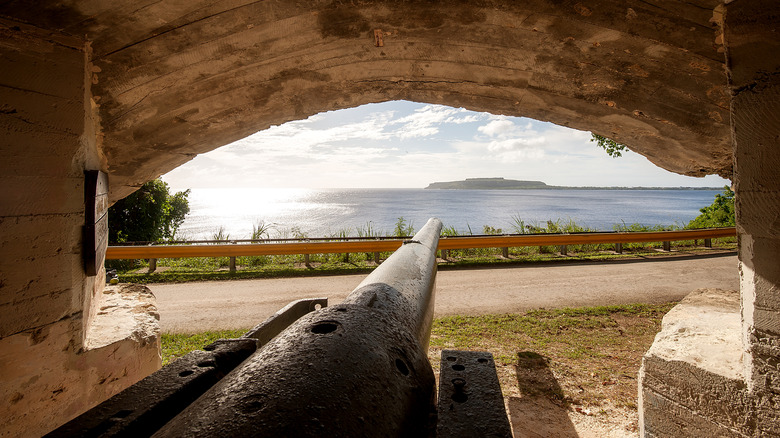
Human settlement on Rota likely dates back more than 3,000 years, when the Chamorro people first came to the Northern Mariana Islands. Today, the islands are considered part of Micronesia, a region that also includes Guam. Spain colonized Rota in 1668. Japan took control in 1914 and used it as a tourist destination until World War II. Since then, Rota and the other Northern Mariana Islands have been governed under the umbrella of the United States.
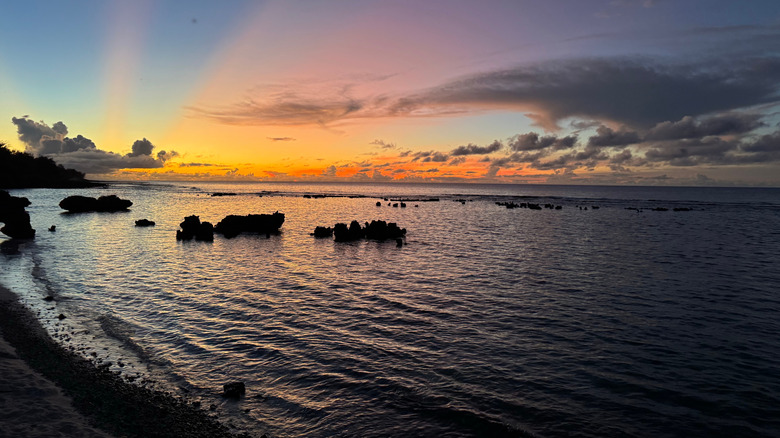
Remnants of that history remain. You can still visit a Japanese fortification; an antique canon is one of the most photographed landmarks on the island, along with a long-dormant train. You can also explore Tonga Cave, a voluminous limestone alcove with a jagged ceiling. The harder-to-find Chugai Cave bears several petroglyphs of local wildlife. Then there are the 38 miles of coast: If Americans have heard of the Marianas, it's likely because this idyllic island archipelago, a far-flung U.S. territory, has outrageously gorgeous beaches. For meals, Rota is known for its seafood, East Asian flourishes, and coconut crab. Most restaurants are in downtown Songsong.
About 250,000 visitors set foot on Rotan soil in all of 2025, compared with Guam's 729,000. The island only has a handful of hotels, including Hotel Valentino. As you can probably tell, this is not a destination of endless all-inclusive resorts and teeming eco-tourism — and that's exactly what discerning travelers may love about it. You can explore the many beaches and dense tracts of rainforest on your own without waiting in lines or fending off hawkers.
Getting to Rota and where to stay
Arranging your passage to Rota is a serious undertaking: A round-trip flight from Los Angeles to Saipan can take 18 to 24 hours and often costs more than $2,000, followed by an additional 40-minute flight from Saipan to Rota International Airport. There's no bridge, tunnel, or ferry between the two islands (which stand nearly 73 miles from each other), so flying is the primary option. If you do decide to settle down here, you likely won't receive many visitors from the mainland.
U.S. citizens do not need to show their passports and can stay as long as they like (or afford); they can even get a job if the opportunity arises. While Rota is part of the United States, it lies west of the International Date Line, putting it about 14 hours ahead of New York City, depending on daylight saving time. Rota offers several advantages for U.S. citizens, and it's an easy island to fall in love with, but it's not for everyone. If you're looking for all these benefits but want somewhere a little easier (and more accessible), Guam is a lush island "where America's day begins," often less crowded and more affordable than Hawaii.