
America's Best City Park In 2026 Is A St. Louis Gem (And It's Even Bigger Than NYC's Central Park)
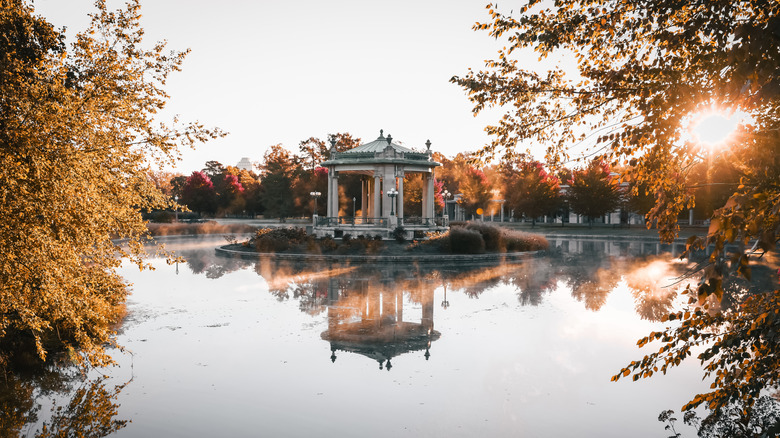
After hopping around restaurants, transit, and crowded streets, a city park gives you some room to breathe and get a change of scenery from the urban grayscale. The best city parks offer lots to do and pretty landscapes without needing to spend. That's what landed St. Louis's Forest Park the number one spot for USA Today's 2026 poll of the best city parks nationwide. It helps, too, that the park is enormous. To be precise, it covers 1,300 acres, almost 500 acres larger than Central Park in NYC.
Yet, even with all of that space, Forest Park makes use of its grounds well. The whole park is blanketed in trails, lakes, athletic fields, and cultural institutions. Its variety of landscapes alone is impressive, with old-growth forests, wetlands, prairies, and savannas, all part of the park's conservation efforts, which won it a 2025 Landmark Award from the American Society of Landscape Architects. Art lovers can stop in the free-admission Saint Louis Art Museum located within the park, or tour the architectural World's Fair Pavilion that was added in 1909 after the World's Fair. Families with children inclined towards the natural world might spend an afternoon in the kid-friendly Nature Playscape.
Forest Park is full of trails and nature
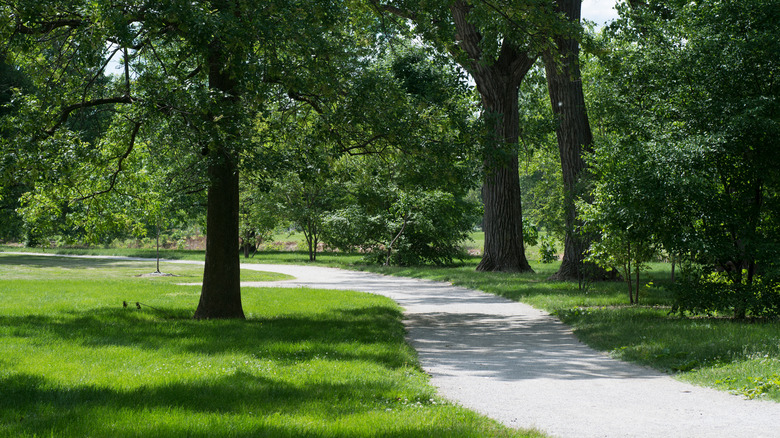
Forest Park is a massive green space neighboring St. Louis' bustling "second downtown" of Clayton, and it's easy to make a day of exploring it on foot or bicycle. The 6-mile Dual Recreational Pathway that follows the circumference of the park is one of its most popular trails. Parallel hard and soft lanes of the trail allow for hikers, cyclists, and skaters to enjoy the route alike. But there are plenty of more hidden, secluded areas of the park that are worth walking around to fully immerse yourself in a nature escape. At the southwest corner is the Kennedy Forest, with 3.5 miles of trails to wander, typically devoid of crowds. Visitors have even spotted deer here, and one Google reviewer noted, "The wooded areas are full of native wildflowers in spring, and the savanna areas are full of native flowers in summer."
If you're drawn to the water, check out Forest Park's Fish Hatchery, a complex of several ponds that were once used for fish farming. These days, its main function is scenic — it sometimes hosts fishing-related programming, but it's an especially relaxed spot to unwind and spot wildlife. It's a hotspot for wading birds like herons, sandpipers, and egrets. Another water feature worthy of a stop is the Emerson Grand Basin, a remnant of the World's Fair marked by fountains and landscaping. If you plan to visit the Saint Louis Art Museum, it's essentially the museum's front porch.
What to know about visiting Forest Park
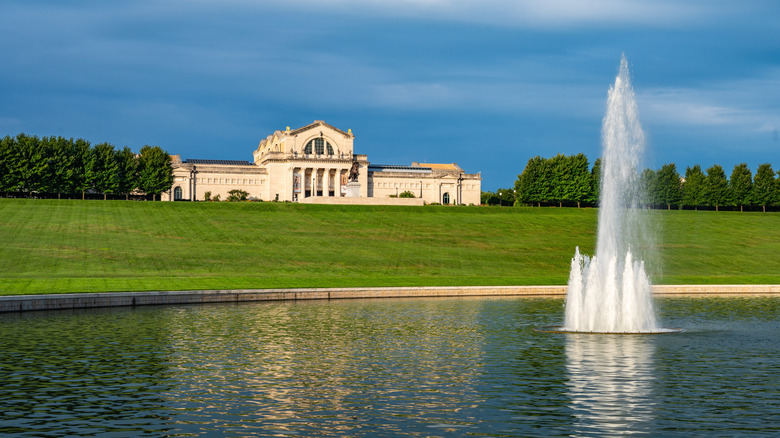
While it might be a given that Forest Park's natural side is free, a great perk for budget-conscious travelers is that it also contains numerous free cultural attractions. There's the Saint Louis Art Museum, housing everything from Ancient Egyptian artifacts to several Van Gogh paintings. The Saint Louis Zoo, also within the park, is likewise free to enter. Meanwhile, The Muny, the award-winning outdoor theater hosting Broadway talent, offers around 1,500 free seats every night (you'll have to get there early to queue for a ticket, though).
If you want to make multiple stops to Forest Park's attractions, plan for some long walks to get from one to the next — from the art museum to the hatchery, for example, it's over a 30-minute walk. Or, you could visit by car, since there are roads and parking lots that connect throughout the park. From Downtown St. Louis, it's about a 10-minute drive to the park, or 20 minutes taking the Red or Blue Lines of the light rail. If you're looking for a more low-key area around St. Louis to visit, you could check out the cozy streets and small-town charm of its Maplewood suburb south of Forest Park.