
Florida's Tiny Panhandle City Is Famous For Unique Honey And Eerie Dead Lakes
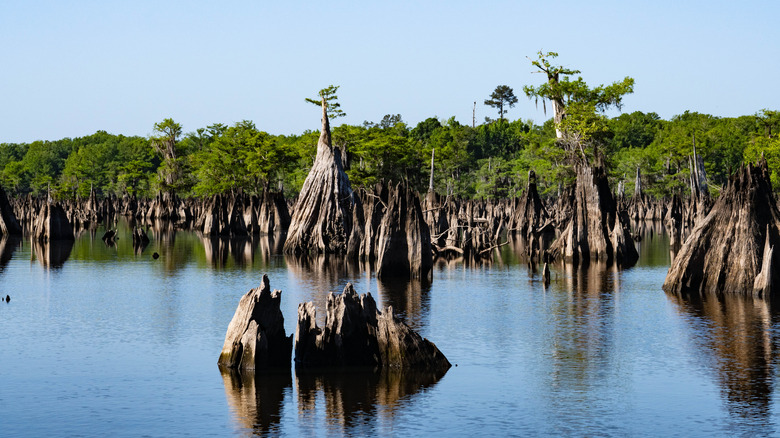
One of the common mistakes people make on their Florida vacation is not setting aside time to visit the natural, rural areas — a faux pas I was determined to avoid on my trip to the Panhandle. While I had plenty of beach time, little did I know that trading the blue waters of the Gulf for the swampy waters of the Dead Lakes would be one of my favorite parts of the trip. It was such a drastic change from the coastal vibes, but my side quest to the tiny town of Wewahitchka was a sweet add-on — literally. Besides the eerie yet striking lakes, this spot is famous for one other thing: tupelo honey.
Tupelo honey is made from nectar that comes from white tupelo gum trees. While the trees can't be found everywhere, they are plentiful in the Dead Lakes area. I was lucky enough to go out on the water at just the right time in mid-April to see them in bloom — and taste the local delicacy. The honey isn't new to Wewahitchka (or Wewa as it's called by locals). It's a part of the area's history and heritage, even making the city famous in 1997 when the movie "Ulee's Gold" was released. In the film, Peter Fonda and Jessica Biel help tell the story surrounding the life of a beekeeper in Wewa.
I visited this area as a guest of the Gulf County Tourist Development Council. While they assumed the cost of my trip, I loved the honey (and beeswax candles) so much that I personally spent a fair bit of money there so I could stock up and bring some home. However, free tastings are available for everyone who visits Smiley Honey, a local, family-owned store that has been around since 1989.
Tasting the rare Tupelo honey
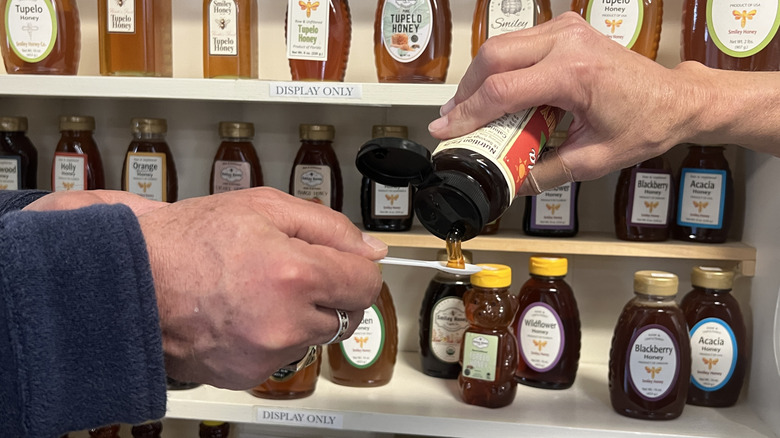
I am a big fan of honey, but had never tried the tupelo variety until my trip to Wewahitchka, as it's typically harder to find. It's rarer than other types because, even though tupelo trees bloom annually, the season only lasts for two to three weeks. Local beekeepers make as much honey as they can during that time, but once it's gone, it's gone.
During my trip, our taste buds led us to Smiley Honey, and upon arrival, we received samples. I was surprised to discover how smooth the treat was: it's sweet but not overpowering. There were several other varieties of honey to try alongside it, even unique flavors such as coffee blossom and lychee. I liked them all, but personally, tupelo honey was my favorite (as shown by my shopping bag). I really enjoyed the hot honey as well. There were other beeswax products on-site, including candles, lotion, and soap.
My visit was a tasty yet educational experience. We were able to see the honey being bottled, and our host shared what made it special. She explained that tupelo honey is unique in its makeup, which gives it a "higher antioxidant count and lower glycemic index." Smiley Honey's website even shows that it may be a good alternative sweetener for people living with diabetes, too. The tiny town also hosts a free event to celebrate its sweet claim to fame. The Tupelo Honey Festival happens annually on the third Saturday of May. There's live entertainment, artisans, and, of course, more honey tastings.
Boating on the Dead Lakes in search of the Tupelo trees
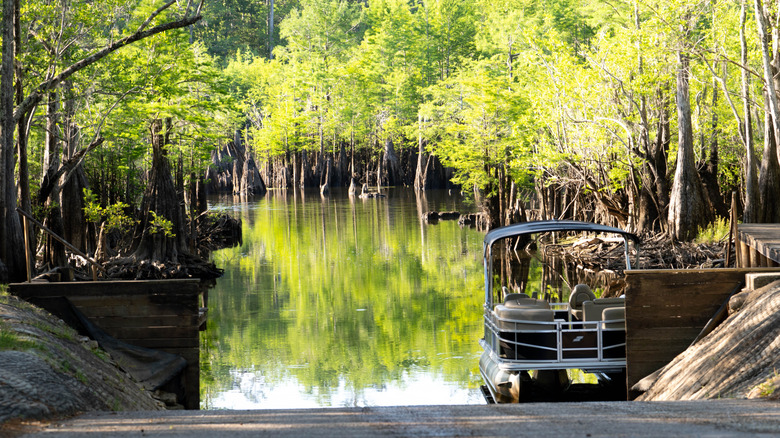
Wewa owes its honey fame to the Dead Lakes, as tupelo trees thrive in the swampy water. Local beekeepers keep hives in strategic locations so the bees can collect nectar from the tupelo blossoms. I was intrigued by the thought of having some on-the-water time to see the origin of this rare honey up close. Plus, the creepy name alone made me curious.
Captain Matt from Off the Map Expeditions took us out for a pontoon tour (the company also offers kayaking excursions). The water of the Dead Lakes is dark and still, which does make it a little eerie. But the name is misleading — I was shocked at how much life I actually saw out there. I spotted so many birds, and it's known to be a good fishing spot, too. Although this body of water didn't rank as one of the five most alligator-filled destinations in Florida, these toothy creatures still linger there. Tupelo trees bloomed alongside the cypress, and the bees loved it. You'll see thousands of dead, archaic cypress stumps — hence the name.
If you venture out on your own, there's a boat ramp at Dead Lakes Park to launch your vessel from, but be mindful of the many cypress stumps in the water. Visitors coming with a camper can stay at the Dead Lakes RV Campground, but those looking for a traditional hotel room or a vacation rental should opt for Port St. Joe, less than half an hour away. It's another secret city on Florida's "Forgotten Coast," and offers a walkable downtown and sugar-sand beaches.