
Wyoming's Largest Artificial Lake Is A Jaw-Dropping Destination With World-Class Fishing And Colorful Canyon Views
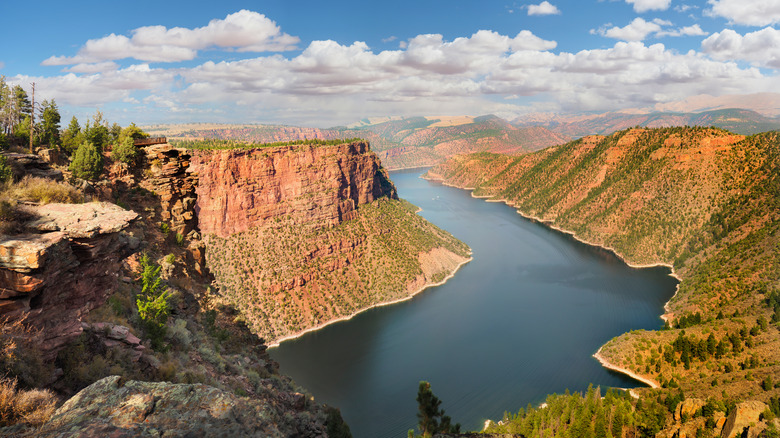
Glistening water. Bronzed cliffs. Stubbled pine trees. If you took a boat into the waters of Flaming Gorge Reservoir and dropped anchor, this is what you'd likely see all around. Most of this artificial body of water stands in Wyoming, and the striated rock faces might remind you of the state's haunting Dubois Badlands. However, the 91-mile reservoir also dips into Utah, and the primal terrain also displays some of the Beehive State's most unique rock formations.
On a map, Flaming Gorge might look intimidating. There aren't any major cities close by, and the adjacent towns are small and spread out. A visit to Flaming Gorge does require some thoughtful planning, due to the remoteness and extreme climate, but the rewards can be manifold: swimming, camping, hiking, fishing, and almost any kind of boating are all encouraged. A day pass is only $5 per adult (at the time of writing), and in the busy season, you'll probably find yourself in good company, as millions of people come here each year.
Flaming Gorge's creation (and recreation)
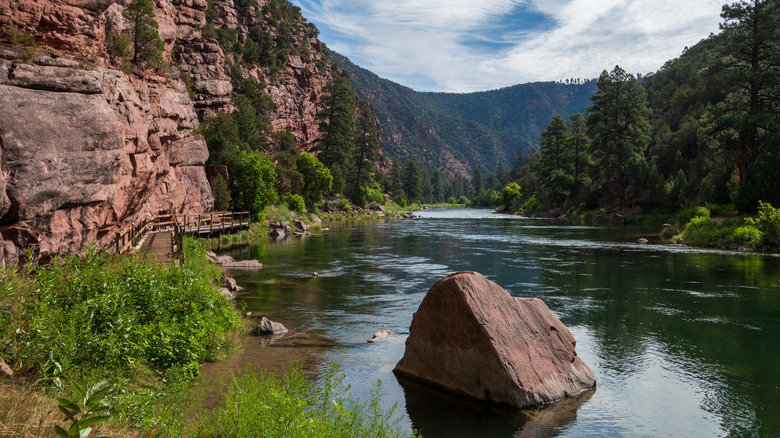
Before the lake existed, the Green River flowed through this valley. Engineers wanted to store drinking water and harness hydroelectric power, so they built the Flaming Gorge Dam, a 502-foot-tall concrete wall that held back the river's flow. The project was completed in 1964, resulting in the Flaming Gorge Reservoir, and the recreational area — which covers 207,000 acres of public land and water — was established 4 years later. The structure is located near the town of Dutch John, Utah (population 138), and although access to the dam itself is restricted, you can catch impressive views from the waters' banks. There's also a visitor center with a scale model and an informational video about its history and construction.
Most visitors, of course, just want to play in the water. There are several boat launches around Dutch John that allow kayakers, rafters, and stand-up paddleboarders to make their way across the still waters. The relatively narrow channels will make you feel like you're making progress. Motorboats are also permitted in the reservoir, and waterskiing is a popular local activity. Miles of rocky surfaces and sheer drops also make for fantastic cliff-jumping.
Then there's the fishing. Anglers come here from around the world to hook the Flaming Gorge's trout, including tiger, rainbow, brown, and more. The varied waters lend themselves to a range of styles, from long-lining to fly fishing. The regulations regarding fishing licenses vary depending on your age and which of the two states you do it in, so make sure to read up on the rules before casting your line. Like Keyhole State Park, this Wyoming recreation area is an under-the-radar gem for kayaking, fishing, and camping.
Getting to Flaming Gorge Reservoir and where to stay
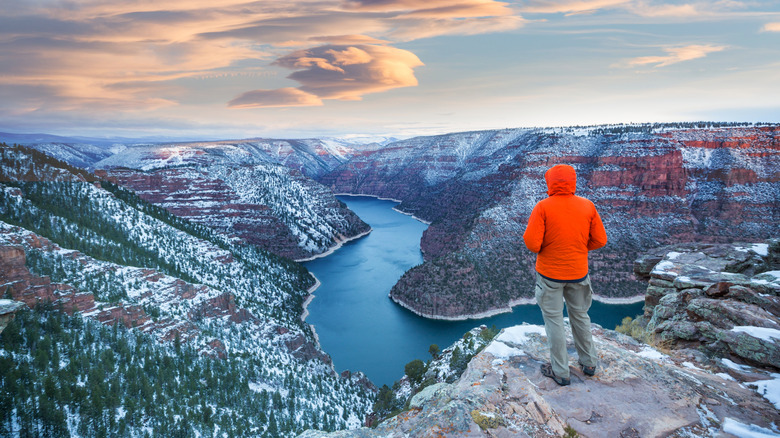
If you're flying into the region, the closest major airport is Salt Lake City International, which is just short of three hours away by car. Driving to Flaming Gorge is the only realistic option, although you could theoretically take a 3.5-hour Greyhound ride to Rocky Springs, Wyoming, which would put you within taxi-ride distance (18 miles) of Green River. Of course, driving will give you the freedom to transport camping gear and visit one of the many spectacular overlooks. If you're cruising through the region in search of epic views, also consider one of Wyoming's prettiest road trips leading to canyons, free hot springs, and a "swinging bridge."
There are at least two established campgrounds in close vicinity, both operated by the U.S. Forest Service. Fire Hole Campground is located in the reservoir's northern area; services are pretty basic, but the picnic tables at each site are thoughtfully covered by open-air shelters to protect campers from the sun. Lucerne Campground lies just south of the state border. While it may not be obvious on the sage-speckled flats, these campsites are about 6,000 feet above sea level. They also have electrical hookups and designated spots for campfires. The recreation area is open year-round, but note that this is a four-season climate, with hot summers and cold winters.
This region isn't well populated, but you'll find a good number of hotels clustered in each of the nearby towns. On the Wyoming side, Green River and Rocky Springs have lots of accommodations, most costing a little over $100 per night (at the time of writing). Just over the border in Utah, Manila offers several hotels as well. If you're making your way west, Flaming Gorge is a great place to get the best of both states, much like Evanston, the Wyoming mountain town near Salt Lake City known as the "Gateway to the American West."