
Canada's Small Town In Newfoundland Is A Walkable Coastal Escape With Historic Charm And Whale Watching
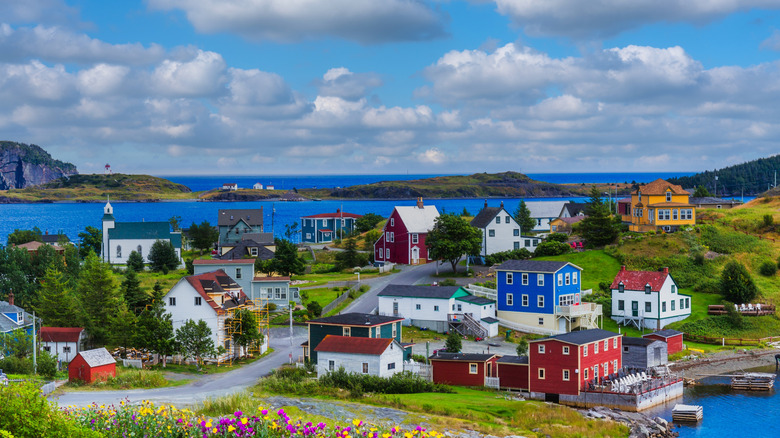
As one of Canada's least populated regions, Newfoundland is often associated with unspoiled patches of rugged Atlantic coast and unique wildlife encounters. Think majestic humpback whales, puffins, and orcas. Small fishing communities, with their wind-swept coastal huts, saltbox houses, and fishing piers, make the easternmost provinces of Canada unique. A standout town among those communities is the historic town of Trinity, one of the most scenic in the entire province.
Tucked in Newfoundland's homonymous Trinity Bay, Trinity is home to a little more than a thousand people. Yet, as one of Newfoundland's oldest settlements, it carries a long history on its shoulders — recognizable in the area's rich geological heritage dating back hundreds of millions of years and visible in its quintessential coastal features, including lighthouses, colonial trade homes, and even its own defense fort. Trinity is small but densely packed with attractions; it's easy to enjoy the town on foot, and walking around gives visitors a chance to follow the community's unique and nostalgic calligraphy street signage.
Thanks to its position on the Bonavista Peninsula, Trinity is also a prime place to spot Atlantic ocean wildlife, with dozens of whale and dolphin species transiting through the area between May and September. There are several ways to witness the spectacular phenomenon of whales feeding and playing off the coast of Trinity — whether you would prefer to observe the pods splashing in the waves from the safety of a coastal trail on land or, instead, want a more intimate and adrenaline-filled experience by kayak.
Discover Trinity's mesmerizing historic heritage on foot
With its patchwork of maritime old-world and colonial influences coming together, Newfoundland's capital is the Canadian destination to visit for European culture and experiences, according to Samantha Brown. Travelers can see a similar eclecticism reflected in Trinity's architecture, with its colorful, Scandinavian-style, clapboard houses painted in yellow, red, and blue. Among them are several historically significant examples dotting the main thoroughfare, Church Road. Start from the Trinity Museum, home to about 2,000 local artifacts, before heading to Hiscock House, where you can learn about provincial life in the 19th and 20th centuries.
Just a three-minutes' walk away is the Lester-Garland House, a sprawling reconstructed Georgian residence ideal for both architecture aficionados, as well as for visitors interested in the archeological displays and period reconstructions hosted inside. Heading 10 minutes south of Church Road, you will find the 1800s Sexton-Wilansky House – an exemplary saltbox house granted Registered Heritage Structure status in 2021. If you don't want to explore the area on your own, you can follow expert guide Kevin Toope, a descendant of English colonists and native to the area, in a two-hour historical walking tour of Trinity, which is active six days a week.
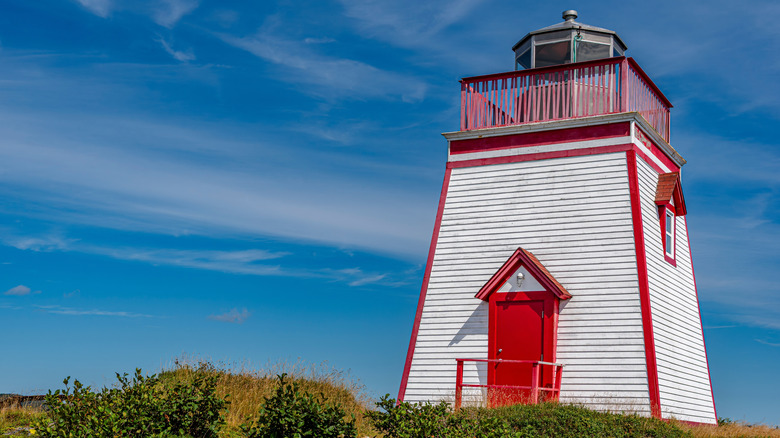
The town of Trinity is roughly three hours away by car from St. John's International Airport (YYT) by car. While the majority of Trinity's highlights are within walking distance, it is worth straying off path to explore the Bight, as the locals refer to the 11 communities anchored on Trinity Bay. About 6 miles away by car is Fort Point, a fortified former military structure also known as "Admiral's Point". The original site was destroyed by the French in 1762, so the structure visitors can see today is a reconstruction from 1812. Its recognizable red and white lighthouse was added much later.
Trinity is an ideal spot for whale watching
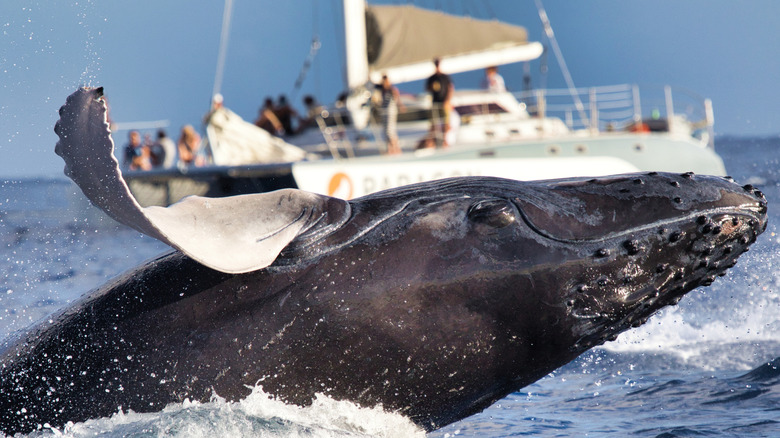
Canada is among the 10 best destinations for whale watching in the world, thanks to its position in the Northern hemisphere and access to three oceans. In particular, the Eastern coast of the country, encompassing the provinces of Newfoundland and Labrador, is a hotspot of cetacean migration, with about 13 species gathering around the Gulf of St. Lawrence and Bonaventure Island alone. Trinity is one of the best places to spot whales in the region, partly because it is a fertile feeding ground for humpback and other whale species. In fact, aside from krill and plankton, these large mammals feed on capelin fish, which is abundant in the shallow waters of Newfoundland and, as a result, attracts large groups of cetaceans close to its shores.
Aside from humpbacks, visitors can spot minke, fin, and sperm whales, as well as three dolphin species: common, Atlantic white sided, and white beaked dolphin. There are a handful of companies offering whale watching boat tours; Trinity Eco Tours take passengers to see whales feed and frolic aboard an inflatable Zodiac boat, whereas Sea of Whales Adventures offers small group tours that also visit the rock formations of the UNESCO Global Geopark of the Bonavista Peninsula. If visiting during early summer, look out for craggy icebergs peeking from the water's surface — another one of Trinity's popular natural attractions. However, you do not need to take to the waters to get a chance at whale or dolphin spotting. As the country with the longest coastline in the world, Canada has its fair share of shoreline trails, and Trinity is among the communities where you can still get close to these majestic mammals by following one of its coastal paths.