
California's Once-Thriving Lake Has Since Dried Up And Become A Wildlife Site
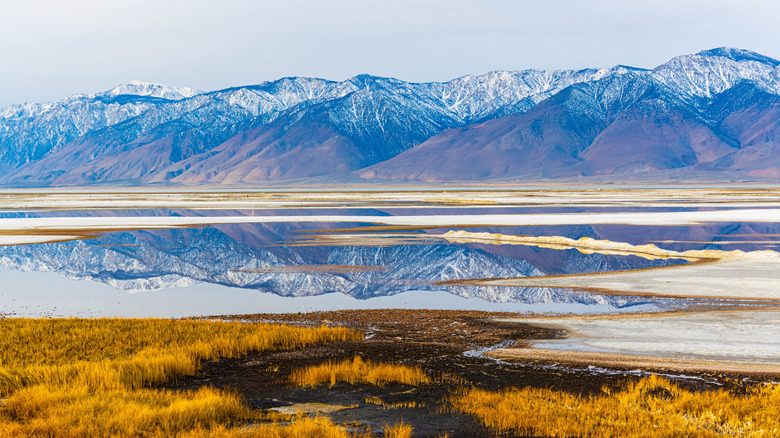
Los Angeles is known as the "Entertainment Capital of the World," thanks to the movie-making magic churned out by Hollywood. But, the City of Angels also has a surprising dark side — in fact, its villainous pursuit for survival amid California's historic water wars was the basis for the fictionalized account in the 1974 movie, "Chinatown." You may not realize that a once parched Los Angeles diverted water from the windswept Owens Valley in eastern California, drying up its lake and irrigation canals and leaving the area in the dust. The decades-long battle to tamp down the resulting air pollution (with the introduction of shallow flooding, gravel, and brine) has now turned it into a resting ground for wildlife and a must-visit destination for birdwatchers.
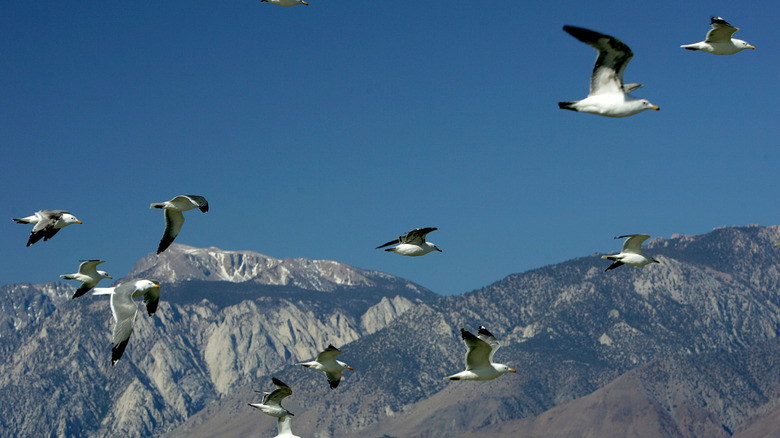
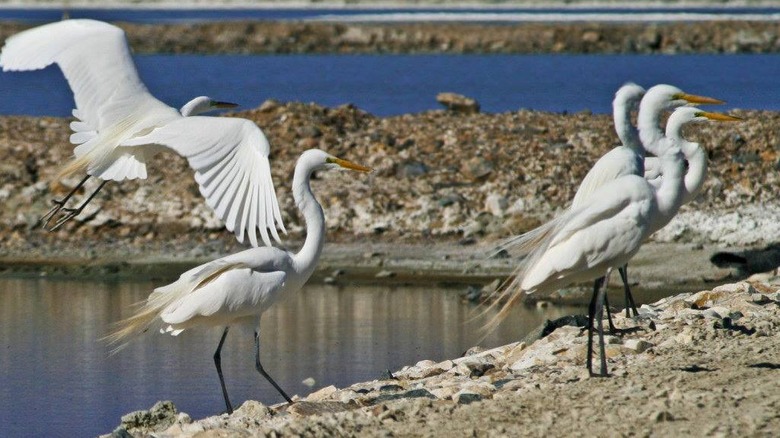
With more than 100,000 shorebirds stopping over Owens Lake annually as they migrate on the inland Pacific Flyway, per Audubon Magazine, you're bound to see creatures taking flight no matter the season, including peregrine falcons, horned larks, and ruddy ducks. Look up, and you may see the tiny, round bodies and pointed wings of least sandpipers in the spring before they travel north to breed in Alaska or Canada. In autumn, you may also spot the green heads of male Northern shovelers paddling along for food, having arrived from their northern breeding grounds. Indeed, these waterfowl and migratory birds don't go hungry, fattening up on alkali flies and brine shrimp.
You can access these salt flats by dirt roads, about 5 miles south of Lone Pine, one of California's top five most affordable mountain getaways. You'll know where to go, spotting flocks of fans donning bucket hats and binoculars as they attempt to capture the moment. You can also buy tickets — which often sell out — for the annual Owens Lake Bird Festival.
The demise and resurrection of Owens Lake in California
So, how did all that water really get piped to Los Angeles and eventually recede? The story goes that Los Angeles, at the turn of the 20th century, was in dire need of water to support its rapidly growing population. So a group of engineers set out to find a new water source and divert it for their purposes. The city secured land and water rights to Owens Lake at the base of the Eastern Sierra Mountains and built an aqueduct to import the water from the lake and its tributaries. The water flowed 233 miles over foothills, through mountains, and across the Mojave Desert into L.A., now accounting for nearly one-third of the city's water needs, per Heal The Bay. These days, L.A. taps the valley's aquifers, the Owens River, and runoff from the Eastern Sierras to keep pumping water.
What was then hailed as an engineering feat turned into a nightmare for the residents of the Owens Valley, depleting their water supplies and farming communities and creating a dust bowl of sorts. The air quality plummeted in the area, and the dry lakebed was once considered the largest source of dust emissions in North America. Years of lawsuits finally forced the Los Angeles Department of Water and Power to apply mitigation measures, such as sprinklers for irrigation and vegetation, beginning in the early 2000s. More than a century later, the pollution has ebbed by 99%, and some life has returned to this once flourishing ecosystem.
Planning your trip to Owens Lake
Visitors who make the trek to this community may want to time their getaway with the three-day bird festival, which attracts about 100 to 150 registrants a year. It offers dozens of tours covering birding on and off the lake as well as outings on photography, advocacy, botany, geology, and mining history. Led by avid birders, environmental scientists, and rangers, your itinerary can include a visit to a nearby wetland where 144 avian species have been spotted or an ecology walk to learn about the stunning red rock formations of the Alabama Hills. This family-friendly event also has an introductory tour for kids ages 6 to 12 on how to identify common birds using field marks and behavior. In between the educational talks, these fans of ornithology let loose with a happy hour, catered dinner, and silent auction.
With a reputation as an old-school, American West haven, known for many movie shoots in its sparse landscape, Lone Pine lodging isn't luxe, but comfortable and close to the lake. The Best Western Frontier Motel is a Tripadvisor Travelers' Choice Award winner with spacious rooms and free breakfast. One Tripadvisor reviewer appreciated the "good Internet connectivity" that was "fast enough for a Zoom meeting," especially in this remote area. Built in the 1920s, family-owned Dow Villa Motel offers historic and modern rooms along with a pool and spa.
Campgrounds are also in abundance here. You can find about 200 tree-covered spots year-round at nearby Diaz Lake or sites by a flowing creek at an elevation of about 6,000 feet at Lone Pine Campground from May through October. Getting to this lakebed is an easy, flat drive. Owens Lake is about four hours north of Los Angeles off U.S. Route 395, a spectacular road trip highway through mountain and desert scenery.