
What Really Happens To The Rides After An Amusement Park Closes Forever?
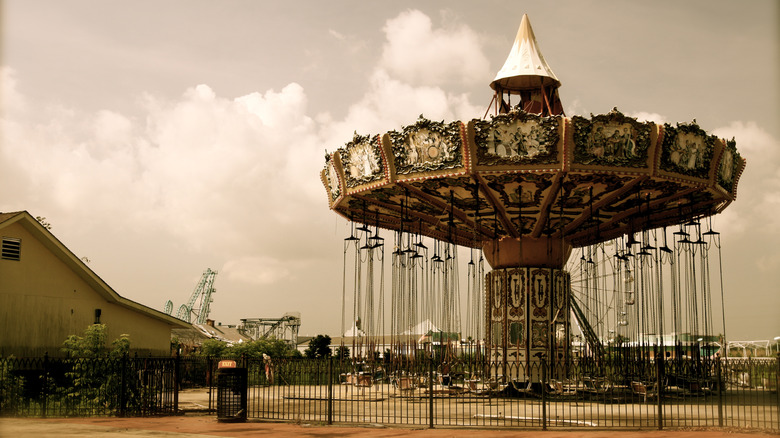
After a beloved amusement park closes permanently, signs are taken down, the cotton candy machines are boxed up, and even entire roller coasters are dismantled — their tracks and cars stacked like giant Tetris pieces into shipping containers and sent off to... where, exactly? Where do the most popular rides go after their former home is sold and transformed into an office park or suburban cul-de-sac?
As it turns out, if you've got an old roller coaster you're looking to sell, there are several websites that can help. In fact, an entire marketplace exists for decommissioned amusement park rides and equipment, including a network of domestic and international brokers that aid in the buying and selling of rides to theme parks and even private collectors. But what happens if a ride is too old or damaged to sell? And what's the going rate for a roller coaster these days anyway? The answers to those questions and more, below.
To sell or to scrap? And other questions theme parks have to ponder
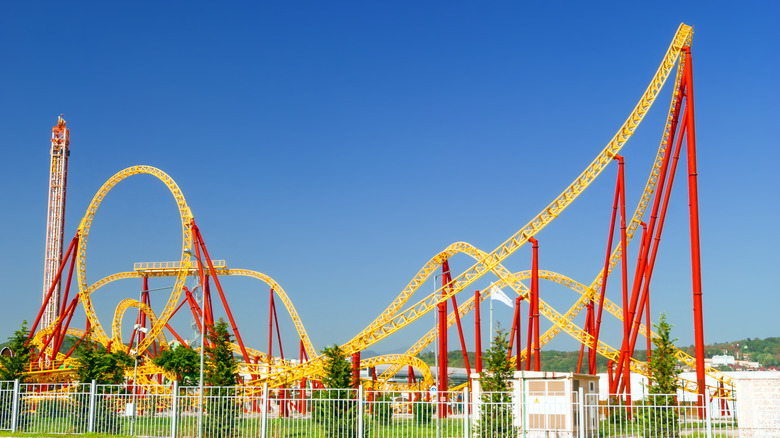
When an amusement park closes for good — like shuttered theme parks that thrill-seekers still get nostalgic for – the park's rides often face three distinct fates: They can either be sold, dismantled for scrap or, in some rare cases, abandoned entirely. If the rides are relatively new and in great working condition, they are often sold. But transporting a ride can be expensive, and older or repair-heavy attractions may be cost-prohibitive, so other parks may decide it's not worth the cost and hassle. In those instances, the rides might be sold for scrap instead.
Six Flags often repurposes its rides rather than scrapping them, a strategy that makes sense for the company's bottom line. Why buy a new ride when you can simply adopt a used one from another park that no longer needs it? Roller coasters in particular aren't cheap, especially when purchased new. A new roller coaster, for example, can cost millions of dollars, whereas a used coaster costs at least 80% less, according to the Los Angeles Times. The Shockwave roller coaster at Six Flags Great America operated throughout the 1990s before it was dismantled and scrapped in the early 2000s. Another example, Road Runner Express, operated at Six Flags New Orleans until Hurricane Katrina forced the park's closure in 2005. The ride was later relocated to Six Flags Magic Mountain, where it continues to operate.
The Walt Disney Company has also been in the repurposing game, moving its Carousel of Progress from Disneyland to Walt Disney World, reusing parade floats, and repurposing ride components and even entire theaters. Still, it's rare for major operators like Disneyland or Universal Studios to purchase rides from other parks; they typically build new attractions on-site. Buying used rides is more common among smaller or regional parks like Knott's Berry Farm or Six Flags.
Why some amusement park rides become abandoned
If your idea of the perfect backyard setup includes a roller coaster, you're not entirely out of luck. Amusement park rides can sometimes be sold to individuals — though securing permits and insurance to operate them can be tricky. At the time of writing, for example, you can purchase Speed The Ride, a roller coaster that once ran outside the Sahara Hotel and Casino in Las Vegas. Amusement park ride prices can range from a few thousand dollars for a small kiddie ride to anywhere between $50,000 and several million dollars for a small roller coaster. A carousel might set you back about $50,000.
Some enthusiasts collect amusement park memorabilia — signage, decorations, and even rides — out of nostalgia or a desire to preserve history. Organizations like the Amusement Preservation Museum focus on saving artifacts from defunct parks, maintaining archives that include ride vehicles — in this case, the museum's keeper is in possession of around 60 rides — and other pieces of amusement history. If you don't have the funds — or backyard space — to buy your own roller coaster, you can always glimpse an old favorite at one of these creepy abandoned amusement parks or bask in the nostalgia at one of these once-thriving amusement parks that are now left deserted.
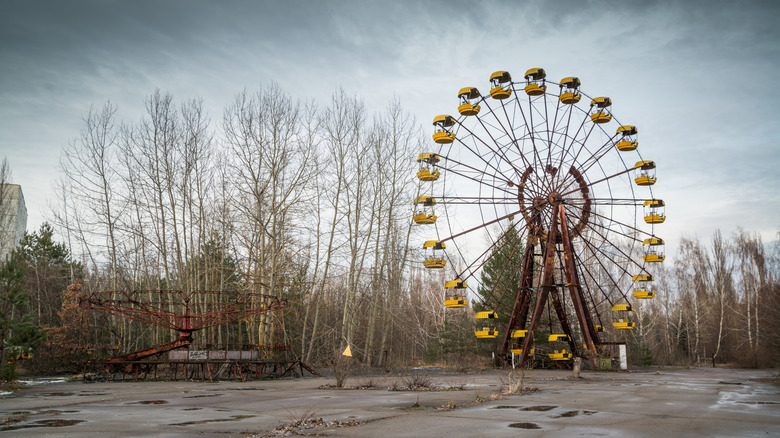
Why do theme parks become abandoned in the first place? Sometimes it's due to disasters, such as the closure of the amusement park in Pripyat following the Chernobyl disaster. More often, though, parks are left standing because demolition is costly. Tearing down a large amusement park can run well over $1 million. When that happens, properties can sit idle for years, falling into disrepair as they await redevelopment. That was the case with Six Flags New Orleans, which remained abandoned for nearly two decades after Hurricane Katrina before demolition and redevelopment efforts finally moved forward in 2025.