
Los Angeles' Oldest Street Is A Vibrant Downtown Hub With Dining, Sightseeing, And A Lively Mexican Market
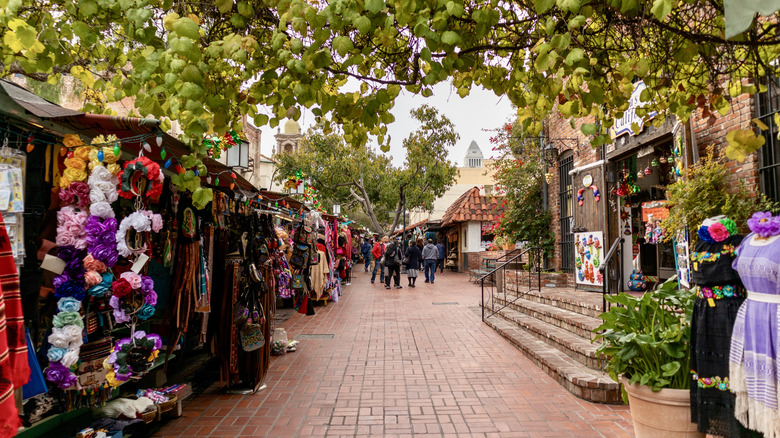
Out-of-town visitors may overlook Downtown Los Angeles in favor of flashier destinations like Santa Monica or Beverly Hills. But if you want to get to the heart of local culture and history, there are few better places to explore — and it all started with Olvera Street. Known as the birthplace of Los Angeles, and part of El Pueblo de Los Angeles Historical Monument, the area was first established as a farming community in 1781. By the 1800s, the street now known as Olvera Street began to flourish, and was officially named in 1877.
A few decades later, Olvera Street fell into neglect. But its second life began in the late 1920s, when a woman named Christine Sterling started a fundraising effort to revitalize the street. Part of her vision was to create a traditional Mexican market, and this came to life with the street's reopening in 1930. Nearly a century later, Olvera Street is one of Los Angeles' epicenters for history and culture. Although it spans just .10 miles, it's packed with locally-run and long-standing eateries, historic landmarks, and at its heart, a vibrant Mexican marketplace with dozens of vendors.
To experience Olvera Street at its liveliest, plan your visit for one of its festivals. Its Day of the Dead celebration — from the end of October to November 2 — is particularly special, speaking from experience. It has been a decades-long Olvera Street tradition, and includes traditional Mayan and Aztec ceremonies, a range of dance and musical performances, and community altars on display. Keep in mind that specific hours of the restaurants and shops vary, and some begin to wind down around 6:00 p.m. From Los Angeles International Airport, it's around 40 to 45 minutes to Olvera Street by car or by public transportation (Olvera Street is located right next to Union Station).
Dining and shopping on Olvera Street
At the core of Olvera Street is its traditional Mexican market, which is lined with colorful storefronts and vendors selling everything from jewelry and clothing to artwork and home goods. Although the market itself is not expansive, part of the experience is just wandering around, taking your time, and seeing what you stumble upon. Olverita's Village is one gem where you can find items like handcrafted leather bags, folklorico and flamenco dancing shoes and hand-embroidered clothing, and hand-made and hand-painted talavera ceramics. At Bazaar de Mexico, you can also find an array of traditional clothing, silver jewelry, and souvenir items.
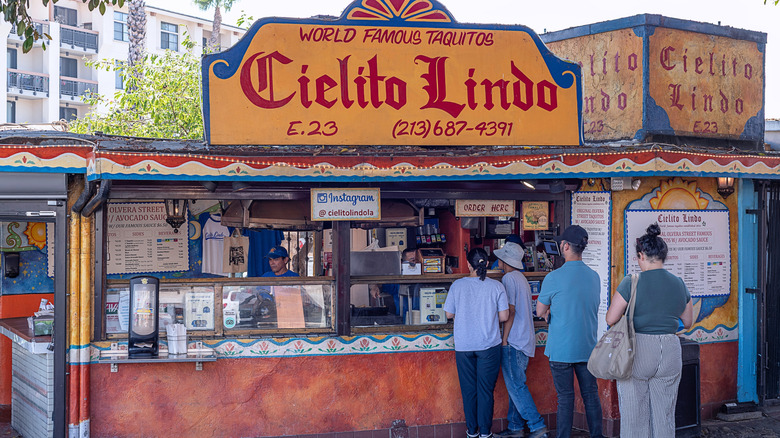
Olvera Street offers a number of authentic Mexican dining options, ranging from casual eateries to sit-down restaurants. As far as local institutions go, it's hard to beat Cielito Lindo. Featured on Anthony Bourdain's Parts Unknown, it has set up shop at the end of Olvera Street since 1934. Don't expect a large menu — Cielito Lindo's claim to fame is its hand-rolled taquitos, slathered in avocado sauce and stuffed with beef. But you'll also find a small selection of other options like burritos and chile rellenos. La Luz del Dia, meanwhile, is a cafeteria-style eatery that's been family-owned since opening in 1959, and serves an array of Michoacán dishes like tacos, tostadas, and tortas. El Paseo Inn, which was established in 1930 and is one of Los Angeles' oldest bars (and the building itself dates back to 1870), serves an array of Mexican dishes like enchiladas, sopes, mariscos, and tableside guacamole.
Sightseeing in the birthplace of Los Angeles
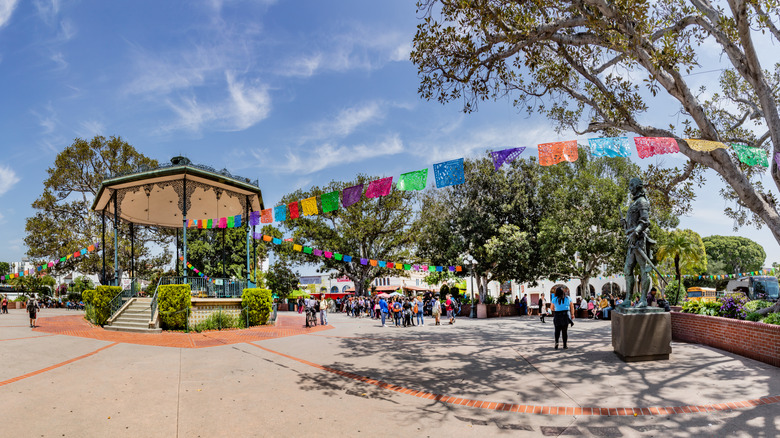
Olvera Street is one of the best free things to do in Los Angeles, and that's partly due to the numerous historic landmarks that you can visit here — all without fees. Start off at the America Tropical Interpretive Center where you'll find an exhibit dedicated to Mexican muralist David Alfaro Siqueiros. In 1932, he painted the controversial mural "America Tropical" on Olvera Street. Due to its political nature, the mural was whitewashed, until a restoration a few decades later, and you can check out the original painting from a viewpoint at the center.
Located within the historic Sepuleveda House which dates back to the 1870s, you can also view a couple of small exhibits dedicated to Olvera Street's early years. The Victorian-style building originally served as a shop and boarding house, but after Olvera Street's transition to a marketplace in 1930, it transformed into a space for artisans and shopkeepers, briefly housing a mini theater and even a USO canteen during World War II.
Don't skip walking through Los Angeles' oldest house, either. The Avila Adobe was built back in 1818 for ranchero and Los Angeles mayor Francisco José Avila, and stayed in his family until 1868 (apart from a brief window as a North American military headquarters). After serving as a restaurant and boarding house, it ultimately fell into disrepair, up until Olvera Street's resurrection in the 1920s. Tour the house for free from 9:00 a.m. to 4:00 p.m. Tuesdays through Sundays. It's relatively small, so you only need 20 minutes or so, based on personal experience. Before you leave downtown LA, head to Little Tokyo for authentic Japanese food and shops, just half a mile from Olvera Street, then stroll over to Gallery Row's dozens of shops selling local art.