
Why The Canary Islands Are A No-Go Vacation Destination For 2026
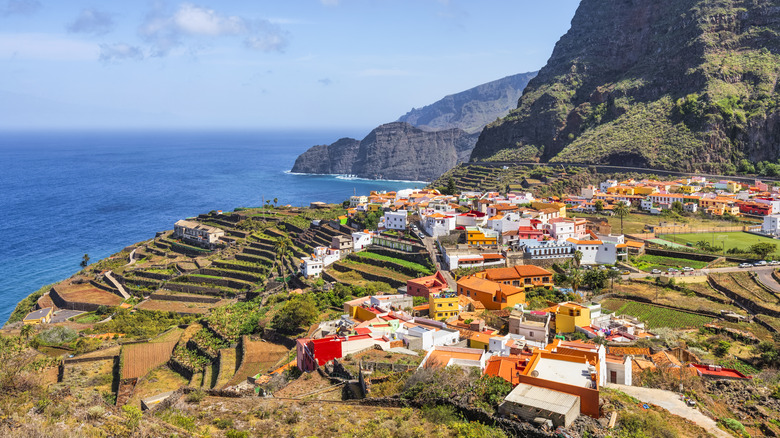
The Canary Islands have quite the tapas feast of attractions up their sleeve. From the soaring heights of Tenerife's Mount Teide, the highest point in Spain, all the way to the shimmering white-sand beaches of Fuerteventura, this is a land of real wonders. Combine those with one of the sunniest climates in Europe, volcanic wine-growing regions, a taste-bud-tingling local kitchen, and world-class surf, and it's easy to see why this string of rugged volcanic rocks in the Atlantic Ocean has been a major draw for decades — nay, centuries!
Ready to book a flight? Not so fast, for the Canary Islands have made a conspicuous appearance on the latest edition of Fodor's No List. Consider it the antidote to all those bucket lists out there. These destinations are ones that travel experts at Fodor's (a guidebook publisher with more than 80 years of experience in the industry) think you might want to reconsider visiting in 2026.
The pause for thought can be for any number of reasons, but overtourism seems to be the major driver behind the rise of the sun-soaked Canaries here. Fodor's points out how soaring arrival numbers in these ocean-washed isles are exacerbating a cascade of other issues, with everything from rising housing costs to traffic jams to loss of biodiversity. And the locals are making their voices heard — major protests and marches against uncontrolled tourism took place across the archipelago in both 2024 and 2025.
Overtourism in the Canary Islands
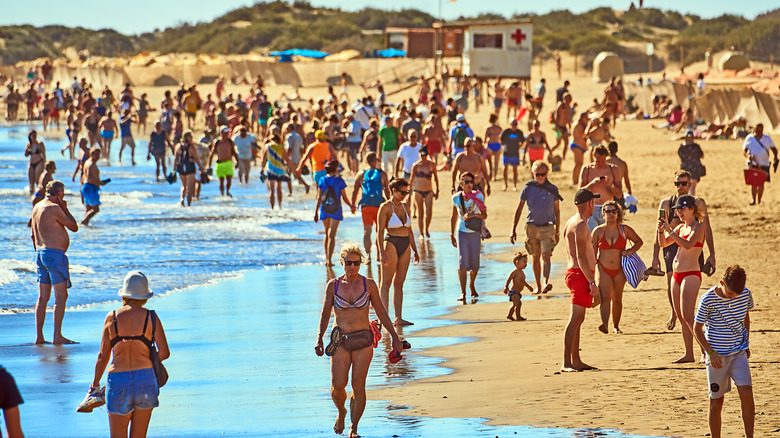
Spain has been combating rampant overtourism for the past few years, and these islands off the coast of Northwest Africa are no different. According to statistics from the Canary Islands Tourism Observatory, a public portal for measuring and tracking the industry across the islands, a whopping 18.4 million people visited in 2025. That set a whole new record for the region, representing an almost 3.5% uptick from the previous year, which was already a record breaker itself (via Canarian Weekly).
Large-scale demonstrations by worried locals reported by Reuters in May 2025 highlight some of the tensions. According to the news agency, protesters held banners declaring that the "Canaries have a limit," and objected to collapsing infrastructure, lack of affordable housing, and struggling water supplies.
Indeed, housing and water are two major points in the debate. The Canaries might have some of the most beautiful islands in Spain, but they don't get all that much rain. Meanwhile, a report by Global Water Partnership recognizes historic water shortages across the region, which contribute to the "over-exploitation" of resources. When it comes to housing, Express reports that the cost of monthly rents in key Canarian towns has skyrocketed in recent years. That's despite a crackdown on non-licensed holiday rentals, which could make up almost a third of the whole market in the Canaries by some estimations (per Canarian Weekly).
Worthy Spanish dupe destinations for the Canary Islands
If you take Fodor's advice and decide that the Canaries need a breather this year, don't go thinking that Spain is totally off the menu. There are stacks of alternative options in this culturally rich country that can offer a similar dose of sand, sea, sun, and R&R.
The obvious choice could be Spain's other iconic chain of isles in the Mediterranean: The Balearics. Home to the Mallorcan "party capital" and resort city, Magaluf, and the iconic White Isle of Ibiza, they've actually had their own struggles with overtourism in recent years, but visiting during the low season is better for hiking, experiencing local culture, and traveling sustainably. To mimic the treks offered by mountain-carved Tenerife, you could strap on the boots and climb the Serra de Tramuntana, a UNESCO-tagged range with ancient farms and olive groves. To recall those Canarian sands, head to Cala Macarelleta, a white-sand inlet on Menorca that's been ranked among the top 50 beaches on the planet.
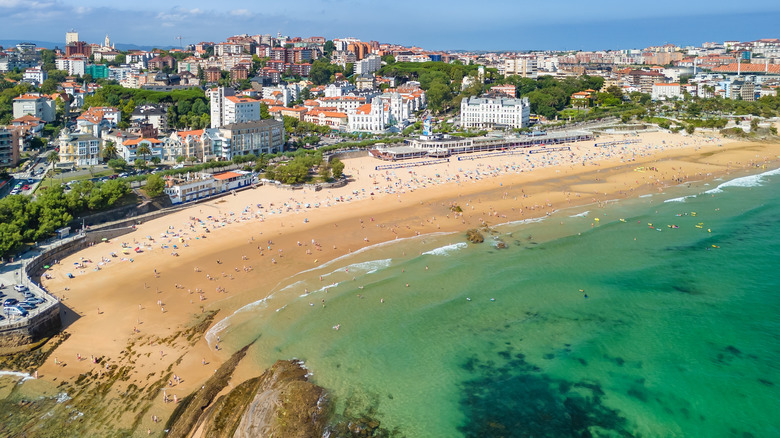
Or there's northern Spain. This really is a less-visited quarter of the country. A recent CNN Travel article features the Costa Verde (the Green Coast) in an article about the parts of Spain where tourists are very much welcome. Here, you can swap those overcrowded Canarian surf spots for the wave-lashed beaches of Cantabria or traverse the magical region of Galicia, home to waterfalls and fairy forests.