
Southern Oregon's Saltwater Lake Is A Remote Basin With Migrating Birds And Stunning Mountain Views
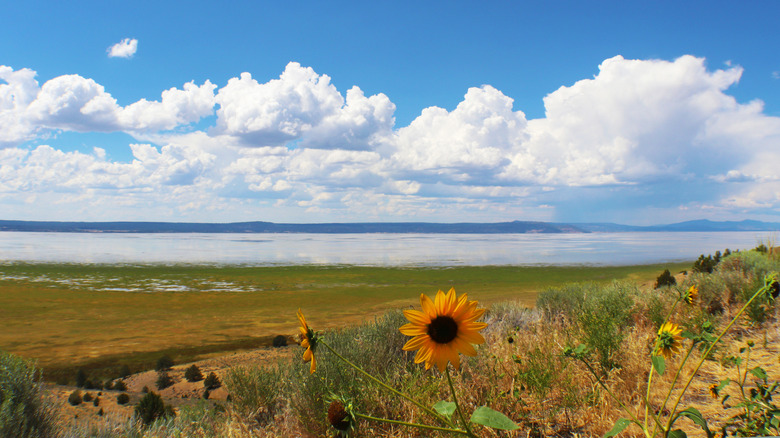
Oregon has a reputation as one of the richest outdoor playgrounds in the American West, and for good reason. The Beaver State is home to a host of alluring natural attractions, including a rugged Pacific coast, thick forests, towering mountains, deep river valleys, and stunning waterfalls straight out of the pages of a Tolkien novel. And while many people associate Oregon — and much of the Pacific Northwest — with grey skies, persistent mist, and the lushness that comes with such a wet climate, if you head to the eastern part of the state, you'll find a whole different world.
The leeward slope of the Cascade Range gives way to a high desert climate that is often as arid as anything you'll find in the Southwest. This is a land of open spaces, rugged canyons, and saline bodies of water like Lake Abert. Situated between the towns of Burns and Lakeview in central Oregon's south (not far from the borders with California and Nevada), Lake Abert sits in a desert bowl under the gaze of the Abert Rim, an imposing fault scarp (similar to a plateau) that lends plenty of drama to the parched surroundings. The shallow waters of the alkali lake are void of any life save brine shrimp, which in turn attract plenty of migratory birds, making Lake Abert a popular destination for birders.
However, you don't have to be a fan of avian species to appreciate the remote, stark beauty that Abert Lake delivers. This is a harsh region that is unlike a lot of other spots you'll find in Oregon, and a visit to the forlorn basin just may fill you with the kind of serenity only found in places of such solitude.
Soak up the remote beauty of Lake Abert
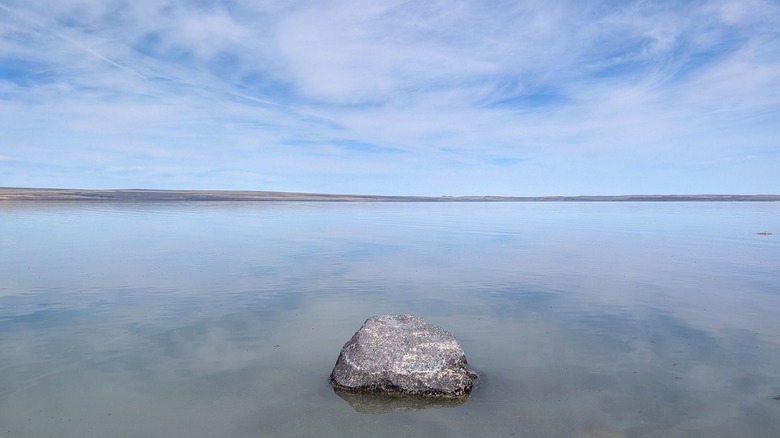
Lake Abert is Oregon's only hypersaline lake and one of just three in the western United States, which includes Mono Lake, a mesmerizing lake that's also one of the most dangerous in California. Lake Abert was formed over millions of years by tectonic events that created local mountain ranges and basins; up until around 11,700 years ago, it was part of the mammoth Lake Chewaucan, which covered some 500 miles and was hundreds of feet deep.
Today, Lake Abert stretches for 15 miles and is 7 miles across at its widest point, though its average depth is just 7 feet. With the exception of the two-laned Highway 395 hugging its eastern shore, you'll find nothing there made by man, and the closest services are in Lakeview, which sits 36 miles to the south. This means that Lake Abert remains as wild and untouched, with the 2,500-foot rise of the Abert Rim standing guard over the saline body like a sentinel. Unlike a lot of other lakes, Lake Abert isn't really a place you'll want to swim or get out onto the water, but if you're looking to just experience nature in its pure form, this is the place.
"I was lucky enough to visit here on a windless day," wrote one visitor on Yelp. "The water on Lake Abert was so still that it was a gorgeous mirror. There is wildlife here galore and it is home to many migratory birds. Abert Rim's serenity of place is stunning. It was a gift to visit here. This is definitely an amazing spot!"
Spot migratory birds at Lake Abert, a unique ecosystem with an uncertain future
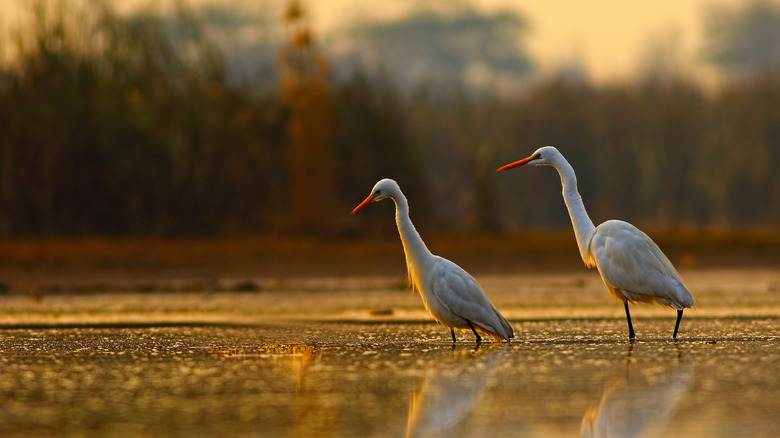
Like Oregon's Tualatin River Wildlife Refuge (one of the best birdwatching destinations the U.S. has to offer), Lake Abert sits squarely on the Pacific Flyway. This migratory corridor is used by an estimated 1 billion birds, with 200 species stopping off at Lake Abert to rest and feed on brine shrimp and alkali flies. In a good year, hundreds of thousands of birds can be spotted. They tend to group at the north end of the lake, and peak viewing time is late July through early September, especially first thing in the morning.
However, recent conditions at Lake Abert have put its future in jeopardy. Aside from rainwater, the lake is fed by the Chewaucan River, whose water is often diverted by local ranchers for irrigation. Lake levels can fluctuate wildly each year depending on rainfall and evaporation, and when there is too little water, the salinity increases, killing the shrimp and flies that are a food source for the birds. "They're on a razor's edge," said Ron Larson, a retired scientist and member of the Oregon Lakes Association, in an article on the lake in The Guardian. "We don't want to get into a situation where the populations get so low that they can't recover."
The good news is that Oregonians are working to guarantee that Lake Abert and the birds it attracts will be around for generations to come. Groups such as the Oregon Natural Desert Association (ONDA) have begun working with ranchers, local tribes, environmental groups, and elected officials to develop solutions that benefit everyone, all the while keeping water in the lake. For more of eastern Oregon's natural splendor, check out this beautiful river with an unfortunate name.