
Oregon's High Desert Lake Is A Freshwater Escape With Fishing, Kayaking, And Birdwatching
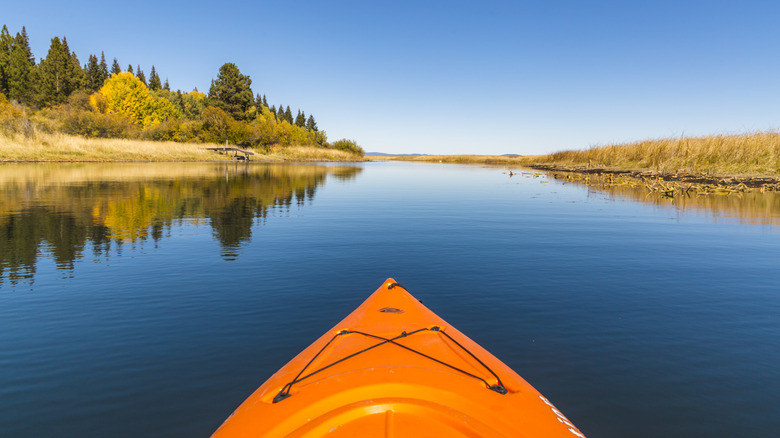
Oregon's largest freshwater lake is a shimmering, miraculously undeveloped gem. You would think that a breathtakingly beautiful, 60,000-acre body of water in Southern Oregon's high desert, blessed with 300 days of sunshine per year, would be lined with summer homes and waterfront restaurants. But Upper Klamath Lake has one entirely natural, seasonal reason it remains largely undeveloped as a recreational mecca. That one reason is the unusually high concentration of blue-green algae, or cyanobacteria, which grows in spring and summer, while experiencing a die-off in the fall that creates a foul odor. How foul? One baffled Redditor, smelling it from downtown Klamath Falls on the lake's southern shore, described as a "putrid aroma."
The silver lining to this unfortunate seasonal phenomenon is that by keeping away development, the pesky algae has kept the lake's shores largely pristine, a miraculous wilderness where fishing, kayaking, birdwatching, and other water sports are highly enjoyable for all but a brief, smelly period each year. The lake's mineral-rich volcanic sediment is a perfect food source for algae and also produces an abundance of food for fish, as well as insects that in turn feed over 350 species of birds. The best thing about Upper Klamath Lake, however, is the serene, hushed beauty of this peaceful body of water, where you're almost guaranteed long stretches of solitude as you glide along in your kayak or canoe. As one awe-struck paddler puts it on Instagram, "If there is anything more beautiful than this, I will explode if I see it."
Birding on Upper Klamath Lake
The lake is home to several stops along the Klamath Basin Birding Trail, a driving route that encompasses the entire sun-soaked Klamath Basin region of Southern Oregon. One of these lakeside stops is the Odessa Creek Campground, nestled in a Ponderosa pine forest where woodpeckers thrive. This is an excellent overnight destination if you're visiting the region as part of a road trip along the West Coast's Volcanic Legacy Scenic Byway, or a good base camp for birding explorations. The campground is 25 miles outside of Klamath Falls, along the remote western shore of the lake, which is about 30 minutes by car. Upper Klamath Lake is about 20 minutes from Klamath Falls and five hours from Portland International Airport (PDX) by car.
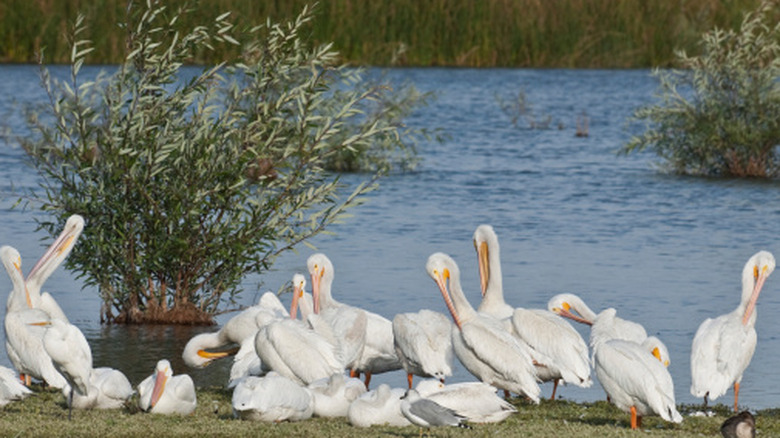
Birding on Upper Klamath Lake is a year-round adventure, with different things to see in every season. Over 350 species of birds inhabit the misty marshlands that you can explore under the shade of a mixed conifer forest. You'll hear songbirds like warblers and thrushes, and from March through October, you can spot the lake's famous pelicans. Sandhill cranes, great blue herons, and peregrine falcons are some of the other showstoppers you can see on the lake. You can also see the largest population of bald eagles outside of Alaska here, and celebrate them in February at Klamath Falls' annual Winter Wings Festival, one of the oldest birding festivals in the United States. In springtime, you can watch grebes put on a show with their elaborate mating dance. To see them without paddling, visit Putnam Point, a city park in the town of Klamath Falls at the southern end of the lake.
Paddling and fishing on Upper Klamath Lake
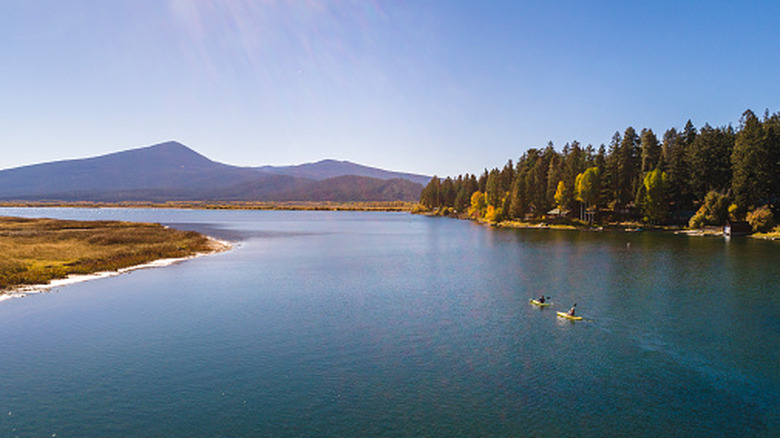
Recreational paddlers, kayak fishers, and birders alike love the 9.5-mile-long canoe trail located toward the lake's northern end, traversing the open waters and reedy cattail marshes of the 23,000-acre Upper Klamath River National Wildlife Refuge. There are put-in spots at Malone Springs and Rocky Point, where you can rent a paddle craft or launch your own. Time your paddling to catch a sunset over the lake, which is almost guaranteed to be epic. Before you launch, be sure to check with the Oregon Health Authority for any algae advisories that might affect water safety, but the water here is often clear and safe to swim in.
The lake's shallow expanse (it covers 50 square miles, but is just 5-15 feet deep) nurtures trophy-worthy fish like redband trout, a staple of the local Klamath Tribes' traditional fisheries. The lake-fed Klamath River is dubbed "the river that came back to life" thanks to the miraculous return of spawning Chinook Salmon. Nurtured by the Klamath Tribes, these important fisheries are being patiently restored, and this bodes well for the lake's ecology, too.
You needn't limit your water explorations exclusively to the summer months. "Cold weather adventure is so exhilarating — the fresh air makes you feel so alive," writes Instagrammer @wildoregongirl about renting a see-through kayak at Malone Springs in the off-season. "The shoulder season in Oregon is amazing for getting out and seeing the changing scenery, and you basically have the lakes and trails to yourself."