
Minnesota's Once-Thriving Ghost Town Was Abandoned Before Transforming Into A Scenic State Park
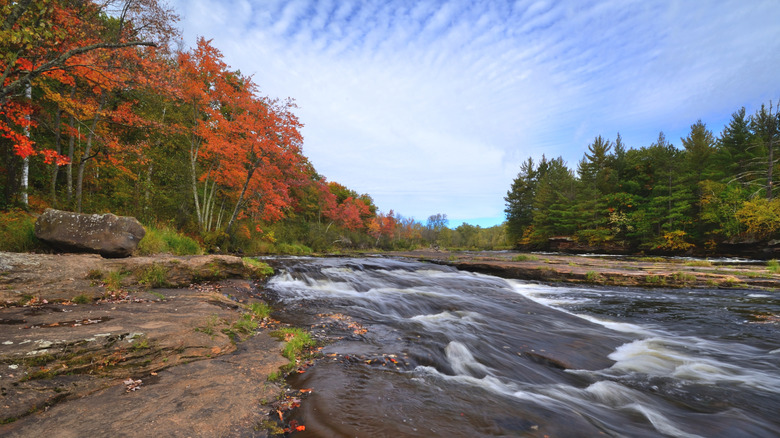
New York is home to America's oldest state park system, but Minnesota's, founded in 1891, comes in second. It's no wonder there's fascinating history to discover at state parks around the Land of 10,000 Lakes, perhaps most especially at the scenic Banning State Park, which occupies the site of an old sandstone quarry and the once-thriving ghost town that used to sit beside it.
Located just outside of Sandstone, Minnesota, about a 1.5-hour drive north of the Twin Cities and an hour's drive south of Duluth, Banning State Park takes its name from William Banning, the founder of the rock quarry and the adjacent town. Both were established in the 1890s, drawing in hundreds of people, including many European immigrants who came to the area in search of work.
Small but relatively lively in its turn-of-the-century heyday, the town once had a motel, a bar, and a boarding house, in addition to several residences. But as demand for steel increased, business at the quarry ran dry — and by 1912, the site was largely abandoned.
Hike through a ghost town at Banning State Park
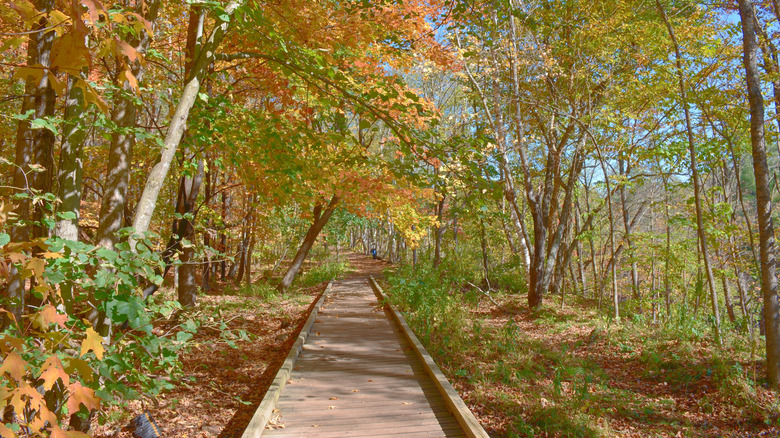
Fast-forward a few decades: In 1963, the old quarry, the once-thriving ghost town, and the beautiful wooded property around it became a state park. Today, the park is more than 60 years old, and it's been well over a century since the workers' town was abandoned. But like Bodie State Historic Park, the famous California park and ghost town that's located on the site of a gold mining hub, Banning State Park still has remnants of the past on display.
While exploring the picturesque refuge, featuring a section of the rushing Kettle River, quiet tamarack wetlands, and lush aspen-birch, mixed hardwood, pine, and conifer forests, look for drilling holes in the rock walls. Then go for a hike on the 1.8-mile Quarry Loop Trail, which follows the path of the old railroad tracks where trains once carried tons of rock. Along the way, you'll see towering sandstone cliffs blanketed in moss and spot the remains of a historic quarry cutting house, where larger rocks were cut into smaller pieces.
The hike is easy, and you can make it slightly longer by trying one of the variations on AllTrails. According to one hiker, interpretive signs explain the quarry's history. Others mentioned that the trail is gorgeous in all seasons, including when fall foliage enlivens the path. The mix of history and nature is a key highlight, too. "Nature is reclaiming what we've abandoned, so it makes for some cool scenery for sure," hiker Laura Garza told CBS News.
Kayaking, camping, and whitewater rafting in the park
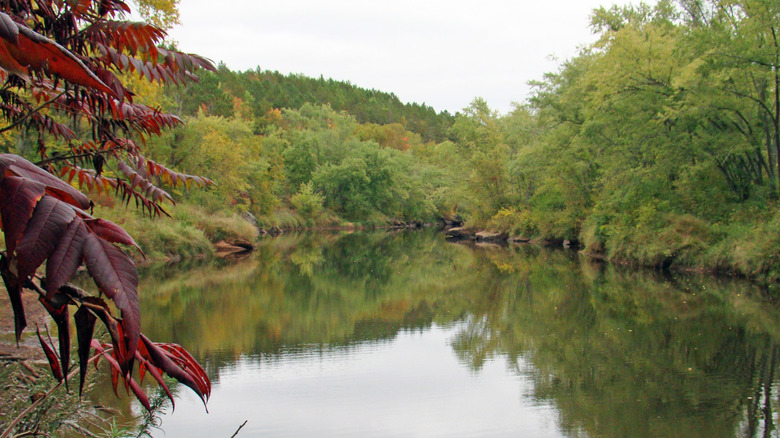
There's more to Banning State Park than hiking trails and history. It's a great spot for boating, canoeing, and whitewater rafting (there are rapids along 1.5 miles of the Kettle River, which is a state-designated Wild and Scenic River) from May through September. Hard Water Sports offers guided paddling trips and gear rental. The park is also a popular destination for rock climbing and bouldering (a free permit is required, and you can get one at the park's office).
From early May to late October, you can camp in the park at one of 33 wooded campsites, or if you're feeling adventurous, at one of five canoe-in sites along the Kettle River. Fees start at $24 per night, plus tax and an $8 booking fee. One rustic camper cabin is also available for rent ($80 per night, plus tax and fees) from April through mid-November. Reservations can be made online, and you can pick up picnic supplies at Chris' Food Center in nearby Sandstone. If you're looking to pitch a tent in winter, try Lake Bemidji State Park, northern Minnesota's state park for year-round camping and lake fun.
Banning State Park is open daily from 8 a.m. until 10 p.m. Apart from camping costs, all visitors to the park pay a day-use fee of $7 per vehicle. Love the concept of Banning State Park? It's not the only Minnesota ghost town that's been turned into a space for outdoor recreation: check out Fort Ridgely State Park, a once-thriving military outpost that's now a state park with camping and trails.