
Michigan's Once-Thriving Military Fort On Lake Superior Was Abandoned And Transformed Into A Scenic State Park
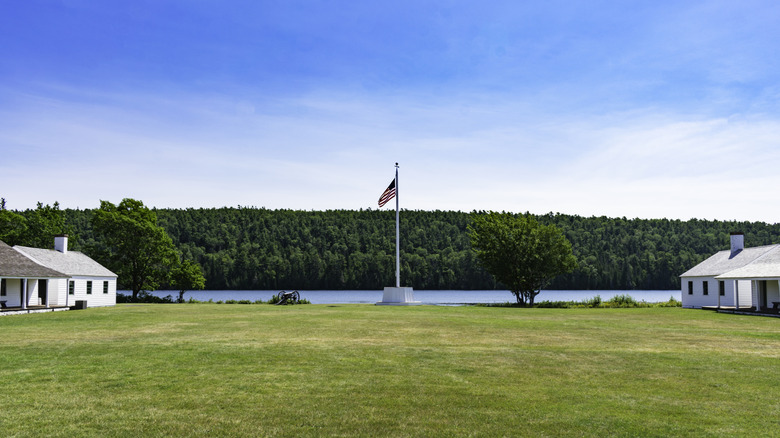
A little-known American historical fact is that the country's first mineral mining boom occurred in the Upper Peninsula of Michigan in 1843. The copper deposits had long been known, but geological reports sparked a rush of thousands to the area hoping to strike it rich. With all that economic action and the influx of prospectors, the U.S. government built a garrison in 1844 to safeguard the shipping on Lake Superior and maintain law and order among the settlers and Native Americans in the region. That was the birth of Fort Wilkins in the Keweenaw Peninsula, and the start of a flourishing copper mining industry that lasted 150 years and extracted over 12 billion pounds of copper.
The Keweenaw mines closed in 1997. Today, Fort Wilkins is a historic state park — a preserved physical snapshot of life in the mid-1800s. But getting there takes some dedication. The park is located 7 hours northeast of Minneapolis or 6.5 hours north of Milwaukee (Houghton County Memorial Airport is an hour south of Fort Wilkins). That remoteness means it's not an easy day-trip destination, and it's best wrapped into a Keweenaw Peninsula vacation itinerary.
You could visit the fort for a day, stroll through the stockade fence, wander the historic grounds, sit next to Lake Fanny Hooe, and let the environment take your imagination back in time. Or you could center an entire trip around this scenic state park (my family camped there every summer when I was growing up). Stay at one of the two campgrounds and spend your days hiking trails, exploring the historic lighthouse, paddling the Lake Superior shore on a kayak, and soaking in all that this secluded Michigan peninsula has to offer.
Fort Wilkins history and state park transformation
Fort Wilkins Historic State Park is just outside of Copper Harbor, an underrated Michigan town for an affordable mountain escape. Highway US 41 starts — literally — 1 mile from the entrance to Fort Wilkins and runs all the way down to Florida.
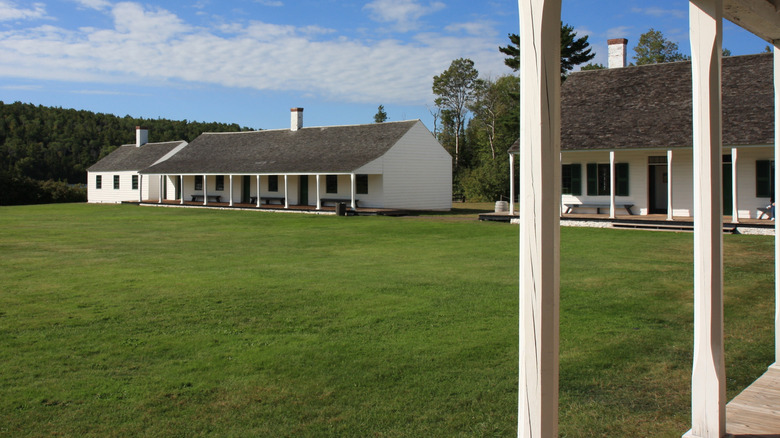
The fort's stockade fence ringed two sides of the fort, while a small river and Lake Fanny Hooe acted as natural barriers on the other two sides. Inside, it was a standard fort of its era and was essentially an enclosed town with officers' quarters, a small hospital, stores, and more. At its peak, around 105 enlisted Army soldiers lived there, but only two years after construction, most were needed for the Mexican-American War. The fort was used sporadically until after the Civil War and was decommissioned in 1870.
Luckily for us, it became a state park in 1923, and people employed in the Depression-era Work Projects Administration program helped establish campgrounds, shower buildings, and parking areas. These days, the fort comprises 19 buildings, 12 of which are the original log structures. Some buildings are neatly furnished as they would have been nearly two centuries ago, while others have audio-visual exhibits. Summertime visits may even include an encounter with the Future Historians Club, a living history program that sends more than 40 grade-school students to the fort each season to portray real 1870s residents — leading period games and dances, and fielding questions from visitors.
Camping and hiking at the state park and Copper Harbor
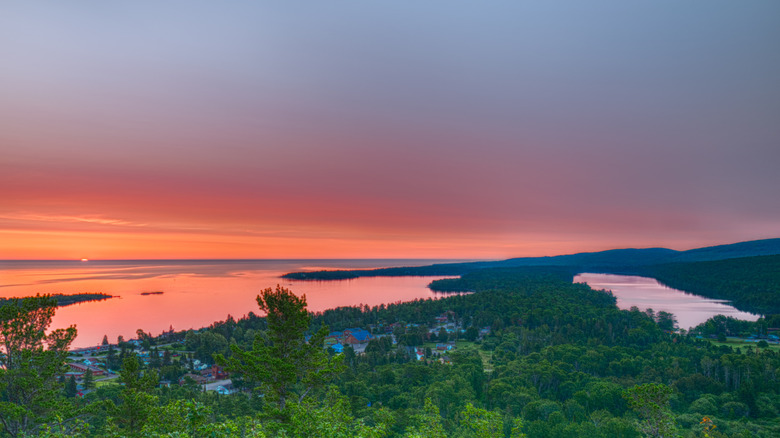
Fort Wilkins' two campgrounds are a short distance apart and aptly named east and west (the east location is under renovation and set to open July 4, 2026). Each features around 80 sites and offers visitors glamping-type amenities, including toilet and shower buildings, playgrounds, and electrical hookups for RVs. There's even a store between the campgrounds that has supplies, souvenirs, sweets, and more. Other overnight options at the state park include two cabin rentals, while Copper Harbor (1.4 miles away) has hotels and nearby unique cabin stays by Lake Superior's shore.
Wherever you sleep, this northern tip of the Keweenaw Peninsula is a dream for outdoor adventure and nostalgic vibes. Beyond the fort, history buffs would love a boat tour of the Copper Harbor Lighthouse, built in 1866. That dramatic and beautiful waterfront is also breathtaking to see on a kayak, and the Keweenaw Adventure Company offers rentals and guided trips onto the water.
For hiking, the Fort Wilkins Historic State Park has a few relaxing trails, while Copper Harbor has trails of varying difficulty, like the Hunter's Point Trail Loop out onto a thin peninsula. The area has also become internationally recognized as a mountain biking mecca.
As a town, Copper Harbor has a vintage vibe with well-maintained buildings, old-timey motels, and small-town charm. Add in Fort Wilkins, and it's no surprise that Copper Harbor is one of the most breathtaking and lively mountain towns in America, according to Reddit.