
Why There's Simply No Need For Physical Boarding Passes Anymore
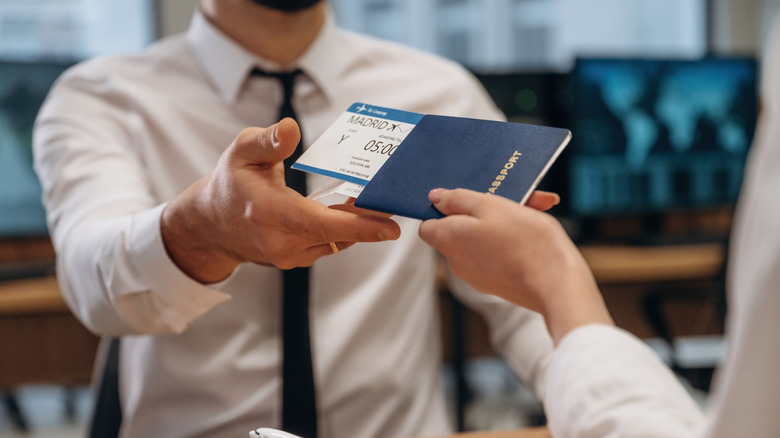
Much has been made of European budget airline Ryanair's choice to phase out paper boarding passes in November 2025. The company billed it as a strategic decision, stating that checking in and issuing boarding passes digitally will keep things moving at the airport, a common refrain in the airline industry as the digital age hurtles forward. And though Ryanair's policy is unique in its total elimination of paper boarding passes, it reflects a wider industry trend.
Adoption of digital and app-based boarding procedures has become almost standard across airlines. In 2025, 78% of travelers surveyed told the International Air Transport Association (IATA), a global airline trade association, that they want to use their smartphones to manage all aspects of the flying process, including check-in and boarding. Another study showed that about two-thirds of passengers opted for mobile boarding passes or e-tickets even when paper boarding passes were available. With stats like these to back them up, airlines are also saying that going paperless will reduce cost, waste, and even speed up airport operations.
Ryanair's total elimination of paper boarding passes is the most extreme example, but airlines such as Emirates, Alaska, and American are pushing in the same direction. In some cases, this means eliminating it as the default option at check-in kiosks so that customers have to ask a gate agent if they want a printed copy. In others, it means a paper boarding pass will come at a cost: A printout of your Frontier Airlines boarding pass is an extra $25. Though there are some cases in which it's still smart to seek out a paper boarding pass, the message here is clear: Airlines want to encourage the use of digital boarding passes wherever and however they can.
Travelers aren't sure what to make of huge changes on the horizon
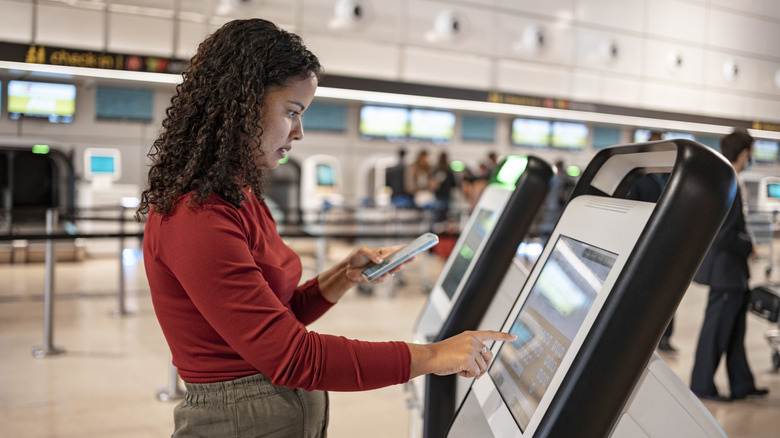
Taking things a step further, the International Civil Aviation Organization (ICAO) recently announced a plan to eliminate traditional boarding passes entirely. ICAO is the arm of the UN responsible for shaping global aviation policy, and its new plan is sweeping in scope. It aims to phase out boarding passes and introduce a new boarding credential called a "journey pass," which will store credentials so that passengers can enter the airport with nothing more than a biometric scan. Valérie Viale, a travel technology expert, told The Times, "These changes are the biggest in 50 years."
In the wake of Ryanair's policy change, disgruntled flyers have taken to forums like Reddit to express worries about potential technological issues. Others have questioned the airline's motives for the change, going so far as to suggest that the airline wants to force flyers to download its app so it can collect "passenger information to sell off." But others don't seem to mind, calling the change "a non-issue for 99% of people" and noting that people who truly can't abide by the new rules — say, because they don't own a phone or ran out of battery — can still get a printed pass.
The new ICAO plans have gotten a similarly mixed reception. While some travelers point out that many major airports have moved forward with big changes thanks to automation technologies, others are voicing age-old concerns about smartphone-based travel: What if the system fails? What about travelers without mobile phones? And especially in the case of ICAO's journey pass, popular myths about biometric technology that make travelers anxious to use them don't help matters, either.