
Stop Doing This Seemingly Polite Habit When Boarding A Subway Train
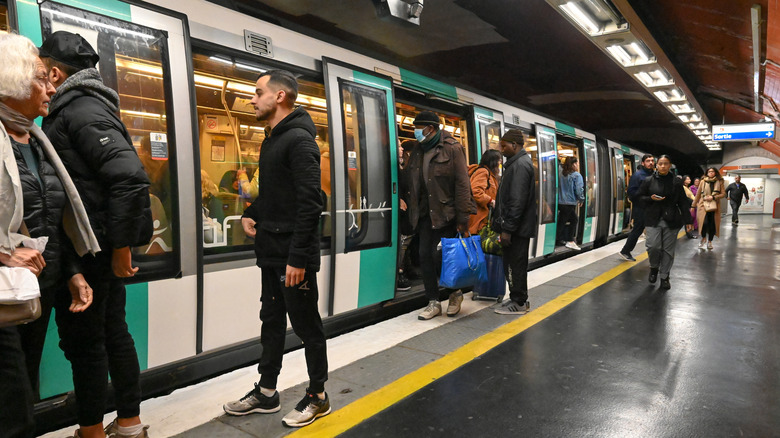
Globally, metros and subway systems are filled with busy commuters racing to their next destination. Every once in a while, a late straggler will be running, begging someone to keep the door open. We've probably all witnessed it and considered sticking our arms through the closing gap. Except, subway trains aren't elevators, which are designed to detect obstruction and reopen. Instead, these underground train doors run on a fixed automated cycle. Forcing them open risks injury, making it one of the rare circumstances where your polite gesture is risky and unnecessary. "I've seen a lady get an arm stuck in the doors and people had to pry them open to help her before the train left," one Redditor mentioned in a thread about dangerous transit doors.
Beyond the risk of injury, forcing them open can damage and delay the entire train. A 2009 MTA New York City Transit campaign claims that thousands of trains are delayed every month because of customers holding the doors open. The MTA takes the problem seriously enough to track the issue, labeling the cause of delay as "Customer Holding Doors." In serious cases, a damaged door can take an entire car out of service, forcing passengers to detrain and find another route. What feels like a small courtesy can quickly become a massive inconvenience for hundreds of fellow riders.
What should you do if you miss your train?
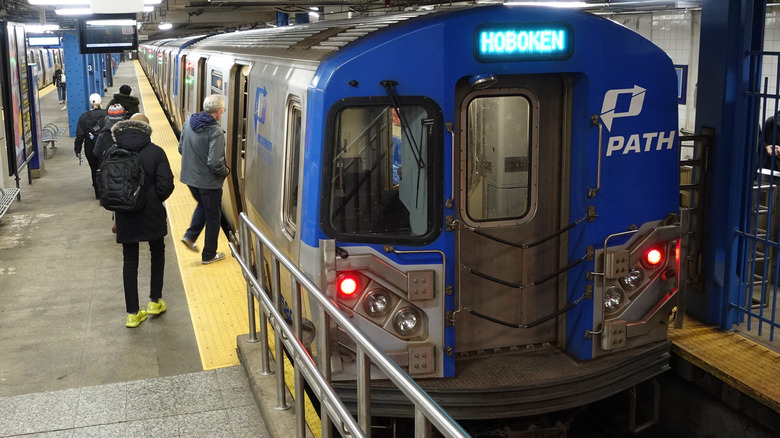
Whether you're sightseeing in European cities using the railways or riding on America's most reliable transit in Boston, someone will always be sprinting down the stairs just a moment too late. And that's okay — in most major systems, the next train is only minutes away. In chaotic subway systems like New York (and even more relaxed ones, like in Barcelona), there are apps that can help you track the next train time, so you always know what's coming. New York has the MTA app, but in European cities, you can download more generic ones, like Citymapper or Google Maps, to help you navigate your entire commute.
More often than not, people hold the panels open out of fear that this train is the only train. The subway is a frequent, reliable loop — and in most major cities, another train won't be far behind. While waiting for the train, travel expert Rick Steves recommends positioning yourself toward the less crowded ends of the platform. Not only does it make boarding easier, but it can also put you closer to the exit at your destination. Overall, the most polite thing you can do is let the doors close naturally to avoid any significant damage or delays.