
Between Philly And Baltimore Is An Abandoned Military Fort Turned State Park With Scenic Hiking And Fishing
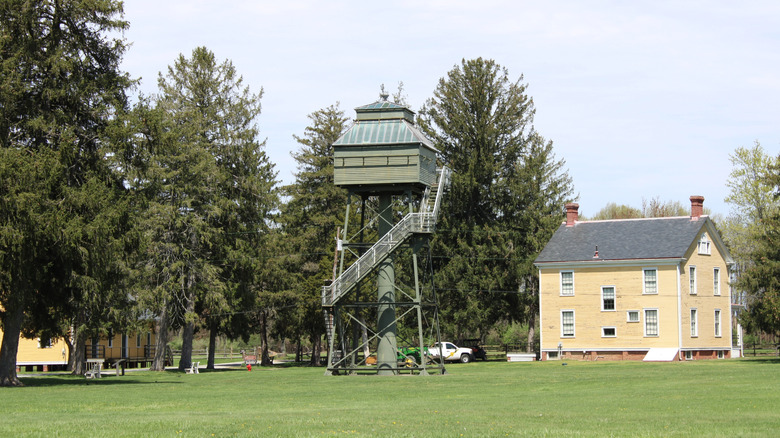
Along the banks of the Delaware River in New Jersey stand the remains of a fort that was longer in the making than it was operational. The government bought the land in the 1830s with the intent of constructing a fort, but it wasn't until after the Civil War that those plans started coming to fruition. The region's defenses hadn't kept pace with military advancements. To address this, construction started in 1872 on what was called the Battery at Finn's Point, but only two guns were put in place before work halted in 1876. Twenty years later, with the Spanish-American War looming, new plans were developed for a three-fort defense system, one on the site of the aborted Battery at Finn's Point project. This time, the fortifications were completed, and it opened in 1897 as Fort Mott.
Fort Mott was state-of-the-art when it opened, equipped with 360-degree mounted guns that could defend against both land and water attacks. The sprawling site functioned as a self-contained town, with more than 30 buildings that included a hospital, on-site housing, and a school. It remained fully staffed until 1922, when the more modern Fort Saulsbury opened and made it obsolete. A caretaking detachment was kept on until 1943, but the officers' quarters were moved to Fort DuPont in 1933, and many of the guns were shipped elsewhere, too, by the time it was officially decommissioned.
But Fort Mott didn't sit abandoned for long. The state of New Jersey bought the site in 1947, and by 1951, the public could visit the new Fort Mott State Park. Today, this unique attraction is part outdoor museum and part natural oasis, blending preserved buildings and restored artifacts with trails and fishing spots along the shore of the Delaware River.
Fort Mott State Park's outdoor adventures
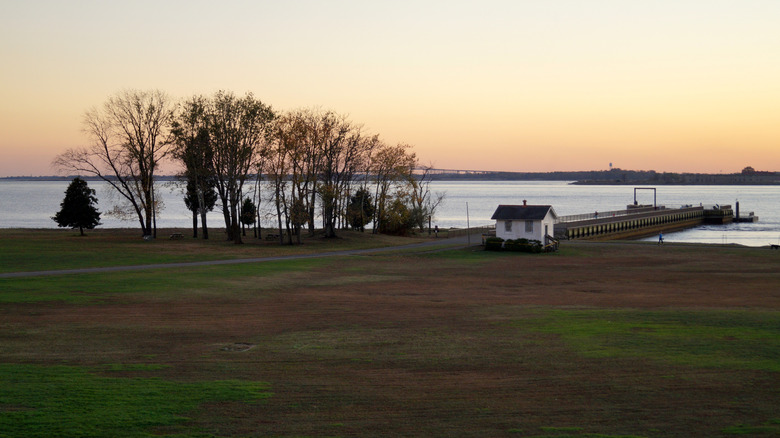
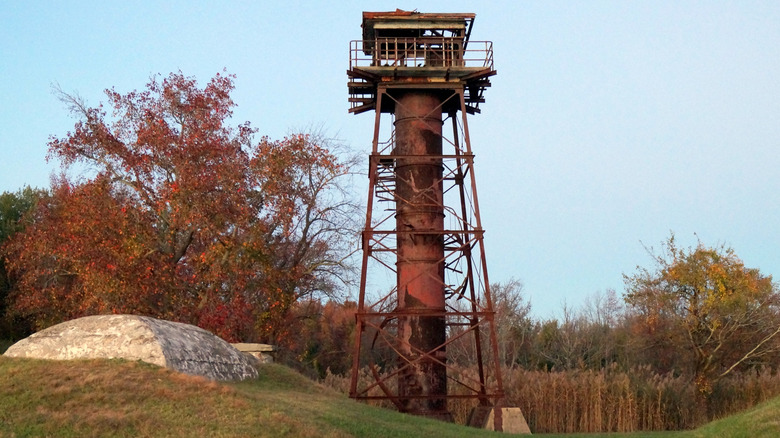
Many people visit Fort Mott State Park to get a glimpse into history, and the interpretive signs posted around the old batteries are a great way to learn about the fort while you take a self-guided tour. The 124 acres of riverfront land within the park also offer visitors lots of opportunities to enjoy nature. You can see both history and wildlife by walking the 1-mile Finn's Point Loop, which runs past the park's key sights. Make sure to climb to the top of the Fort Mott Gun Fire Control Tower to see panoramic views of the area. A portion of the New Jersey Coastal Heritage Trail also runs through the park, and you can stop in at the trail welcome center to see displays about Fort Mott's history.
Birdwatchers and fishing enthusiasts can enjoy the Delaware River shoreline within Fort Mott State Park. The ferry pier also functions as a fishing pier, where anglers are known to catch catfish, bass, and flounder. You do need to register as a New Jersey Saltwater Fisherman to fish here, which you can do for free online. The pier is also an excellent spot to watch waterfowl, which are abundant in Fort Mott most of the year. Migrating shorebirds and ducks come through in the spring, while summer is peak time for wading birds like great blue herons and great egrets. The trail behind the fort passes through wooded areas where many migrating songbirds, like warblers, can be spotted in the spring. If you're lucky, you can even catch a glimpse of the park's mammalian inhabitants, like foxes and beavers.
When and how to visit Fort Mott State Park
There is a lot of history along the Delaware River, and Fort Mott is within easy reach of many storied East Coast cities. It's about an hour's drive south of Philadelphia, home to America's most historic square mile, and about two hours north-east of the heritage-rich harbor of Baltimore. The closest city is Wilmington, Delaware, a half-hour north, where you can visit the national park that represents the start of the United States.
Fort Mott State Park is free to visit and open every day of the year except Thanksgiving, Christmas, and New Year's Day. The best time to visit depends on what activities you're interested in. Anglers will likely get the most bites in the spring and fall. For spotting birds or other wildlife, spring and summer tend to be the best times of year, though winter is when you're most likely to spot rare ducks like hooded mergansers (if you're willing to brave the icy wind that blows off the river). Winter is also when the park's trails and hills open up for sledding and cross-country skiing. History buffs may want to plan their visit to coincide with the opening dates for the nearby Finns Point Rear Range Lighthouse in Supawna Meadows National Wildlife Refuge, which is open on select dates between April and October.
How you get to Fort Mott State Park might change depending on the time of year, too. On-site parking is available year-round, but from May through September, you can also reach Fort Mott by taking a 15-minute ferry ride from Delaware City. The ferry also stops at Pea Patch Island, one of Delaware's most beautiful islands and the location of Fort Delaware, a 19th-century fort that served as a Civil War prison camp.