
Greece's Gorgeous 'Painted Village' Is A Wildly Underrated Dreamy Island Destination With Artistic Flair
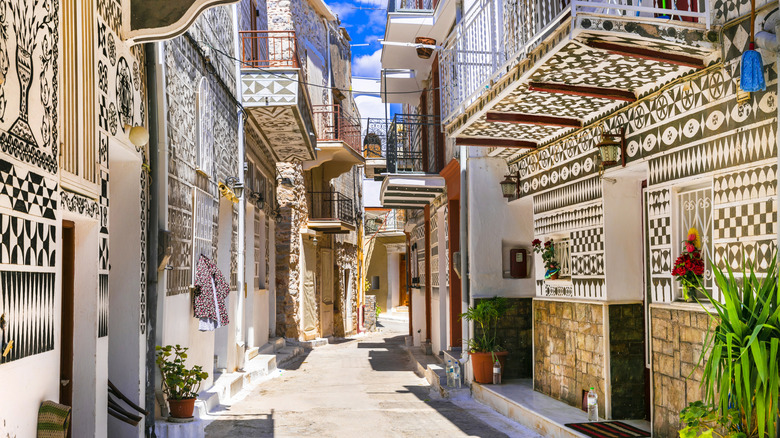
Santorini and Mykonos usually get the hype of a Greek getaway, and while the Cyclades are a marvel to visit, the country is made up of thousands more underrated treasures. Part of the Eastern Aegean group, the island of Chios is home to villages like Pyrgi that offer something different than the typical blue dome buildings and white-faced walls that are so easily identified with the more popular destinations.
The little settlement on the southern side of Chios has rows of painted buildings with artistic patterns, giving it the nickname "Painted Village." As travelers walk down the alleyways through town, they'll witness xysta-style art — the technique of etching intricate geometric patterns into two-toned plaster — giving the atmosphere the vibe of an open-air art gallery.
It is the largest medieval settlement on the island built between the 13th and 14th centuries, with facades dating back to 1665 by the Cretan painter Antonios Domestichos. The walls give the town a charming, creative energy that feels preserved and paradisiacal all at once. It is small and landlocked, offering a different side to Greece than its usual coastal escapes like Antiparos, Paros' secret sister island with less crowds or Milos, known as the "Island of Colors" for its vibrant balconies and doors. While it is one of the most visited villages in Chios, Pyrgi is still refreshingly uncrowded — the kind of retreat that most Greek hot spots can no longer promise.
Why Xysta-style walls make Pyrgi stand out
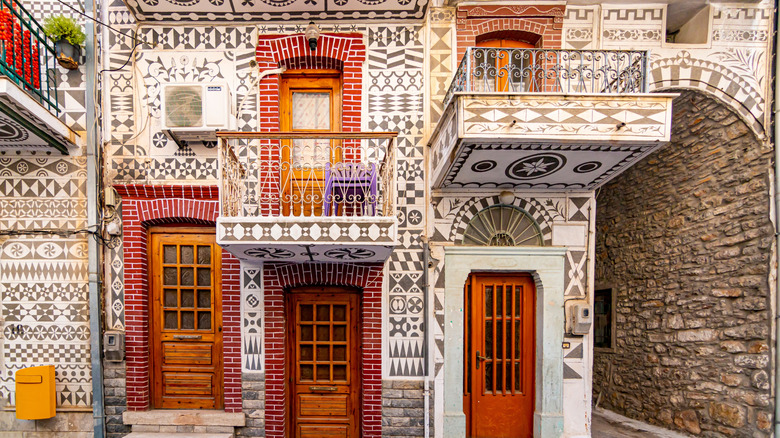
Pyrgi popularized xysta-style art, where black and gray patterns blanket the facades of the buildings (shown above) in a variety of forms. Diamonds, circles, triangles, and more, stack the walls — some from floor-to-ceiling, others in smaller surfaces.
"Xysta" in Greek means "scratched," a nod to how the designs are made. A dark layer is applied to the wall first, followed by a lighter coat of plaster on top. Artists use a fork-like tool to scratch through the surface, revealing the darker shade beneath, bringing the geometric patterns to life. It has become central to the village's cultural identity, and it lives on as local artists adapt designs onto canvases, ceramics, and souvenirs for shoppers to bring home. Historians believe the designs were inspired by Genovese carpets, which once hung on building exteriors for decorative purposes. When the Genovese left, locals recreated the patterns in plaster.
Beyond the xysta designs, the best way to take in Pyrgi is simply to wander. Visitors will find the art on many walls, but there are some where it won't be seen at all, like the Church of the Holy Apostles (Agioi Apostoloi). The cozy village is home to over 1,200 inhabitants, so it's small enough to explore in a few hours, but captivating enough that you'll want to stay far longer.
How to spend a day in Pyrgi
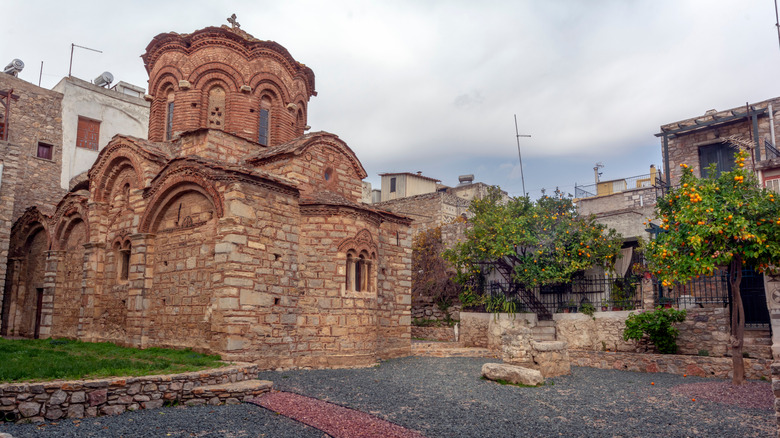
A visit to Pyrgi is more than a living art museum — it's a journey through time. In the center the Agioi Apostoloi, a Byzantine church with a quieter, more medieval contrast to the bold patterns covering the xysta walls outside, gives visitors a glimpse into the village's fortified past. The main square nearby buzzes with locals and visitors alike, and is a natural place to stop and let the area settle around you. Gift shops like Marianna have traditional, handcrafted xysta keepsakes to take home. Then, of course, get lost in the alleyways and admire the patterned facades made by Greek artists and maintained by locals.
Pyrgi is one of 24 villages in southern Chios known as the Mastic villages — communities historically tied to the production of mastic resin, an export that shaped the region's identity for centuries. That living history was recognized in 2014, when the UNESCO Representative List of Intangible Cultural Heritage of Humanity inscribed the traditional knowledge of mastic cultivation on Chios. For those wanting to go deeper, the Chios Mastic Museum sits just outside the village, where interactive exhibits trace the history of mastic cultivation among a grove of trees visitors can explore. Time your visit between August and September and you may even catch the harvest in action — one of those rare travel moments that feels entirely unscripted. The "Painted Village" might feel off the beaten path, but its blend of art and history give travelers a meaningful discovery.
Visiting Greece soon? Pyrgi might be inland, but the beaches on Chios and the rest of the region are a major draw. See how the country's "untrodden beach" rules affect travelers in 2026.