
Why More And More Travelers Are Saying Goodbye To Switzerland Vacations In 2026
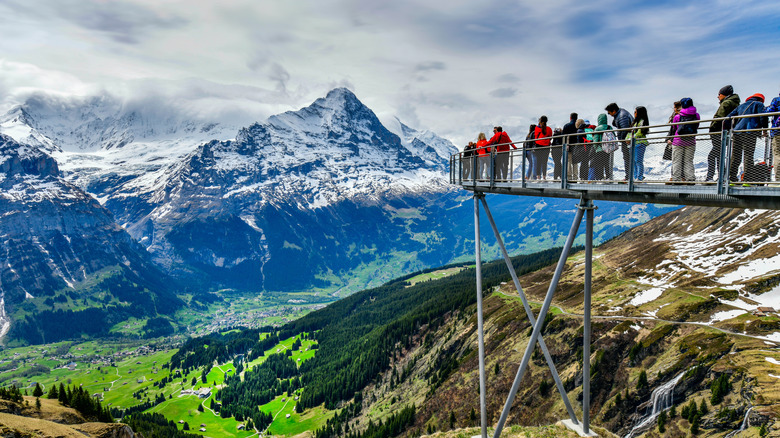
In the travel imagination, Switzerland is easy to fantasize about as an alpine dream destination. Trains gliding over viaducts, glistening mountain lakes, and fairytale Swiss Alps villages transformed into winter wonderlands lend it a natural allure. But there's been a slight shift in consensus among travelers and travel media in 2026, who are reconsidering Switzerland's place as a travel destination. Swarming tourist crowds, high costs, and scenery affected by climate change are puncturing holes in the fantasy.
Switzerland has become somewhat fatigued by its visitors, too, and some regions have introduced measures to deter heavy tourism. In Lucerne, for example, the city decided to increase its tourism tax by more than double starting in 2026. Meanwhile, in April of 2026, several Swiss tourism groups came together to publish a "toolbox" to ease the relationship between tourists and locals, as Hospitality Inside reported. Switzerland's visitor numbers are far from drying up — overnight stays are still increasing year by year — but the tourism surge may have been approaching a breaking point, where the crowds and consequent measures to contain them take some of the sheen away from the country's romanticized appeal.
Overtourism and high prices in Switzerland's alpine hotspots
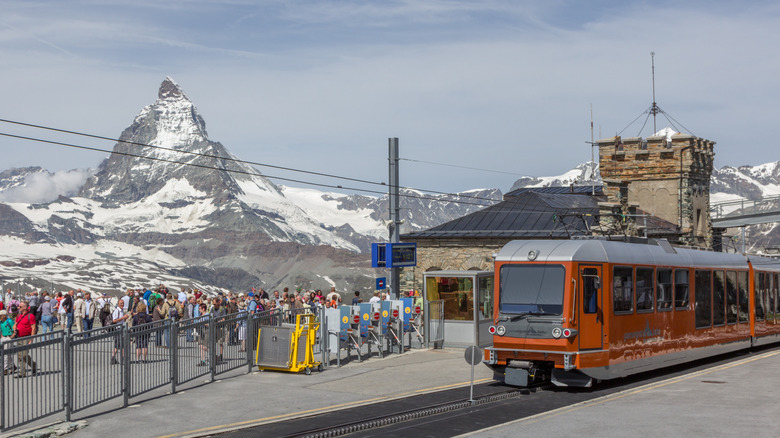
In 2025, Switzerland recorded its highest number of overnight stays ever. But the influx of visitors isn't evenly spread out across the country. Jürg Schmid, President of Graubünden Tourism, specifically cited three regions in Blue News as being overtouristed: the Jungfrau region (the ethereal Swiss region that Fodor's begs travelers to avoid), Lucerne-Titlis, and Zermatt. They are all particularly scenic Alps destinations (with Zermatt being home to the iconic views of the Matterhorn) and, naturally, tourist magnets. The soaring number of visitors becomes all the more dramatic when you consider how it compares to local populations. A study from Watson found that Zermatt, for example, had about 269 visitors per inhabitant in 2024, far exceeding major tourist cities like Paris or Venice.
While overtourism can be a strain on locals — potentially causing displacement and disruption to the local way of life — it's affecting the experience for some travelers, too. Long queues, limited parking spaces, and people climbing over each other to get photos are common problems. "[W]e're planning to avoid places like Jungfraujoch, which are full of tourists," a Reddit user wrote.
Then, there's the problem of costs. A 2026 study by Vanguard ranked Switzerland as the third-most expensive country to visit, citing high prices for everything from rail passes to dining. One Reddit user described how something as simple as buying a kebab can shock you when you get the bill: "This was the day I decided I am never coming back to Switzerland again. Not because of the kebab by itself, but the kebab price was a symptom of other issues."
Is a trip to Switzerland still worth it?
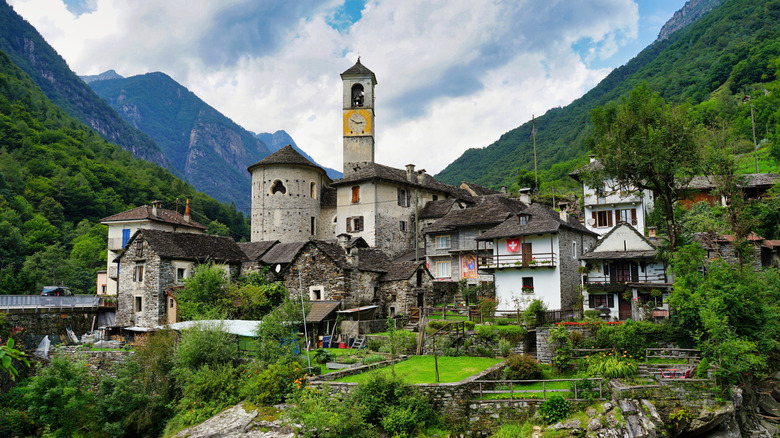
If you've never been to Switzerland before, there are a lot of reasons to consider visiting at least once. Switzerland has countless pretty and iconic destinations, and you don't necessarily have to stick to the most popular ones. As Switzerland Tourism Director Martin Nydegger said in swissinfo.ch, "Don't turn a few places into a nationwide phenomenon." There are lots of wonderful, underrated Swiss destinations that won't have the foot traffic of Jungfrau, Lucerne, or Zermatt — Lavertezzo is one charming fairytale town where you can avoid the crowds, for example. If you're a hiker, you might also get a breather from the more crowded gondolas and resorts once you get on the trails. "Everyone takes the trains/cable cars so the hiking trails are mostly empty," a Reddit user said.
As for the expense, you will have to budget for some higher-than-average costs in Switzerland, no doubt. One of the categories travelers most often complain about being pricey in Switzerland is food. It might be helpful to plan your Swiss trip around nature and sightseeing, and less as a culinary experience. Then, you can stick mostly to buying groceries rather than dining out. However, if your goal is to visit the Alps on a tight budget, it might be worth considering alternative destinations like Austria or Southern Germany.