
Italy's Abandoned Quarantine Island With A Once-Thriving Hospital Is Now An Underrated Museum
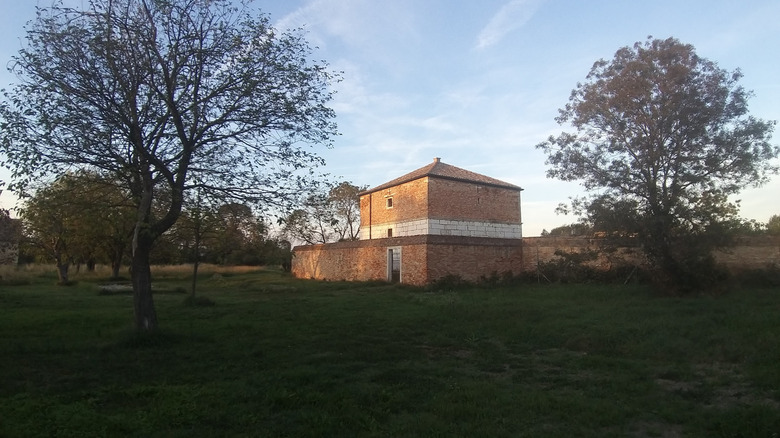
Venice presents two different ways to experience the city: One is marked by art museums and gondola rides under perfectly arched bridges, while the other, more discreet side of the city reveals underground crypts and abandoned islands at its lagoonal fringes. One of those islands is Lazzaretto Nuovo, located at the northern gateway to the Venice Lagoon. Though the island has an air of peace lent by its natural scenery, its history is much darker than what meets the eye. It served as a quarantine station for new arrivals into Venice during plague outbreaks.
Lazzaretto Nuovo was built as a giant, fortified facility, sometimes described as resembling a prison. According to History Walks in Venice, the spread-out hospital had around 200 beds for people arriving in Venice by ship who may have been exposed to the plague, starting around the mid-15th century. They would be kept in a high-walled chamber for around 40 days — the word "quarantine" in fact comes from the Venetian term for the 40-day isolation period. Though the island went through several military occupations and was abandoned altogether in the 1970s, you can still see one of Lazzaretto Nuovo's preserved plague-era buildings, plus some later-built military structures, which make up part of the open-air Lazzaretti Veneziani museum.
See an early quarantine building and marshes at Lazzaretto Nuovo
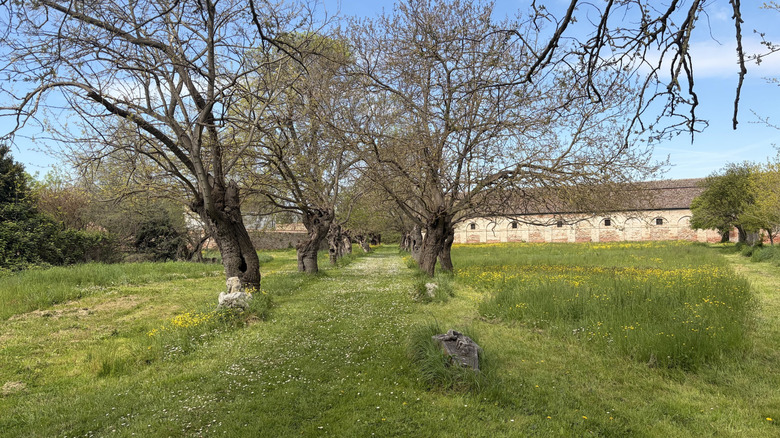
Upon arriving at Lazzaretto Nuovo, you might find that it's a surprisingly pretty expanse of green, with the old fortifications surrounded by "barene," or lagoon salt marshes, and ancient mulberry trees. It's the kind of underrated, hidden corner of Venice that travel expert Rick Steves praises as the "most intriguing." The surrounding natural area is called The Path of the Barene, and it preserves some of the pre-inhabited nature of the island, giving you a scenic spot to walk before entering the historic compound.
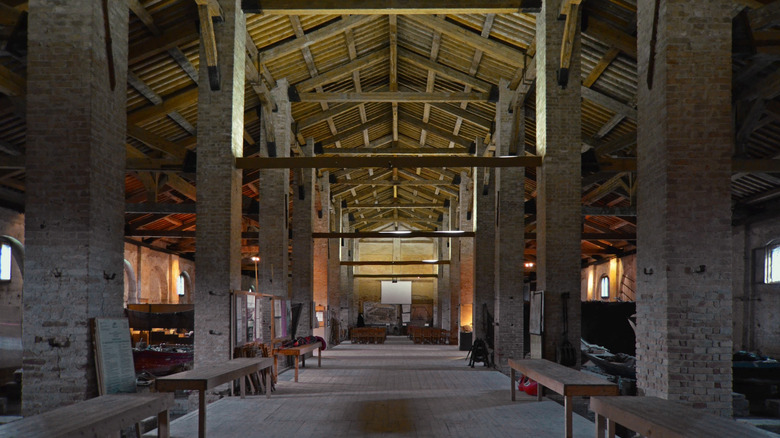
The walls encircling Lazzaretto Nuovo are not from the quarantine facility, but rather were built when Venice was controlled by the Austrians in the 19th century. The Austrian takeover destroyed all but one of the earlier quarantine buildings: a huge, central warehouse where items were brought from incoming ships for disinfection, called the "tezon grando." Some of the people working or isolated in the enclosure left behind inscriptions and drawings on the walls of the tezon grando, dating to the 16th and 17th centuries, which you can still find there today. You'll also get to see two preserved gunpowder towers that house some archaeological finds, as well as active archaeological digs happening around the island.
How to visit Lazzaretto Nuovo
For a chance to explore Lazzaretto Nuovo, you'll have to join a guided tour, which is offered by the Lazzaretti Veneziani museum. Reservations must be made through email, and there's an entry fee you pay when you arrive. Guided tours last around two hours, with English tours available on Saturdays from April through October. The tour guides are highly praised on Google, with one visitor commenting, "Excellent tour guide... and a unique and very very interesting place."
To reach the abandoned island, you can take a vaporetto, a water bus that's Venice's cheapest way to get around the city. Lazzaretto Nuovo is a stop on the Line 13 vaporetto, which departs regularly from Fondamente Nove, the main water bus station connecting the historic center of Venice with its northern islands. It's about a 30-minute ride between Fondamente Nove and the island. As Lazzaretto Nuovo is an optional stop along the line, make sure to tell the driver you're getting off there. Afterwards, you might pair your island outing with the neighboring Sant'Erasmo, one of Venice's least-visited islands with glistening lagoon views and another stop on Line 13.