
Between Daytona Beach And St. Augustine Is Florida's Once-Abandoned Plantation That Is Now A Historic State Park
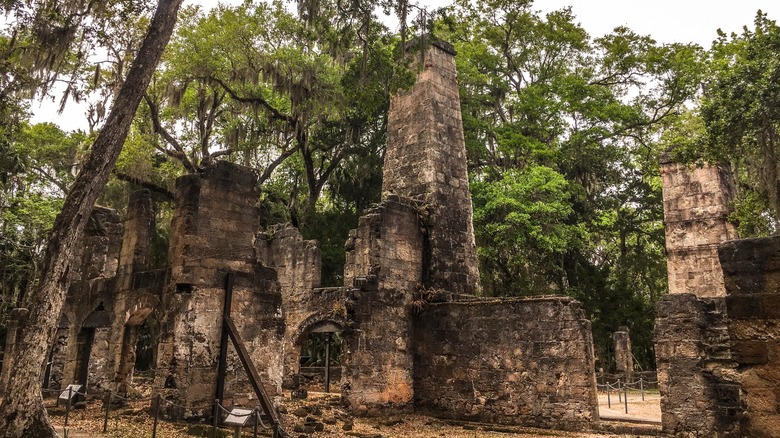
If you drive just half an hour from Daytona Beach, you'll discover the ruins of what was once one of the largest sugar mills in East Florida. Bulow Plantation Ruins Historic State Park spans 150 acres and preserves the remains of the Bulow Plantation. The plantation was owned by Major Charles Wilhelm Bulow, who acquired over 4,600 acres of land along the banks of a tidal creek that is now known as Bulow Creek. Located 22 miles north of Daytona Beach International Airport and nearly 36 miles south of historic St. Augustine, the plantation was destroyed after the outbreak of the Second Seminole War in 1836.
The plantation was sprawling, complete with a plantation house, spring house, slave quarters, wells, and a sugar mill constructed from coquina rock. After the plantation was burned to the ground, the structures that made up the large estate were never rebuilt. Over the years, a subtropical hammock reclaimed the land that had once been used for growing sugar cane, rice, and other cash crops. The plantation sat abandoned until 1945, when the Florida Park Service purchased the property. In the 1950s, the ruins were opened to the public as a state park, and in 1970, the park was added to the National Register of Historic Places. Today, visitors to Bulow Plantation Ruins Historic State Park are captivated by the park's living history. There's a $4 fee to enter, and while the primary attraction is the ruins that sit eerily within the dense hammock, the park offers other activities for visitors, such as hiking and paddling.
Exploring the ruins of Bulow Plantation Ruins State Park
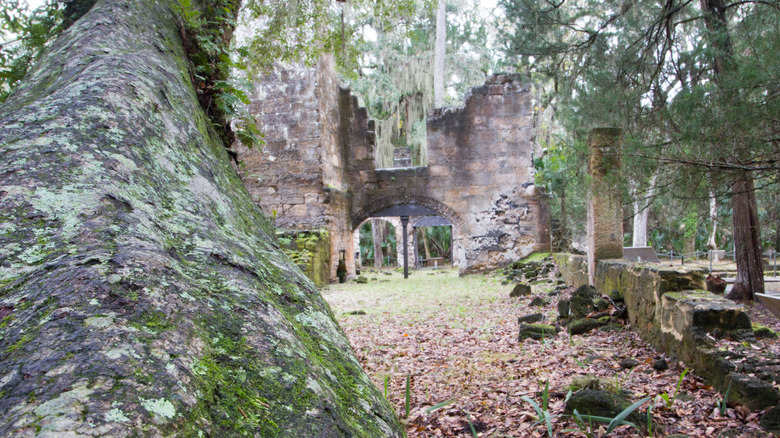
BulowVille, the name of the plantation, was a vast operation that was founded in 1821 and was run on the backs of enslaved labor. When the Second Seminole War began, the family and the people they enslaved were forced to abandon the plantation. On January 11, 1836, members of Florida's Seminole tribe destroyed BulowVille. Today, the historic site contains the remains of the sugar mill, several wells, and the weathered foundations of the spring house, slave quarters, and the plantation home. Parkgoers can reach the ruins either by an unpaved one-way loop or by way of the shaded nature trail that winds through the hammock.
The sugar mill ruins are the park's most dramatic feature, with the haunting structure still bearing the burn scars of that fateful day in 1836. A paved pathway winds around the walls of the mill, and interpretive signage along the path highlights the mill's history. While the sugar mill ruins are a must-see, there are other parts of the park worth exploring. Near the site of the plantation house, the outdoor interpretive center tells the story of BulowVille and displays artifacts from the time period. You can see the foundations of the slave cabins and spring house, which are less imposing than the sugar mill but are still rich with history — much like the ruins of Bongoland in Port Orange.
Relax and learn about history at Bulow Plantation
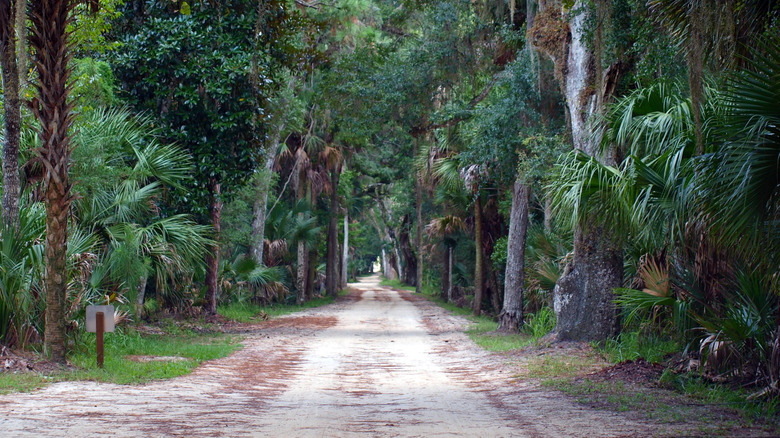
As nature has taken over the site where industry once thrived, Bulow Plantation Ruins Historic State Park now offers a great setting to reconnect with nature. In addition to the trail leading to the ruins, the park serves as the northern trailhead for the 6.8-mile Bulow Woods Trail, a mostly shaded nature hike that leads to nearby Bulow Creek State Park. Please keep in mind that, due to ongoing storm cleanup, parts of the Bulow Woods Trail are closed at the time of this writing. With its location along Bulow Creek, the park also offers fishing opportunities along the creek's banks. Visitors who come to cast a line can find a variety of fish, including red drum and largemouth bass. Make sure to have your fishing license in hand, as you may be asked to provide one.
Just south of the foundation of the plantation house, near the picnic area, you'll find the park's historic boat slip. During the plantation's operation, the slip was used both to ship cargo from the plantation along the creek and for recreation. Today, the boat slip acts as an access point for paddlers looking to take a leisurely trip down Bulow Creek. As part of Florida's Canoe Trail, Bulow Creek offers paddlers the opportunity to see the diverse wildlife that call the creek home, including swallow-tailed kites and bald eagles. In addition, Bulow Creek features a shoreline framed by southern live oaks and sable palmetto palms.
If you want to see other historical sites within an easy drive of Bulow Plantation Ruins Historic State Park, drive 36 miles south to New Smyrna Beach to check out the ruins of the Cruger-dePeyster Plantation, or drive about 45 minutes north to St. Augustine and explore the beaches and history of America's oldest city.