
Maine's Once-Thriving Military Battery Sits In A Scenic Preserve For Hiking, Birdwatching, And Ocean Views
There are more than 4,000 islands sitting off the coast of Maine. They are lined with fishing communities, historic lighthouses, seasonal inns, and renowned seafood restaurants. On Peaks Island, you'll find a World War II gun battery and panoramic ocean views. It's now part of a large nature preserve favored by birdwatchers and hikers.
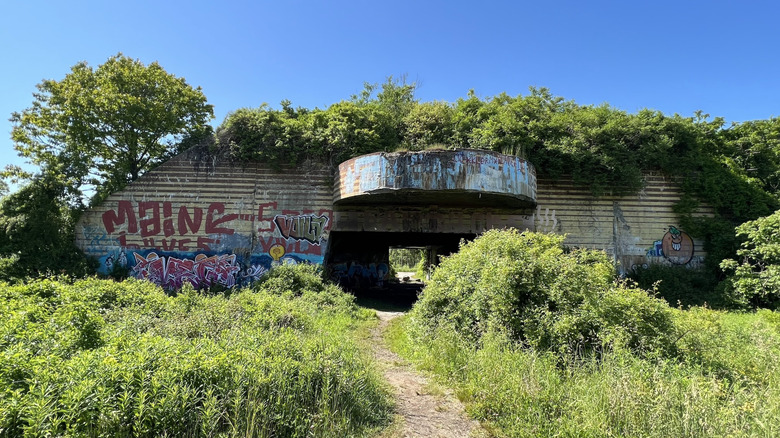
Peaks Island lies 3 miles off the coast of Portland, a lively hub of waterfront fun, renowned seafood, old walkable streets, and quirky shops. Since the 740-acre island was settled by Europeans in the 17th century, it's been a shipbuilding center, a summer destination known as the Coney Island of Maine, and a military fortification built to protect the city. Though the boardwalk and the amusement park are long gone, you can still see Battery Steele's overgrown observation towers when you visit the Peaks Island Land Preserve (PILP) that now protects more than one-fifth of the island.
Despite being an island, it isn't hard to reach Peaks Island. First, you must make your way to Portland, the largest city in Maine. You can either fly to its Portland International Jetport (PWM), which receives nonstop flights from cities all over the United States, or ride the train up from Boston. Amtrak's Downeaster line, departing from North Station, stops in Portland en route to Brunswick. After making your way to the Maine State Pier, you'll find Casco Bay Lines, which runs year-round ferry service to the Islands of Casco Bay, including Peaks Island.
Discover the remains of Battery Steele
The ferry from Portland doesn't take very long. In just 17 minutes, you'll arrive on Peaks Island, an artsy day trip location with unmatched ocean and Downtown Portland views. Despite being the most populous of the Islands of Casco Bay (fewer than 900 people live here year-round), Peaks Island is easily walkable. The Peaks Island Loop, which circles the island in just under 4 miles, takes in the south shore's scenic views, including Cairn Beach and Lookout Point, en route to the "Backshore." The east-facing side (or ocean side) of the island is where you'll find Battery Steele.
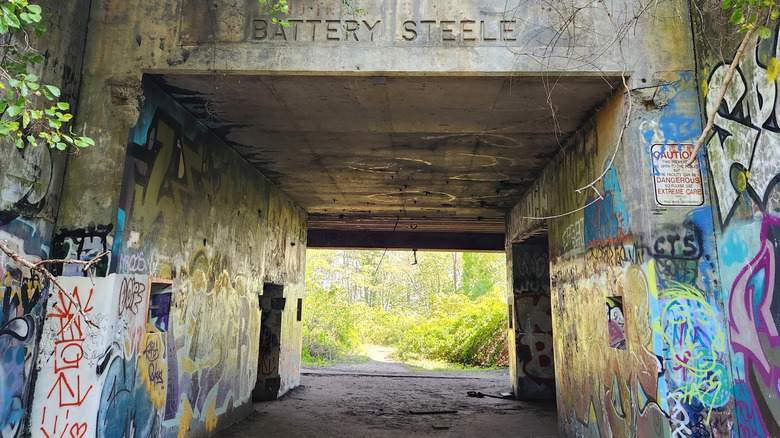
Battery Steele, named after a World War I Coast Artillery officer, was the biggest gun battery the United States ever built. It was constructed in 1942, during World War II, to defend Portland against a potential German invasion. The large battery had concrete bunkers, gun turrets, and observation posts. More than 800 American soldiers were stationed here until 1948, when Battery Steele was decommissioned.
The Peaks Island Land Preserve, which has protected almost 150 acres from future development, purchased the long-overgrown and graffiti-covered Battery Steele in 1995. Since 2005, it's been on the National Register of Historic Places, as well. You can now walk through the battery's tunnels, which are extensive and quite dark. You can also climb on top of the battery, where you'll find views of the water with three lighthouses in the distance.
Explore more of Peaks Island
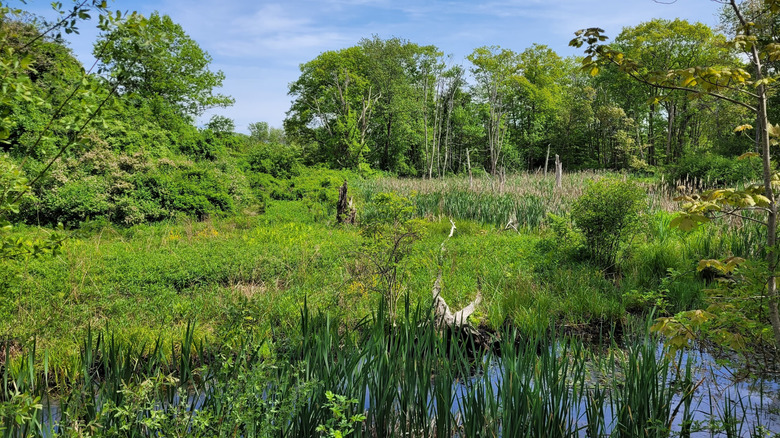
Though Battery Steele attracted you to Peaks Island, it isn't the only land on it that's safeguarded by the PILP. In front of Battery Steele, there are wetlands, including a cattail marsh and a red maple swamp. Keep an eye out for beavers and hawks here. North and west of the battery, you'll find Hundred Acre Woods. Though the woods aren't quite 100 acres — they only cover about 94 — it's the largest area protected by the PILP. You'll find swamps, marshes, hardwood, and young forests. There's also a good chance to see muskrats and gray tree frogs, as well as hearing black-capped chickadees or red-winged blackbirds.
As you continue following the Peaks Island Loop toward the northern tip of Peaks Island, you'll discover a couple of ponds and more protected woodlands. Ice Pond, which is used as an ice-skating rink during the winter, is popular with migrating birds, thanks to the native plants being repopulated there. Nearby Echo Pond and Skillings Woods are home to red spruce trees and raccoons during the springtime. The Daveis Sanctuary, which borders the sea, has been a refuge for songbirds since the 1940s. It's also a popular spot to watch the sunrise.
When you reach the end of the loop, you'll be back near the ferry again. Hopefully, you'll have time for a trap-to-table lobster roll from the Island Lobster Company, or at least a cone at Down Front, which serves Gifford's HomeMaine ice cream. If you're continuing to head north, make sure to spend some time in Brunswick, the perfect base to explore Maine's Mid-Coast.