
The Once-Thriving Airline Boomers Still Remember Decades Later
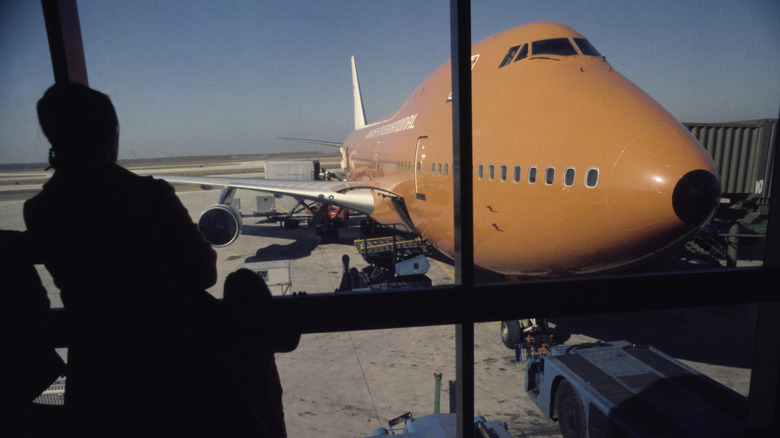
With the shutdown of Spirit Airlines in May 2026, people of a certain age may be thinking back to other airlines that have long since disappeared from the sky. Now-defunct aviation companies like Pan Am and TWA, once staples in the airline industry, are often fondly remembered by older generations. A once-thriving airline that made an impact on baby boomers in particular is Braniff Airways, founded as the Oklahoma Aero Club in Oklahoma City in 1927. Younger generations may know the name from the end credits of the animated series "South Park," or from stories told by their parents or grandparents. Maybe they've heard that Braniff hired and trained the first women to be certified airline mechanics, or perhaps they know about the company's fleet of brightly colored crew uniforms and planes.
Whether or not you've heard of it, Braniff Airways was a groundbreaking company in a number of ways, and even changed the way people looked at commercial flight. Several commenters on a thread in Reddit's r/aviation shared memories of Braniff, with one poster saying, "I flew Braniff multiple times. Most memorable was JFK to Amsterdam in 1979, first class, on a 747. Literal champagne and caviar. Crystal and china. I was 18." Another reminisced, saying, "As a kid in the 70s flew once round trip BOG – MIA coach. I was an easy to impress kid. I still remember the beautiful plastic green salt and pepper shakers with the meal. Great memories."
The history of Braniff Airways
The Aero Club precursor to Braniff Airways was started by Paul Revere and Thomas Elmer Braniff, with the airline becoming Braniff Airways in the 1930s. Though the Great Depression was rough for the company, it took on an airmail contract and grew through the years, moving its headquarters to Dallas Love Field in 1942. International contracts followed through the decade, and the company was eventually purchased, first by Texas Instruments, and then by Greatamerica Insurance Company. Then, Harding Luther Lawrence of Continental Airlines took over in 1965.
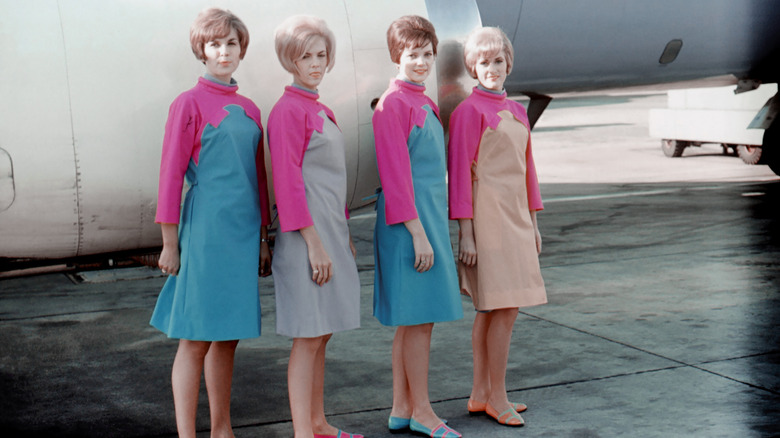
This was a turning point for the company, as Lawrence hired an ad agency to shift the perception of flying and make it more stylish. Advertiser Mary Wells came up with the campaign "The End of the Plain Plane," bringing literal color to the airline, and (according to my parents) getting people excited to fly. The planes that your own parents and grandparents likely remember were brightly colored and snappy. In fact, another poster on the r/aviation thread shared, "We always flew on Braniff when going to the US or Canada. I remember flying on a bright yellow 727 once and was always disappointed when we didn't get to fly in 'the banana plane.'" Additionally, the flight and ground crews started wearing stylish uniforms designed by Alexander Girard, Emilio Pucci, and Halston.
The end of Braniff Airways
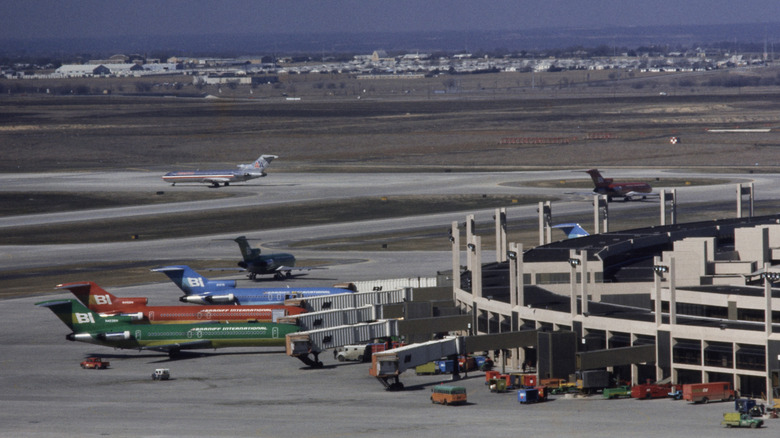
Braniff Airways continued to grow, even adding new routes when other airlines were struggling as a result of the Airline Deregulation Act of 1978. The same year, new solid-colored planes with leather interiors debuted, keeping up the style of the airline, despite the logical reasons most planes are painted white. In 1979, Braniff became the first and only U.S. airline to fly one of the supersonic Concorde jets, though because of noise regulations, it didn't actually fly at supersonic speeds. However, the larger airlines were taking over some of the routes that Braniff was famous for, cutting into its profits. Harding Luther Lawrence retired in 1980, and after the recession in 1981, things took a turn, and the airline ended its historic run in 1982. Despite Braniff Airways' demise, it's still remembered fondly. In another r/aviation thread, one person remembers, "My dad and I flew the Concord [sic] from IAD to DFW in April 1979. I was just a kid – 14 – but I remember it to this day. Very exciting!!"
Looking back at the history and risks taken by Braniff Airways, it's sad to think of how many airlines have gone bankrupt over the years and never recovered. However, the first flight wasn't that long ago in the grand scheme of things, taking place in 1903, and the progress made by early risk-takers like Braniff Airways can still be felt in the industry today. If all of this has gotten you interested in more aviation history, check out historic planes and spacecraft for free in Washington, D.C., at the Udvar-Hazy Center.