
Japan's Oldest And Largest Lake Is A 4-Million-Year-Old Beauty Popular For Fishing And Beach Fun
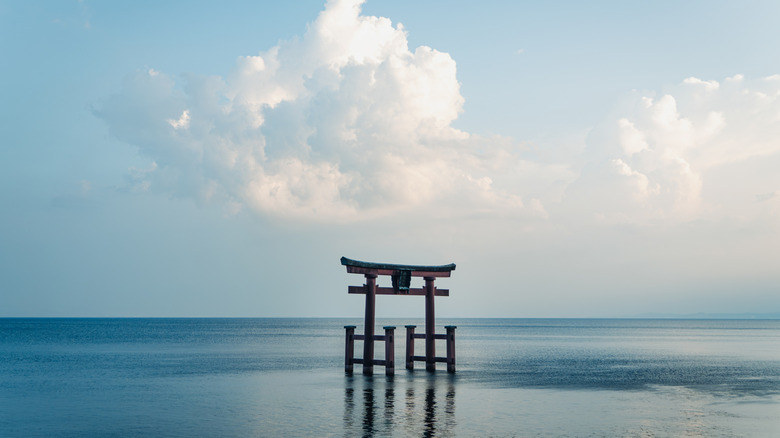
Just minutes away from Kyoto in the heart of Shiga Prefecture, there's a vast, shimmering expanse of water that stretches as far as the eye can see. Estimated to be at least four million years old, and featuring 146 miles of shoreline, the 259-square-mile Lake Biwa is Japan's oldest and largest lake. In fact, along with Lake Titicaca in South America and Lake Malawi in Africa, it's one of the oldest lakes in the world — and today, it's a popular destination for swimming, sunbathing, and fishing.
Lake Biwa's name is thought to be based on its curving shape. Wide and deep on one end and comparatively narrow and shallow on the other, the freshwater lake resembles a "biwa," a traditional short-necked Japanese lute. But the present-day moniker is only a few hundred years old: the ancient lake has gone by many names in its long history, including "Ohmi no Umi," which translates to the "Sea of Ohmi" (with "Ohmi" being an older name for the prefecture).
Swim, sunbathe, and fish on Lake Biwa
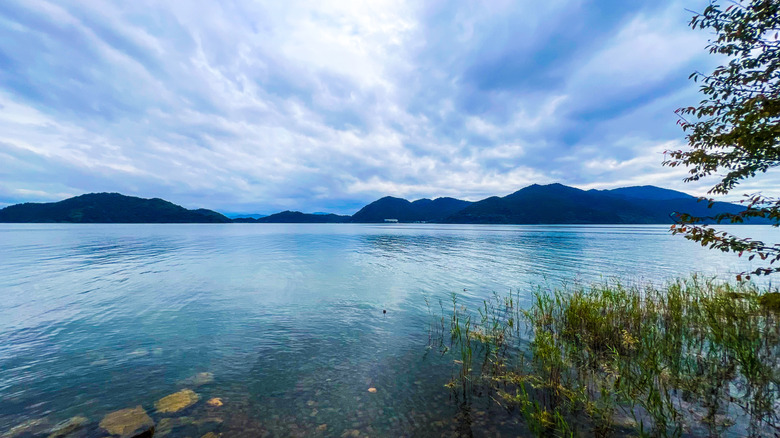
When the weather is warm and sunny, Lake Biwa's beautiful beaches fill with visitors. One particularly popular stretch of shoreline is Omimaiko Beach (also spelled Omi-Maiko) on the western shore. The white-sand and pebble beach, tucked between the Hira Mountains and groves of lush fir and pine trees, is a great place to put down a blanket and enjoy sunbathing and swimming in the lake. There are free public restrooms and barbecue pits that anyone can use, plus vendors selling everything from inner tubes to ice cream. It's a 10-minute walk from Omi-Maiko Station, the closest transport hub, with frequent railway connections to nearby Kyoto and Osaka, the foodie-favorite city nicknamed "Japan's kitchen."
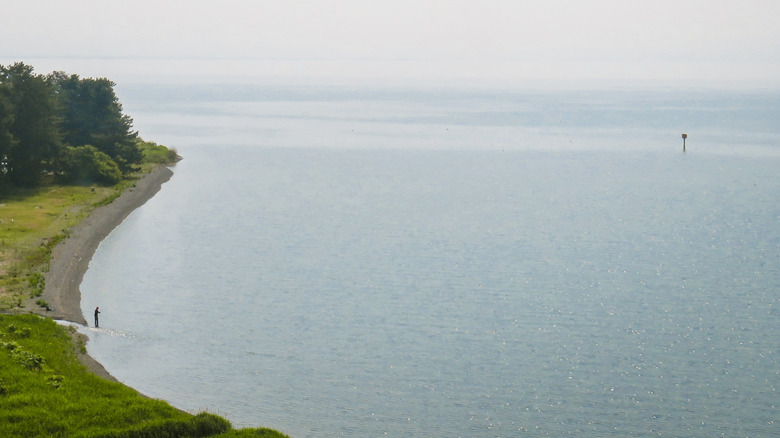
Lake Biwa is also a world-class fishing spot, thanks in part to its 341-foot depth, which supports a diverse underwater ecosystem. Many come to cast a line for largemouth bass, as one of the largest-ever of its kind to be caught, a fish weighing just over 22 pounds, was reeled in here. Other fish you might catch include the Biwa salmon, the Lake Biwa Giant Catfish, and a traditional Japanese fish called Ko-Ayu. For the best experience, consider working with a fishing guide or going on a chartered trip with an outfitter like Lake Biwa International Fishing Guide and Charter. A license is not required to fish on the lake, and the best conditions occur between March and November.
Planning a visit to Japan's largest lake
Cultural attractions around the scenic lake include Oki no Shiraishi (Shirahige Shrine). It's an unusual sight, to say the least: a rock formation in the middle of Lake Biwa supports a striking torii gate that rises up from the water, appearing to float majestically on the lake's surface. It's one of many shrines and temples located on or around the lake, like Mangestuji Ukimidō, a decorative wooden temple constructed on a jetty that juts out onto the water.
Getting around Lake Biwa is relatively easy, as there's rail service that runs along the lakeshore: the JR West Line serves many destinations on the east side of the lake, and the Keihan Ishiyama Line serves the western shore, with connections to Osaka. Many international travelers visit Lake Biwa on a day trip from Kyoto, as it's an hour (or less) away by train from the city, depending on where exactly you're going.
If you're not basing yourself in peaceful Kyoto, one of the most-visited spots in a country that's considered the ultimate destination for solo travelers, you could choose to stay in one of the many lodgings around the lake. Conveniently, Shiga Prefecture's official travel website put together a guide to finding your ideal stay near Lake Biwa. Check out these affordable, gorgeous destinations in Japan for tourists on a budget (plus tips on how to save).