
Between Philly And Baltimore Is An Abandoned Island Fort That's Now A Scenic State Park For Hiking
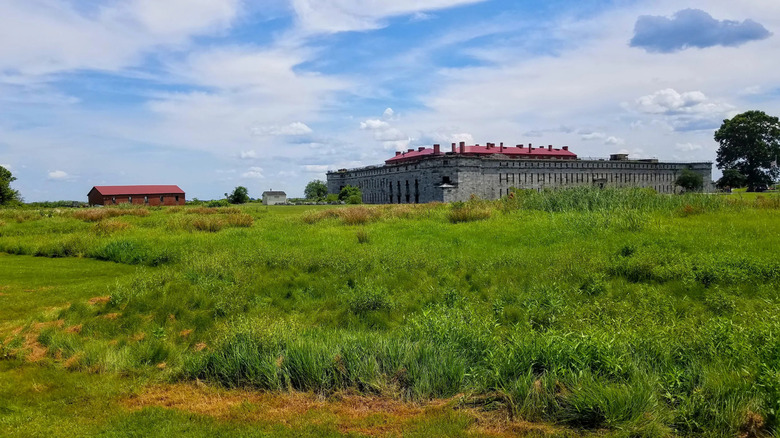
As the country's first official state, it's no surprise that Delaware is brimming with history. And one of its best-kept secrets is Pea Patch Island, a roughly 1-mile stretch of land surrounded by the Delaware River. Home to a unique Civil War-era fort that was once a Confederate prison, today Fort Delaware State Park is filled with living history, complete with historic tours, reenactments, and demonstrations. Plus, the island also houses a nature reserve with unique bird species and hiking trails.
First formed as a mud bank in the 18th century, the island's name supposedly stems from the peas that started to grow after a ship carrying seeds ran aground. In 1813, the federal government took over control of Pea Patch Island, with the goal of guarding the Delaware River and protecting the Wilmington and Philadelphia ports. Over the next few decades, numerous complications (including a fire) delayed the construction of the fort you'll see today. It was finally completed in 1859, with 32-foot-tall walls, a 30-foot-wide moat, and a surrounding community, with a school and numerous businesses.
To reach the park, hop on a ferry from Delaware City (about an hour drive from Philadelphia, and an hour-and-a-half from Baltimore). From there, it's just a half-mile ride to reach Pea Patch Island. Fort Delaware State Park opens for its regular programming from late April through September (specific days vary), but outside of its regular hours, you'll also find other unique offerings throughout the year, including sunset river cruises and paranormal ghost tours. The ferry costs $15 for adults (which includes entry to the park). Close-toed shoes are required to visit the island.
A historic Delaware destination with an abandoned fort
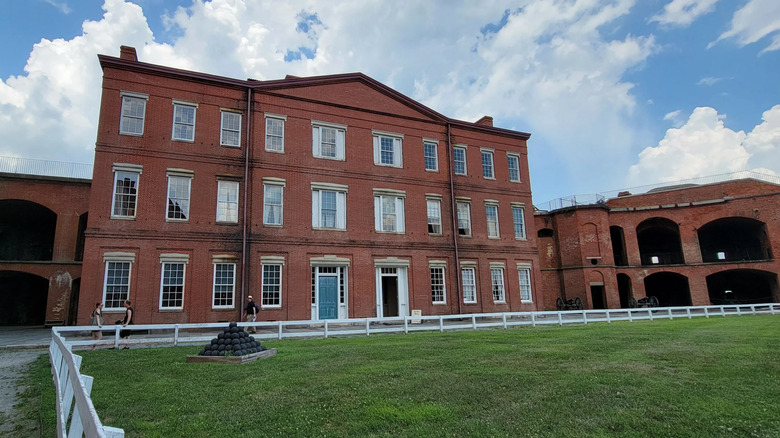
When it comes to Civil War history, American history buffs probably don't immediately think of Delaware. But Fort Delaware's most significant history actually traces back to this time period. Throughout the course of the war, the fort served as a Union army prison, housing thousands of Confederate prisoners, including many soldiers captured during the Battle of Gettysburg, and prominent figures like Jefferson Davis' private secretary and the governor of Texas.
After the Civil War, the fort remained in use for a few more decades, but by 1944, it had been abandoned. A few years later, the state of Delaware resumed control of the property and transitioned it into the state park it is today. Today, that history comes alive at the park. You'll find interpreters dressed in 19th-century clothing, and past visitors consistently praise how they stay in character, engage with guests, and thoroughly answer questions. "This place is great," said a visitor on Google. "The employees are nice and knowledgeable, [and] can answer any questions... It's really a good place, I must say."
Beyond chatting with the "locals," visitors can tour the numerous corners of the fort and surrounding grounds, including the barracks, officers' quarters, the kitchen, a blacksmith shop, and more. Each day, you can even see a cannon fired.
Birding and hiking in Fort Delaware State Park
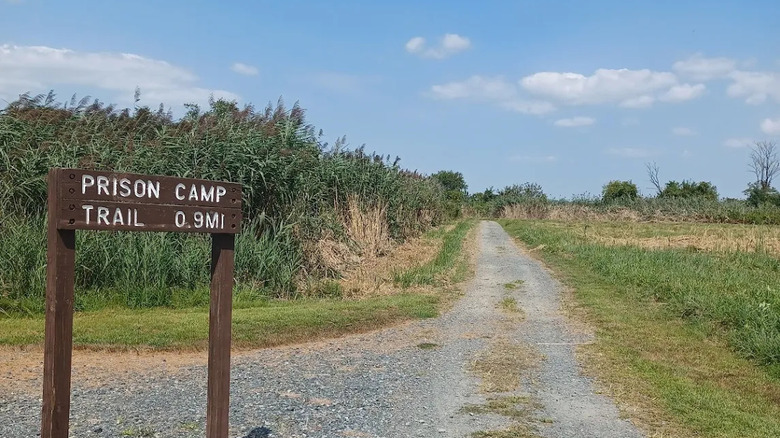
Fort Delaware State Park isn't just worth visiting for its history — there's also the Pea Patch Island Nature Preserve, a scenic wooded area with peaceful views. Travelers looking for the best birdwatching destinations the U.S. has to offer will be happy to hear that around 130 bird species have been recorded here, and it's one of the top places on the East Coast to see birds like herons, egrets, and ibis. While here, follow along the 2-mile Prison Camp Trail — an easy, roughly 50-minute hike with minimal elevation gain — to reach an observation platform with the best view. The park also occasionally hosts heron tours led by a member of the Delaware Ornithological Society, if you prefer a guided experience.
Along the way, you'll see picturesque views of the island's surrounding waters, marshes, and other wildlife. Past visitors recommend bringing bug spray, and keep in mind that portions of the trail can sometimes close due to bird nesting. For another Delaware state park with birdlife and scenic trails, consider a visit to Brandywine Creek State Park. And if you'd prefer to dive into more Civil War history, venture out to Bennett Place in North Carolina, which is the spot of the largest troop surrender in the entire war.