
Wisconsin's First Capitol Is Next To An Under-The-Radar State Park Full Of Family-Friendly Outdoor Fun
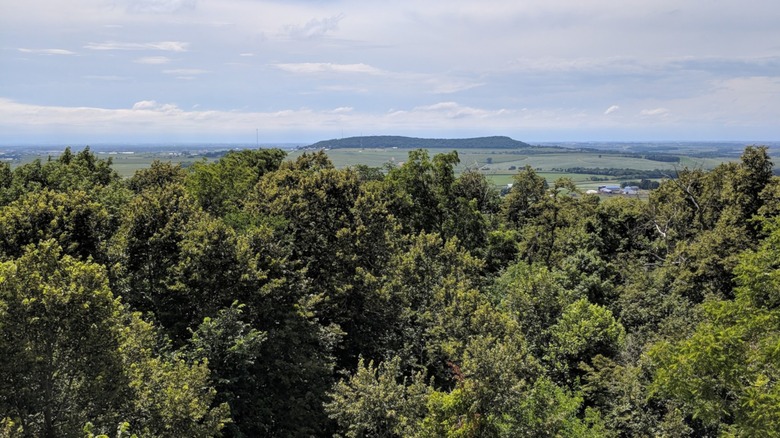
Far from the shores of the Great Lakes are the Belmont Mound Wounds. Closer to the border with Iowa than it is to Lake Michigan, these woods are home to an often overlooked state park — Belmont Mound. Travelers to Wisconsin should not miss out on the chance to explore this diverse forest, where trees and flowers couch stone formations that have developed over hundreds of millions of years. Today, the park is filled with life, including wild turkeys, hawks, chipmunks, and many other animals that call the forest home.
Belmont Mound State Park is managed by the Wisconsin Department of Natural Resources, and like all such areas, visitors are welcome to fish, hunt, trap, and forage for food, such as fruits and nuts. In the winter, the park warns against skiing because the trails are not groomed, but guests are invited to snowshoe once the snow starts to fall.
Park goers typically stop in the town of Belmont, situated 2.5 hours west of Milwaukee. Like Dodgeville, a similarly small but charming city near Madison, Belmont may not be huge, but visitors come here for a reason. It is an ideal stop for anyone exploring the park, located just five minutes north. However, as the First Capitol, it is also home to some of the original government buildings used before Wisconsin even became a state. Belmont and the surrounding areas stay under the radar, but there is plenty of family-friendly fun to be had while you visit.
Hiking to see the geographic and natural marvels of the park
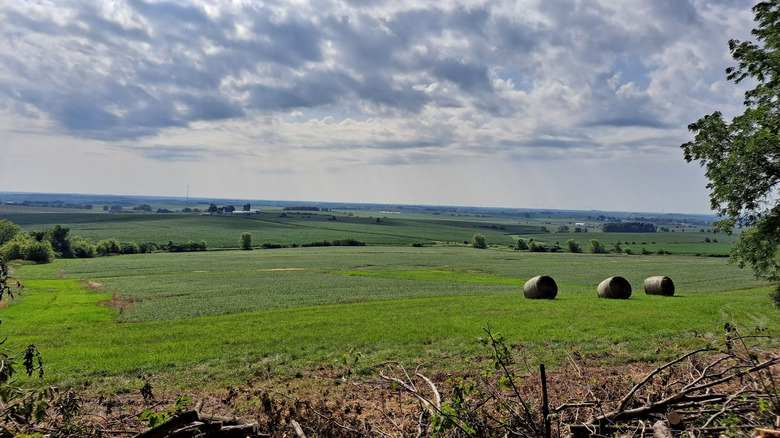
Since overnight camping is not allowed in Belmont Mound State Park, the nearby artsy college town of Platteville makes an excellent place to stay. From there, the park entrance is just 12 minutes east. Once you are on the grounds, Belmont Mound State Park is best known for the geographic highlights along its paths. Among these is the Devil's Dining Table. Over time, weather conditions eroded rock surfaces to form this unique formation that closely resembles a table. The surface is 40 feet across and is perched on a rock column. Similar formations include the Devil's Chair and The Cave, all of which can be seen at the northern end of the park.
Encircling most of the property is the looping Belmont Mound Extended Loop, which is only about a mile in length. Although not one of the toughest hiking trails you will find in North America, it is still scenic. Guests can find the Devil's Dining Table close to the north end of the loop that circles the park. South of the table, one of the best views of the countryside can be enjoyed from the Top of the Mound. Once the sight of an observation tower, the Top of the Mound remains the go-to destination for the best views of the park.
Belmont Mound State Park is open year-round from 6 a.m. to 11 p.m. Families do not have to worry about breaking the bank if they are visiting: There is no fee to enter and no need for a vehicle admission pass, which is required at Wisconsin's other state parks.
Having family friendly fun and enjoying history at the First Capitol
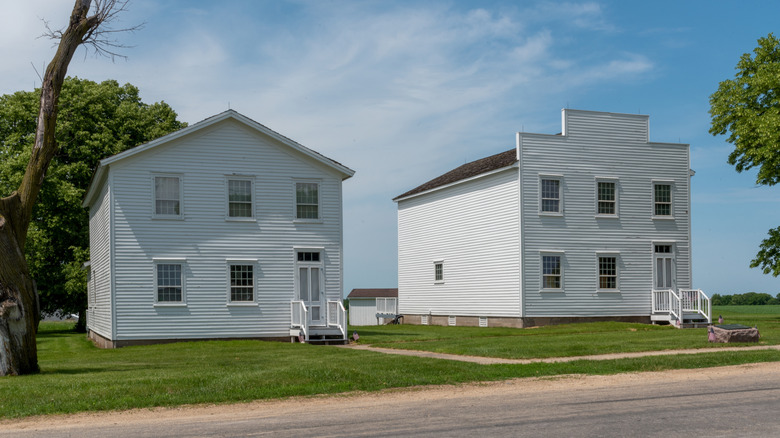
After you have enjoyed time at the park, the First Capitol is a family-friendly way to spend the afternoon while seeing reconstructions of where the original legislature met. Best of all, you can combine your visit to Belmont Mound State Park with a visit to the First Capitol, since the grounds are just one minute away from the park exit.
Today, the capital of Wisconsin may be Madison, but it was not always that way. Belmont acted as the home of the territorial legislature before the Capitol was moved to Madison. This historic site explores early Wisconsin history from its days as a territory through statehood. Visitors will find a combination of restored structures from the state's earliest era and exhibits depicting how Wisconsin's government was formed.
The first of these structures is the Council House, where Wisconsin's legislature met. The interior combines educational displays with furniture arrangements that mirror how the building looked when it was in use by lawmakers in 1836. After its days as a government building, it was converted first to a home and later a barn. The second building on the grounds is the courthouse. Interestingly, the courthouse was where legislators resided whenever they met. Visitors hoping to see the buildings should note that the historic site is free and open to explore seasonally from late May to early September.