
TSA Just Updated Its Marijuana Policy, But What Exactly Does That Mean?
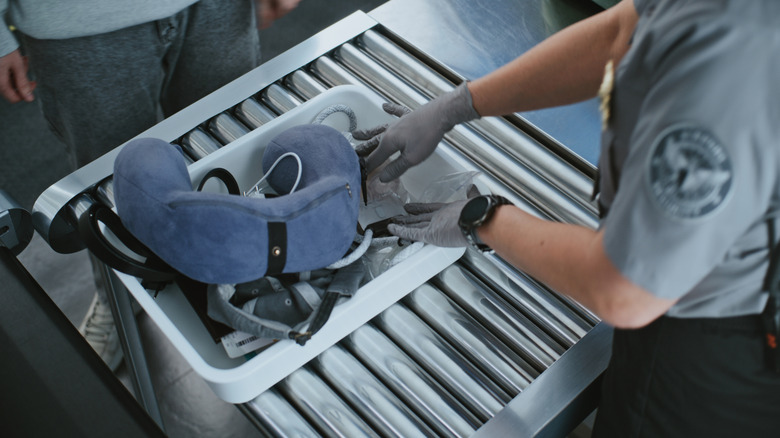
Is it about to get easier to pack your pot on an airplane? Without any fanfare or even a press release, the Transportation Security Administration quietly changed its policies regarding marijuana in April 2026 — specifically, medical marijuana. But as news of TSA's change began to circulate, the specifics remained unclear.
According to the TSA's official website, "medical marijuana" is now permissible in both carry-ons and in checked bags, with a "special instructions" caveat. Those instructions, however, have not yet been clearly defined. TSA also explains that while it does not specifically search for illegal drugs, the agency retains final discretion over whether to permit items through the safety checkpoints and will turn any illegal substances or evidence of criminal activity over to law enforcement. Long classified as Schedule I contraband (alongside heroin), this is the first time since President Richard Nixon signed the Controlled Substances Act in 1970 that any form of marijuana's risk has been downgraded by federal law. But the question remains: can you bring cannabis on a plane, or can't you?
Cannabis still isn't federally legal in the United States, but the Department of Justice has recently reclassified some marijuana products from Schedule I to Schedule III, reflecting lower perceived risks and fewer legal ramifications. A proposed hearing scheduled for June 2026 could potentially extend this classification. The current Schedule I list of marijuana products includes a few FDA-approved items — like Epidiolex, or CBD — and products regulated by state-licensed medical marijuana facilities. For example, if you possess a medical marijuana card in Florida and carry a legal medical product through TSA, that product may fall under the revised federal guidance. Recreational marijuana users in states such as California, however, remain in a legally murky area when traveling through airports, which operate under federal jurisdiction.
You should still exercise caution even when traveling with medical marijuana
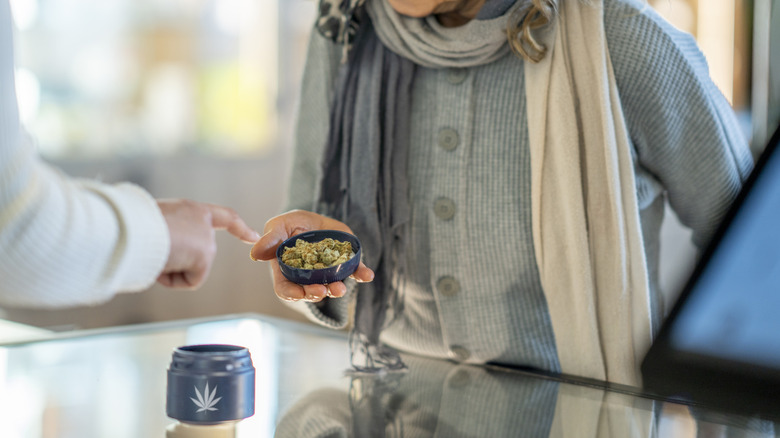
Even for card-carrying cannabis users, laws surrounding travel with marijuana on board remain murky and subject to TSA rules and control, which can be notoriously inconsistent. Additionally, the FDA has approved very few marijuana-containing products, although 40 states, the District of Columbia, and three U.S. territories have legalized medical marijuana in some form. In 2025, although marijuana remained illegal and one of many items banned from flights, TSA did allow products classified as hemp with less than 0.3% Delta-9 THC — a trace amount — in transit. Travelers on Reddit point out that since TSA doesn't automatically search for drugs, it hasn't been a travel issue for many, and some encourage its legalization. "The amount it would reduce air rage would be off the charts," wrote one user. "Giving alcohol to people locked in a tin can is very stupid." But local law stands no matter which airport you're in, and if TSA has any cause to involve law enforcement in a situation, it likely will.
Denver-based journalist Nickolaus Hines noted recently that some TSA agents were unaware that the law had even changed. Hines pointed out that the vague guidance could interfere with a smooth travel process, and ultimately, it leaves traveling recreational cannabis users in the status quo with no change to the marijuana travel policy. As Black Cannabis Magazine summarized, "The Schedule III action that took effect April 28, 2026 is not a broad rescheduling of all marijuana." For now, if you don't medically rely on cannabis, it's best to leave it behind. Even if you do use it medically, be sure to travel with documentation, including a valid medical marijuana card. And of course, remember that none of these rules apply when flying internationally, where cannabis laws can vary dramatically from country to country.