
Nepal's Top-Rated National Park Has A Lot More Than Just Mount Everest
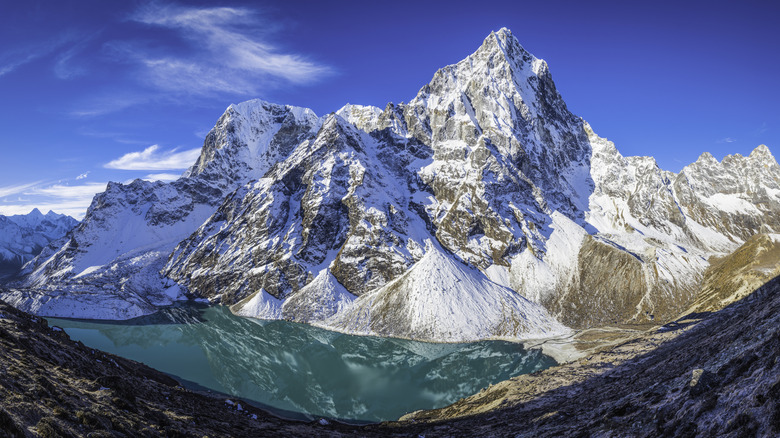
There is, quite literally, no natural wonder that can top Mount Everest. This soaring summit caps the entire globe at over 29,000 feet above sea level, crowning the highest ridge in the Himalayas between the Tibetan Plateau to the north and the nation of Nepal to the south. What some travelers may not know is that this hulking high point has a Nepali name: Sagarmatha, which means "Goddess of the Sky." It also happens to be the name of a national park that encompasses the subpeaks, foothills, and vast stretches of land on the Nepal side of the world's tallest mountain.
While Everest looms large overhead, the Sagarmatha National Park unfolds around it, with enough rarity, beauty, and biodiversity to merit World Heritage Site status. According to UNESCO, there's oodles here to enthrall would-be adventurers besides the famous peak — think ice-capped mountains trodden by snow leopards and remote Sherpa communities alike. Beyond Everest itself, visitors will find epic trekking routes, lowland forests, and rugged high-altitude plains dotted with iconic peaks, from the cone-shaped Ama Dablam to Lhotse, the fourth-highest mountain on Earth. Sagarmatha offers so much for outdoor adventurers that it's the top-rated national park in Nepal on Google Reviews, with 4.6 stars over 2,200 reviews. While Langtang National Park also has 4.6 stars, it clocks in with less reviews overall, at 2,000 (at the time of writing).
Just getting to Sagarmatha National Park can be a challenge. The main route involves a domestic flight from Kathmandu to the town of Lukla, followed by an onward trek to the entrance of the reserve, though you can also opt to charter a helicopter or take a combination of 4X4 and hiking that takes multiple days. Every visitor to Sagarmatha needs a permit, which is typically arranged in Nepal's largest city, ancient Kathmandu, before arriving.
Epic trekking in the Sagarmatha National Park
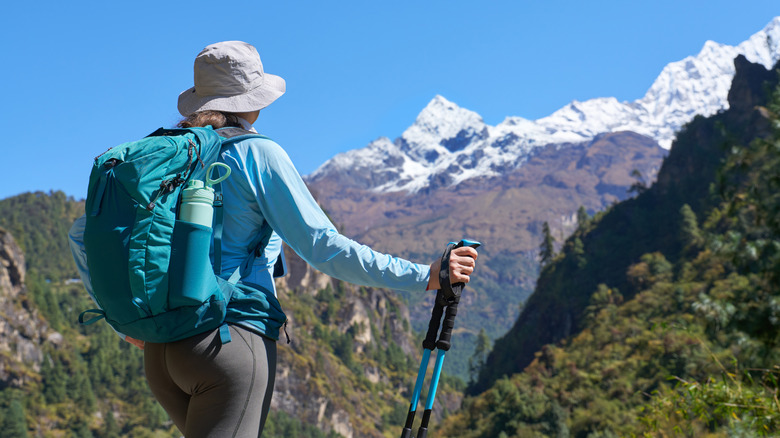
The Sagarmatha National Park plays host to some of the absolute best hiking trails in Nepal. Chief among them is the legendary Everest Base Camp Trek, a 12- or 14-day route that takes you all the way from the highland outpost of Namche Bazaar to 17,598 feet above sea level. The end point is, just as the name implies, the camp where serious mountaineers gear up and prepare for the push up Everest itself. Along the way, you'll drop by the stirring Tengboche Monastery, one of the highest in Nepal, and even do potential side hikes to conquer the viewpoints of Kala Patthar, where you can watch the sunrise over the roof of the world.
There's also the Gokyo Lake Trek, which whisks you up to the highest-perched string of mountain lakes on the planet. It's a journey of over 10 days, going on sheer-cut stairs, across remote passes, and past groups of yaks on less-trodden trails. You'll get to see 19 lakes in all, which simmer teal blue when the sun shines. There are also lookouts over carved glacier tongues where other mountains, like the world's fifth-highest mountain, Makalu, stand tall behind.
There are two main trekking seasons in the Sagarmatha National Park. One is spring, between March and May, when the wildflowers are the highlight. The other is fall, starting in September and ending in November, when you can bank on clearer skies and better views. There are also key safety concerns to be aware of when traveling to this far-flung corner of Asia, especially altitude sickness, which remains one of the region's most serious risks.
The cultural draws of the Sagarmatha National Park
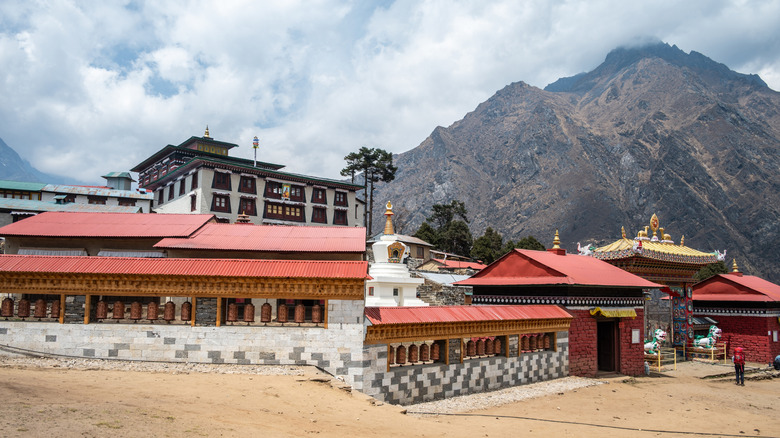
Despite encircling one of the most dramatic and distant stretches of the Himalayas, much of it high above the tree line, Sagarmatha also has a rich human history. Take the aforementioned Tengboche Monastery. It's seen as a real cultural highlight of any visit, not only to Sagarmatha but to the whole of Nepal. You'll find it sat in the shadow of twisted Ama Dablam, the so-called "Matterhorn of the Himalaya." Climbers aiming for the Everest summit come by for blessings before their big expedition, while late fall is the time of the Mani Rimdu, a festival that involves dance and meditation.
Around that flows a region peppered, according to UNESCO, with over 20 Sherpa settlements, some of which have existed for more than 400 years. There's the duo of Khumjung and Khunde, for example, which the Nepal Tourism Board's official website hails as a great place to get acquainted with local Sherpa culture — and the cuisine.
Just a touch south of that, Hotel Everest View offers some of the highest hotel rooms in the world. The accommodations there open up onto sweeping panoramas of the whole Everest massif, as does the on-site restaurant. Keep going south, and you'll soon land in Namche Bazaar, a hubbub of hiker activity that brims with teahouses, outdoor gear shops, and even bars where trekkers gather pre- and post-adventure.