
What Colorado's Best Ski Resorts Have In Common (And What They Don't)
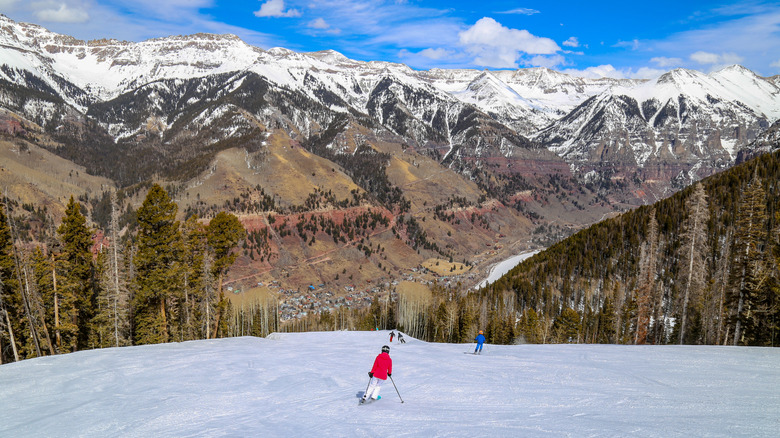
If you're wondering what makes a good ski resort, why not look to Colorado? This is the state with the absolute best skiing in the U.S., and a few of its resorts are even among some of the top-ranked in the world. There are over 30 ski resorts across the territory, but we thought we'd narrow it down to the top two to try to pinpoint what, if anything, they have in common. And what they don't.
The method? Take rankings of all the resorts in Colorado from a broad selection of leading ski and mountain publications, like OnTheSnow, Z Rankings, Snowmagazine.com, and Powderhounds, to pick out the two resorts that get namedropped the most. Then, compare them to see what binds them together (ski pun intended!) and what doesn't, looking at everything from overall terrain coverage to the style and vibe of the resort town itself.
Two clear names emerged from research: Vail and Telluride. It's easy to see why they came out on top. Vail was ranked as the most resilient for skiers worldwide, showcasing a snow-surety that eclipsed even Switzerland's Zermatt and France's Val d'Isere. Meanwhile, the year-round destination of Telluride was voted as the top ski resort in North America in 2023 by OnTheSnow and once reigned supreme on USA Today's 2019 list of the finest ski centers on the continent. So, at the very least, one thing each of these has in common is an undeniably fine reputation in the world of ski and snow sports.
What Vail and Telluride have in common
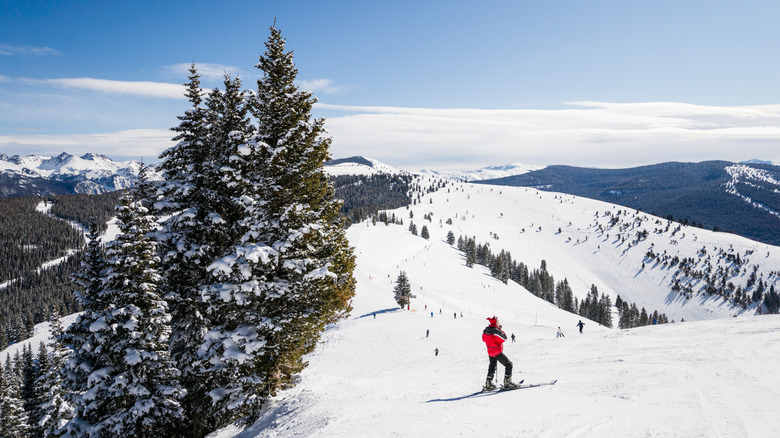
The folks over at Ski North America 100, a site dedicated to ranking and reviewing the top century of ski resorts across the continent, highlight that terrain diversity is a real forte of Vail. They point out how the resort offers everything, from big groomed pistes to more distant back bowls across its vast landscape. And it looks like that's something Telluride has up its ice-caked, snow-covered sleeve, too. Snowmagazine.com praises its compact but organized ski zone, with tree-lined beginner runs on Bald Mountain alongside thigh-busting mogul descents from the top of lift nine.
The snowfall counts in both spots are also roughly in line with each other. Vail gets an average of 250 inches of the white stuff per year, while Telluride receives about 206 inches each season. Not to mention, Z Rankings, a data-first league table of over 220 ski resorts, shows that, while Vail gets a touch more snow overall, Telluride has more north-facing slopes to preserve the all-important snowpack.
Another great point these resorts have in common is the fact that you can access them with the very same multi-mountain ski pass. Vail Resorts, the company that runs Vail itself, offers the Epic Pass. It provides access to over 90 separate ski mountains across the whole globe, from Whistler Blackcomb in British Columbia to Stowe in Vermont. It even includes France's Three Valleys, the largest ski area in the whole world! Telluride is also listed on Epic as a partner resort, allowing up to seven days' skiing each year at no extra cost.
Differences between Vail and Telluride
Even a quick glance at the mountain metrics reveals one clear difference: Vail is massive compared to Telluride. It counts a whopping over 5,300 acres of skiable terrain to Telluride's 2,000, which actually makes the former the largest ski resort in all of Colorado. Online ski-travel guide Powderhounds remarks that you could ski in Vail for a whole week and still not have skied everything! That's a sentiment probably not so true in Telluride, where there's less terrain.
These two ski hotspots also diverge in location and the crowds they draw. Telluride is consistently called remote and a touch off-the-beaten-path. It's tucked away at the mouth of a dramatic canyon in the San Juan Mountains, which makes for spectacular views but also means the resort can be hard to reach. In fact, Telluride is a mighty six-hour drive from Denver, while Vail, sitting plum on the main Interstate 70, is just two hours from the big city. The bottom line: Vail can get busy and easy to access, but Telluride is more chill with raw, pristine nature.
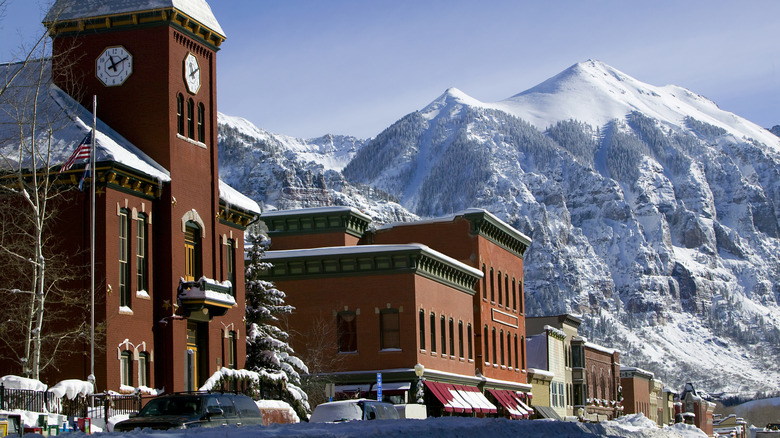
Finally, there's the look and feel of each resort. These places could hardly be more different. Vail was planned as a ski resort in the early 1960s, while Telluride has a story that goes all the way back to the late 1800s, when it sprang to life during a Colorado mining boom. Vail's downtown was artificially imbued with a whiff of Europe, thanks to carefully curated streets lined with Swiss-looking chalets. Telluride's center is a genuine National Historic Landmark District, complete with handsome Victorian facades.