
Morocco's Car-Free Destination With Jaw-Dropping Open Air Markets Is One Of The Best Places To Visit In 2026
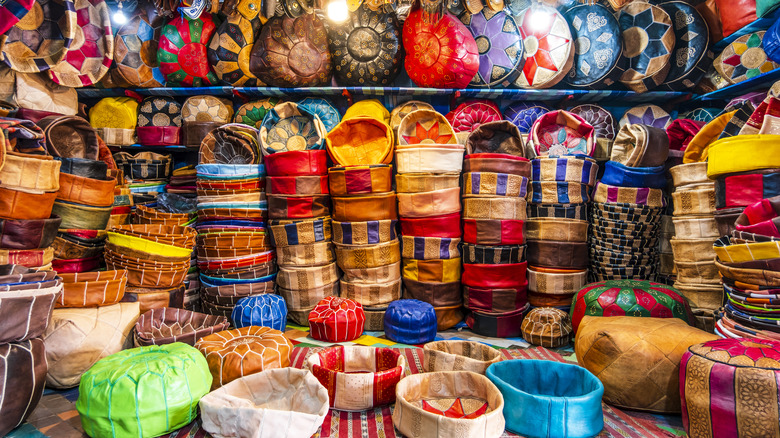
There are so many things to do in the middle of Fes, Morocco. You can stroll the alleyways, shop for wares, and sip gourmet coffee. You can visit historic mosques and hear the Adhan — Muslim call to prayer — five times per day. You can witness the traditional leather-dyeing process at the Chouara Tannery, where giant vats are spread out in a special plaza. You can chat with merchants and baristas, and if you're linguistically inclined, practice your French or Arabic. This is an action-packed city of more than a million people, and the Medina (old city) of Fes is a World Heritage Site that people travel from all over the globe to experience. Most of the activity occurs in the open air, in the shade of closely packed buildings. But there's one thing you can't do here: drive a car.
Not only is this walled quarter designed for pedestrians, according to Guinness World Records it's the world's most populated car-free city. Other urban areas may forbid motor vehicles across a larger area, but Fes' medina has the most residents of any foot-based community, at more than 150,000 residents. In keeping with medinas across Morocco, this part of Fes is dense and busy, and the streets were laid out generations before the first combustion engine. Even if you could fit a small car in these narrow streets, such a vehicle would look totally out of place among the steep walkways and old-fashioned stalls. These 9,000 streets are also laid out in a maze-like pattern, and even seasoned explorers tend to get lost.
How to experience the Medina of Fes
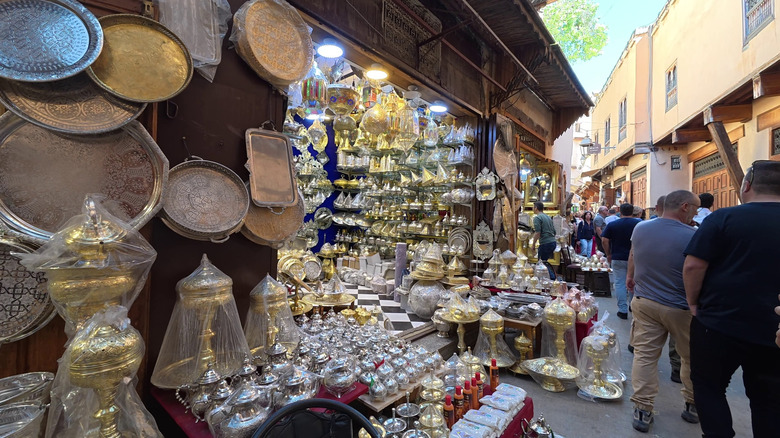
Many associate the name "Fes" with cylindrical red hats, and indeed, the traditional fez was originally fashioned in this Moroccan city. But the city's roots go far deeper than that. The medina was first established around 800 A.D.. It was here that the University of al-Qarawiyyin was founded, an institution that is still educating students today and holds the Guinness World Record for oldest continuously operating university in the world. The history of the medina is layered, and evidence of its 1,200-year-old past is everywhere, from the 350-plus mosques to the ornate bronze doors of the Royal Palace of Fes.
With this heritage in mind, the best way to enjoy the medina is to walk around and do a little shopping, just as travelers have done since the Middle Ages. Stalls are filled with iconic Moroccan wares: dried dates, fine pottery, leatherworks, distinctive lamps, and woven carpets are all classic souvenirs from the Kingdom of Light, as Morocco is often known. You also get to engage in haggling, a routine practice in the streets of Fes. Negotiating prices can be a fun way to interact with merchants, once you get the hang of it.
Leather is a massive industry here, and visitors are encouraged to tour the tanneries. Such culture trips are common and easy to arrange. Just be aware that the process lets off a powerful smell, and guests are usually given sprigs of mint to hold against their noses. Still, this is one of the unique activities and traditions that the "Cultural Capital of Morocco" showcases.
Getting to Fes and where to stay
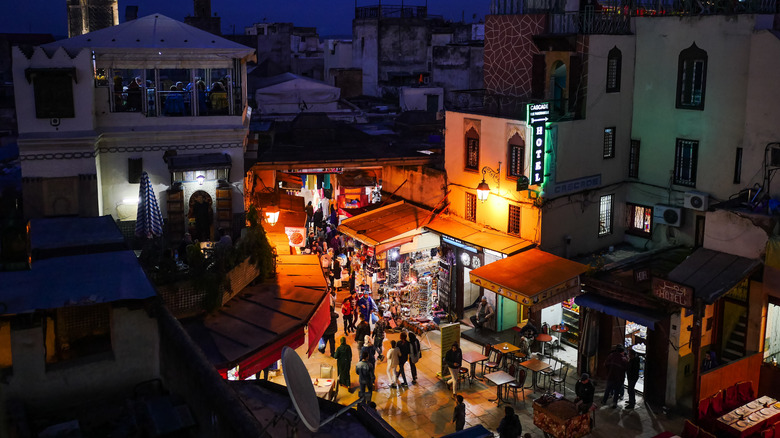
Let's assume you're visiting without driving a car, and you're most interested in Fes' historic center. It's a perfect situation since, like these 5 peaceful, car-free islands, the Medina of Fes requires no car rental, gas, or parking. The city has its own airport, Fès-Saïss International (FEZ), so many foreign travelers fly directly there. Expect a 40-minute taxi ride from the terminal to the medina. As for driving around the rest of Fes (where cars are permitted), look out for "petits taxis," smaller cars that can take up to 3 passengers. Fes also has an active train station, the "Gare de Fès," whose architecture takes its cues from traditional Arab palaces. The station connects you to all major Moroccan cities, although you may have to transfer somewhere along the line.
Note that Fes technically has two medinas: Fes el-Bali is older and more famous, and it contains the marketplaces and landmarks described above. But there's also Fes el-Jdid, which is smaller and slightly newer. This is where you'll find the old Jewish Quarter and some other historic attractions. The former is more popular among tourists, but they are both considered the cultural heart of Fes.
Not surprisingly, Fes el-Bali is packed with hotels, offering a wide range of lodging and price points. Simple guesthouses can cost well under $100 per night, while luxury hotels like La Maison Bleue provide top-notch comfort and convenience but will set you back several hundred. Fes is famous for many things, but access to water isn't one of them. For that, Rick Steves says this laidback, comfy coastal paradise is the "most European city" in Morocco.