
This New York Neighborhood Was A Total Bust In The '70s — Now It's A Must-Visit Entertainment Hub For Families
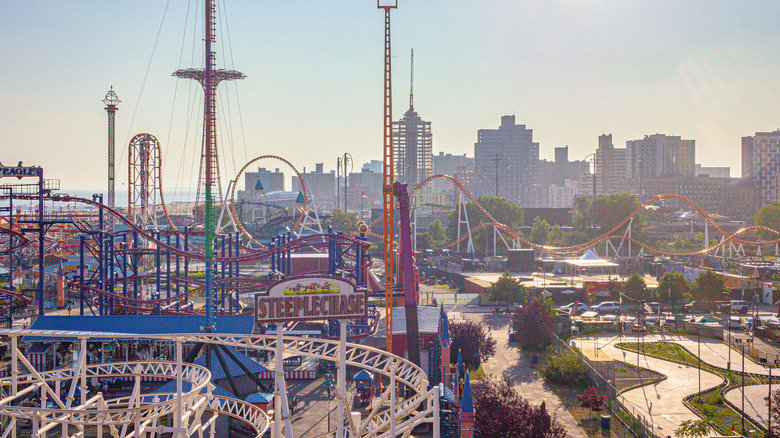
Today, Coney Island's cotton-candy colors and whirring rides can seem almost immune to decline, but it wasn't always such a sprightly pocket of whimsy. Step into a time machine to see the neighborhood in the 1970s, and your first instinct might be to fear for your life. It was the decade of the final phase of the New York City fiscal crisis, and pamphlets titled "Welcome to Fear City" were handed out to visitors, warning them about going out at night. There were some neighborhoods you might not have ventured to at all, not the least of which was Coney Island. The Brooklyn neighborhood has since turned into a family-friendly, beachfront escape from the imposing concrete sprawl of downtown, but it was a long road to get there.
Coney Island was one of the faces of urban decline in the 1970s, marked by shuttered amusement parks and crime. A 1975 article in The New York Times described Coney Island as a "war zone," full of demolished buildings and structures standing empty and neglected for years. Around the end of the 1960s, the city launched a failed urban renewal program for the neighborhood, which fell through due to a lack of funding. For all its hardships, though, Coney Island made a comeback in the decades to follow, reclaiming a seaside, carnival charm that made it an iconic vacation getaway in the first place.
How Coney Island reclaimed its seaside appeal
While Coney Island entered the 1970s with neglected properties and failed renewal projects, it ended the decade with a new hope for recovery. In 1975, local residents formed Astella Development Corporation, which slowly began filling vacant, desolate blocks with new, affordable housing. The initiative brought new life to Mermaid Avenue, the main artery of Coney Island apart from its entertainment-filled boardwalk. Today, it's where you'll find lots of dining spots from cuisines around the world. The Dominican restaurant Mi Candileja is a 4-star-rated option on Google Reviews, and just a block away is ChowTime, a solid option if you're craving Chinese food.
The preservation of Coney Island's historic rides also helped save the neighborhood from obsolescence. Perhaps there's no ride more symbolic of the neighborhood than The Cyclone, one of America's best wooden roller coasters with old-school charm. By the mid-1970s, it was at risk of demolition because the beachfront amusement parks were struggling financially. Luckily, one Parks Commissioner petitioned for its protection, and The Cyclone was saved, becoming an official city landmark in the 1980s. It's one of the key sites to see in the neighborhood today, and a great stop to add for a family outing to Brooklyn's seaside edge.
Take a whirl down the reborn Coney Island shoreline
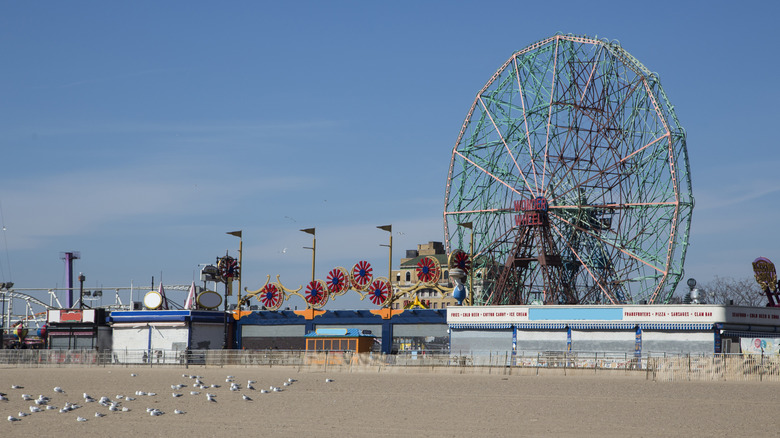
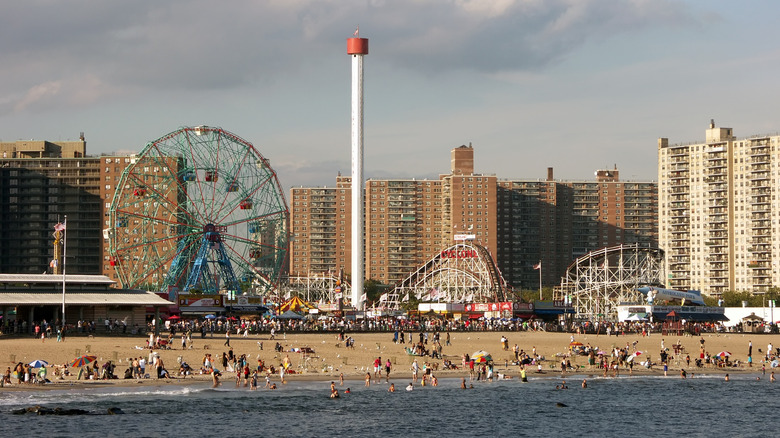
Beyond Mermaid Avenue and the Cyclone, modern-day Coney Island offers plenty for families spending a day by the beach. Its boardwalk is a menagerie of rides, hot dog stands, and live performers. One of its centerpieces is New York City's largest amusement park — Luna Park — home to some thrilling seaside rides, including The Cyclone. You can actually walk around the grounds for free if you just want to soak in its carnivalesque atmosphere and pay per ride. Neighboring Luna Park is another fixture, Deno's Wonder Wheel Amusement Park, home to the historic Wonder Wheel, which opened in 1920 and gives you bird's-eye views of the Atlantic Ocean on one side and out to the Manhattan skyline on the other.
If you keep walking to the end of the Coney Island boardwalk, you'll reach the New York Aquarium, a must-do rainy day activity in NYC that proves that you don't need a sunny day to visit the beachfront. It's a visitor favorite, with 4.3 stars on Google Reviews, and has a particularly well-loved sharks exhibit. Also worth stopping by if the weather isn't playing along for rides and beach lounging is the Sideshows by the Seashore Theater, just a block inland from the boardwalk. The venue regularly stages circus sideshow acts like sword swallowers and aerial artists.
Coming from Manhattan, you can take a subway train to the Coney Island-Stillwell Avenue stop, about an hour-long ride from Midtown. From the station, it's a 10-minute walk to the boardwalk and amusement parks.