
Why More And More Travelers Are Saying Goodbye To Puerto Rico Vacations In 2026
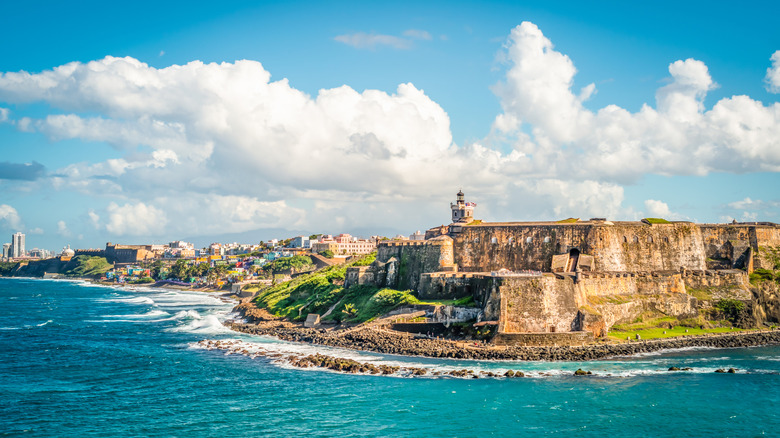
In 2025, Puerto Rico welcomed 6.8 million air travelers at the Luis Muñoz Marín International Airport and 1.6 million cruise passengers, making it Puerto Rico's fifth consecutive year of record-breaking tourism (via Discover Puerto Rico). All projections assumed the trend would continue, with 2026 adding new records to the island's belt. Instead, in a sudden twist, tourist movement into the island has decreased this year. So, what happened to make a seemingly thriving tourist destination lose its spark?
Okay, maybe "losing its spark" is a somewhat overdramatic statement, but some travelers in 2026 are indeed eschewing Puerto Rico for other destinations. However, the reasons have very little to do with Puerto Rico itself and more to do with rising travel costs, global economic instability, and a sudden uptick in flight prices. The conflict in Iran and the subsequent closing of the Strait of Hormuz, plus the sudden departure of Spirit Airlines, have led to a sharp increase in airfare, with domestic rates increasing by as much as 21% compared to the same time last year (via CNBC). As a result, many Americans might choose places closer to home (and accessible by car) as opposed to an island like Puerto Rico. According to Tourism Analytics, Puerto Rico welcomed around 2.2% fewer air travelers between January and April 2026, compared to the same months the previous year.
Another factor in the decline in Puerto Rican tourism is the fact that the local currency is the U.S. dollar. One reason Americans can travel to so many countries for (relatively) less money is because the U.S. dollar goes further in countries with a less valuable currency. But that advantage doesn't exist in Puerto Rico, and prices here are often comparable to the mainland.
Why is Puerto Rico expensive in 2026?
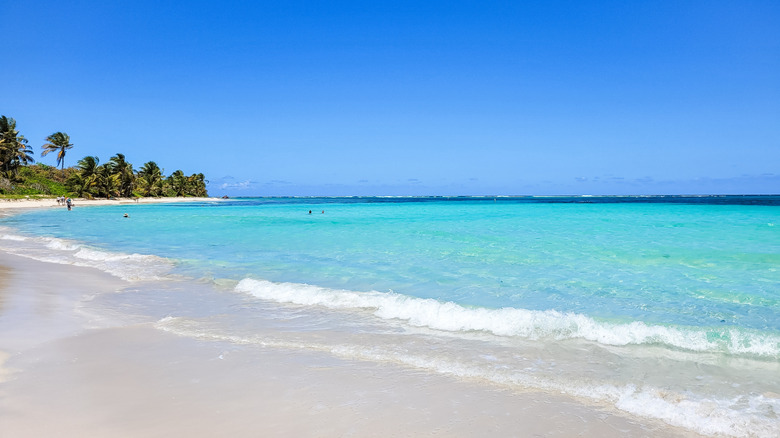
One of the biggest blows to Puerto Rico tourism was the demise of Spirit Airlines, which has left passengers scrambling and driven up prices on popular routes. The low-cost carrier served many routes into Puerto Rico, including its less-traversed airports in Ponce and Aguadilla, a Hawaii-alternative retirement destination with crystal-clear waters. With rising airfare costs, many travelers are questioning the logic of flying to an island when there are equally scenic tropical destinations that are cheaper and accessible by car.
Local prices are another issue. Puerto Rico imports a large amount of its food and supplies, most of which come from the mainland U.S. The 1920 Jones Act also drives up prices, as it stipulates that trade between U.S. ports must happen through American-built, American-owned, and American-operated vessels. As a result, visitors have noticed that even dining in Puerto Rico is often close to mainland U.S. prices. Hotels can also be expensive. While there are hotels in Puerto Rico for any budget, they're rarely all-inclusive in the way other Caribbean destinations offer. As one Redditor puts it, "I live in D.C. Puerto Rico is about the same distance from here as Cancun/Tulum/Riviera Maya in Mexico, where dollars go further, the beaches are nicer, and the food is significantly better."
The upside is that a lot of the current issues are temporary. Spirit Airlines may have shut down, but alternatives like Frontier are already filling in the gaps. While travelers might forgo a 2026 vacation to Puerto Rico, the island will likely recover from these temporary setbacks and remain a popular vacation spot in the coming years.