
Zion National Park's Free And Easy Way To Explore That Doesn't Require Your Car
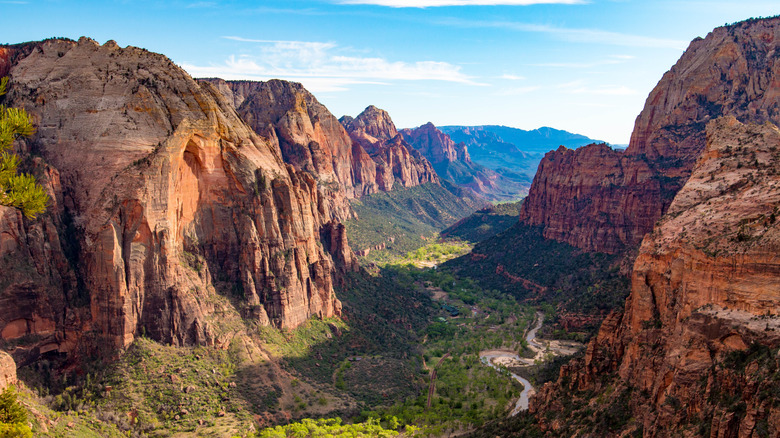
The scenic drive along the floor of Zion Canyon is a winding ribbon of beauty that has been leaving visitors agape since the canyon's paved route you drive today was first built in 1931-32. The idea of a shuttle service was first discussed in the park's 1975 and 1977 management plans, with the aim of easing congestion, which would help preserve the serene atmosphere. However, it wasn't until 2000 that Zion National Park finally took action to mitigate years of heavy high-season traffic by banning passenger vehicles on the primary scenic drag from March through November and establishing a shuttle service. The park's shuttle fleet went all-electric in 2024.
Once you've parked (more on that later) and paid your admission or shown your America the Beautiful pass at the gate, you can hop on board the free shuttle for the 7.7-mile route, with a total of nine stops giving access to scenic viewpoints and some of the park's most popular trailheads. No permits. No reservations. Just hop on, hop off, and hop back on again. Rinse, repeat.
Visitors have largely welcomed the opportunity to ride rather than drive while ogling the spectacular scenery amidst congestion. "I'm not usually a fan of park shuttles, but the transportation up the scenic drive was so efficient and took the headache out of parking," writes one Tripadvisor reviewer. "There was always another shuttle coming within a few minutes, so we never had to wait long." Drivers can still use Zion's other roads to explore more remote sections of the park, like the scenic drive to Kolob Canyon, or the equally stunning Zion-Mt. Carmel Highway. Still, keep in mind that larger RVs and trailers need to pay an additional fee to arrange a special escort through the Zion-Mt. Carmel Tunnel.
How to ride the Zion Canyon shuttle
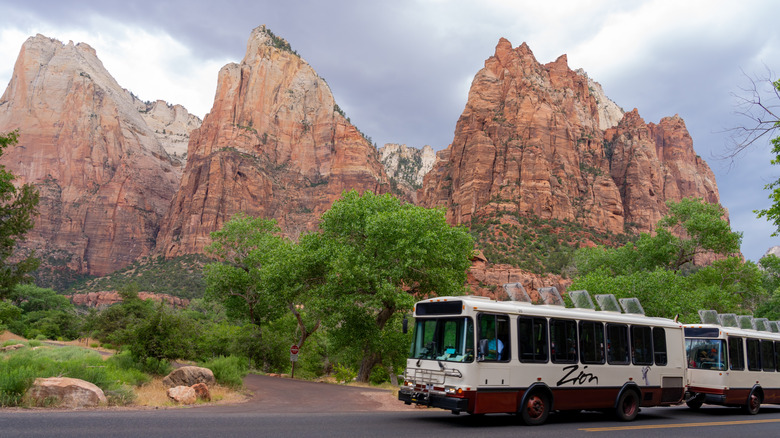
After entering Zion from the east or south, you'll park and catch the free Zion Canyon shuttle at the south entrance, by the Visitor Center. Depending on the time, day, and season, you may walk right on board, or you may encounter a wait. This YouTuber, who has visited the park over 15 times, reports that the longest he waited was 45 minutes during Utah's spring break.
The Visitor Center parking lot is free, but fills up early, usually by 8 or 9 a.m. RVers have their own free parking lot. If being an earlybird isn't your style, there are other parking options. Just outside the park, you can find paid street parking and paid parking lots in the artsy little town of Springdale, with rates that scale depending on how close you are to the park entrance. Once parked, you'll take the free Springdale shuttle to the Zion Canyon pedestrian entrance where the shuttle starts. It typically runs every 10 to 15 minutes.
Springdale hotel guests have it made, with shuttle stops nearby and many stays providing free parking. If you happen to be staying in one of the other towns along the Zion Corridor between St. George, Utah, and the park, including Hurricane and Virgin, the affordable SunTran bus service can also get you to Springdale stops. Note that when you're riding the Zion Canyon shuttle during its season, you might see guests of the Zion Lodge driving to the facility, along with authorized emergency or service vehicles.
What you can visit on the Zion Canyon shuttle
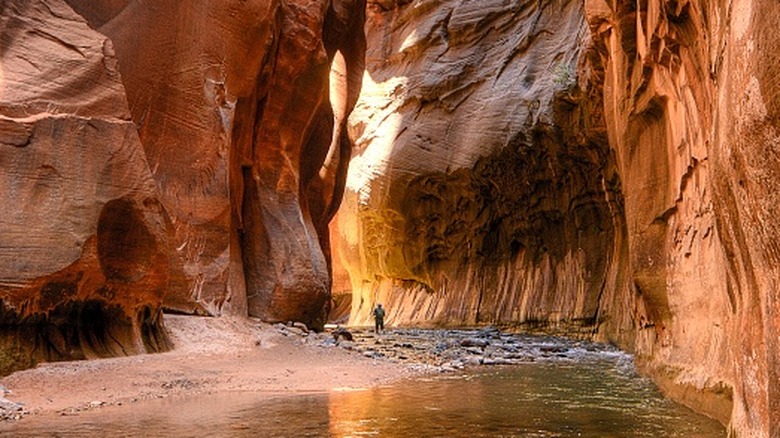
There are nine stops on the Zion Canyon shuttle route, including the embarkation point at the Zion Visitor Center, with many notable highlights along the way. Stop #2, the Zion Human History Museum, is where you'll find a grand yet easily accessible viewpoint at the Temples and Towers of the Virgin Viewing Deck. Stop #5, Zion Lodge, is where you'll get off to hike to the famed Emerald Pools. Rather than riding to the next stop, you can hike up the one-mile Grotto Trail to the Grotto picnic area and shuttle stop, where you'll find the trailhead to the popular yet dangerous Angel's Landing. Stop #7, Weeping Rock, features rich hanging gardens and a spring-fed alcove, while #8, Big Bend, offers an excellent vantage point for spotting wildlife like raptors. Zion saves the best for last, as Stop #9, Temple of Sinawava, is where you'll find the entry for the iconic and enchanting Narrows hike, the trailhead for the paved Riverside Walk along the Virgin River, and the geologic amphitheater.
The absence of cars on the road created by the shuttle program has created an opportunity for exploring the canyon by bike. If you bring or rent pedal-powered bikes, the shuttle buses have bike racks for non-electric bikes, so you can choose to shuttle to the top and ride all the way back down along the scenic drive. Or, you can rent an ebike in Springdale and ride both ways while following bicycle park regulations. "You have the canyon mostly to yourself," writes one Facebook user whose family rented ebikes. "A bonus to the bikes is that you can stop at places the shuttle doesn't. We found a small waterfall and a group of rams that we would have missed otherwise." While the shuttle makes Zion Canyon more enjoyable for its human visitors, it also makes the canyon a cleaner, more peaceful place for its wildlife residents.