
Kansas' Premier Birdwatching Paradise Is A Unique Plains Oasis With Wildlife And Trails
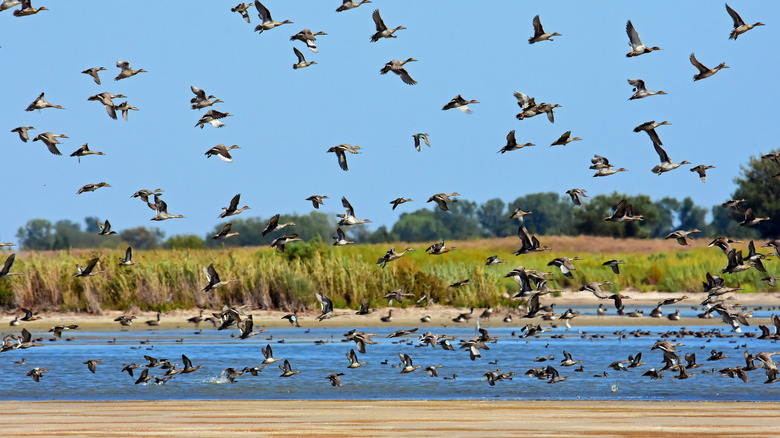
I grew up in Kansas, and for high school biology class, we took a field trip to Quivira National Wildlife Refuge. Our task was to keep a running total of the number of bird species that we saw on our trip. While I don't remember exactly how many types of birds I saw that day some twenty-plus years ago, I do remember falling in love with this beautiful place. Along with fantastic birdwatching, particularly in the fall and spring during migration, you can also hike a few trails and see other wildlife during your visit to Quivira.
As for why this is such a good place for birdwatching, it's in large part because of its location on the Central Flyway, one of the major migratory routes for birds in North America that stretches from the Gulf of Mexico north up into Canada. The mix of salt marshes, sand prairie, and woodlands at Quivira National Wildlife Refuge provides a habitat for a range of birds throughout the year.
The refuge was first created in 1955 to give birds a protected place to rest and refuel on their journeys, which can be thousands of miles. It's such an important place for the birds that it was designated a "Wetland Site of International Importance" in 1992, according to the U.S. Fish and Wildlife Service. It got its name from the Spanish explorer Francisco Vasquez de Coronado who visited what would become Kansas in the mid-1500s on his search for cities of gold, and while there, he called the area Quivira.
Quivira's ecosystem attracts hundreds of thousands of birds to south central Kansas
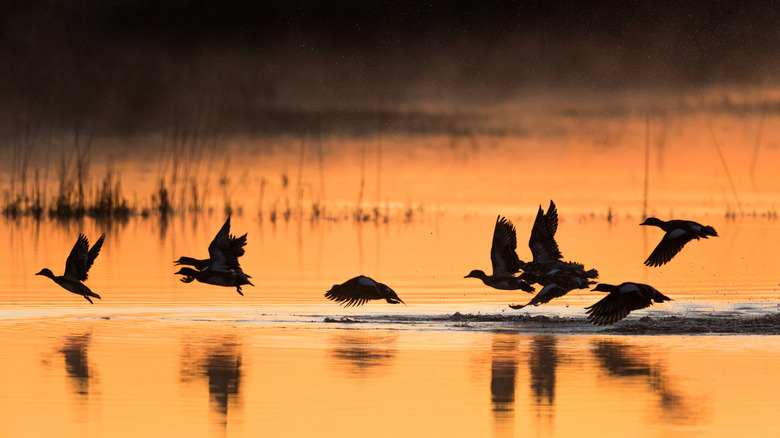
Quivira National Wildlife Refuge is thousands of miles from the ocean, but it still has saltwater marshes: the Big and Little Salt marshes. Rather than coming from the sea, the salt in these rare inland salt marshes comes from the underlying sandstone. The salty water helps boost biodiversity, and the birds like to eat the invertebrates that thrive in the waters.
One of the reasons that this is one of America's renowned birding destinations is the amount of birds that can be seen here during the fall and spring migrations, though you can spot a variety of birds here year round. Up to half a million birds of more than 300 species pass through the area during spring migration; that's an estimated 40% of the country's waterfowl that make Quivira their temporary home, according to Kansas Tourism. Snow geese are some of the most plentiful, but you can also see endangered species, like whooping cranes. Referred to as "whoopers" by birders and photographers, they attract a lot of attention when they show up at the refuge. This area is also an important place for nesting area for a number of bird species, including American avocets, snowy plovers, interior least terns, and bald eagles.
There is a small visitor's center and signage around the refuge that gives you information about some of the birds and other wildlife as well as cultural history. For the best perspective of the 22,135 acre refuge, drive the auto tour route. It's 15 miles long, and you can follow along with the Quivira National Wildlife Refuge auto tour guide for more insight on what's around you.
Hiking and wildlife at Quivira National Wildlife Refuge in Kansas
To stretch your legs at Quivira National Wildlife Refuge, there are a couple of trails. Near the visitor's center, there are a couple of trails roughly a quarter mile long, like the Birdhouse Boulevard Nature Trail and out to the observation deck at the south end of the Little Salt Marsh. For something a bit longer, the Migrant's Mile Trail is an approximately 1.2-mile figure-eight loop near Park Smith Lake.
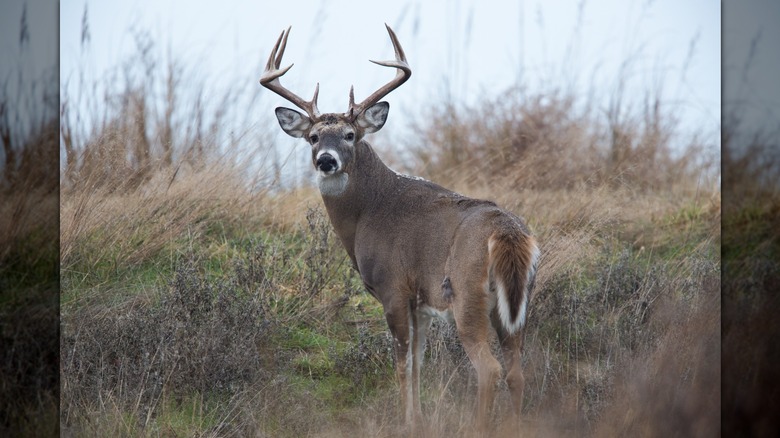
It's not just birds at Quivira; at the northeast end of the refuge, there is a small prairie dog town. If you spend some time quietly waiting, you often can see these social animals as they pop out of their burrows and interact with each other — though rain, extreme heat, or cold, may keep them underground. They're not just fun to watch. Prairie dogs are a keystone species, vital to the health of the prairie. They're a food source for other animals, and their extensive burrows help promote healthy native plant growth as well as provide shelter for other animals. Along with prairie dogs, you can see white-tailed deer throughout Quivira by the dozens, particularly during winter.
The refuge is in south central Kansas about 45 minutes from Hutchinson, home to one of the finest space museums in the world. The closest airport is the Dwight D. Eisenhower International Airport about 90 minutes away in the bustling and underrated city of Wichita. You'll definitely need a car to get around this part of the state. One of the bonus benefits of having a car at Quivira is that you can pull over and use it as a blind to watch the wildlife. Many birds and other animals are generally used to cars driving by, so they may be less likely to fly off if you stay in your car.