
Here's The Right Way To Go Camping In Arizona If You Want To Stay Cool In The Summer (Including RVs)
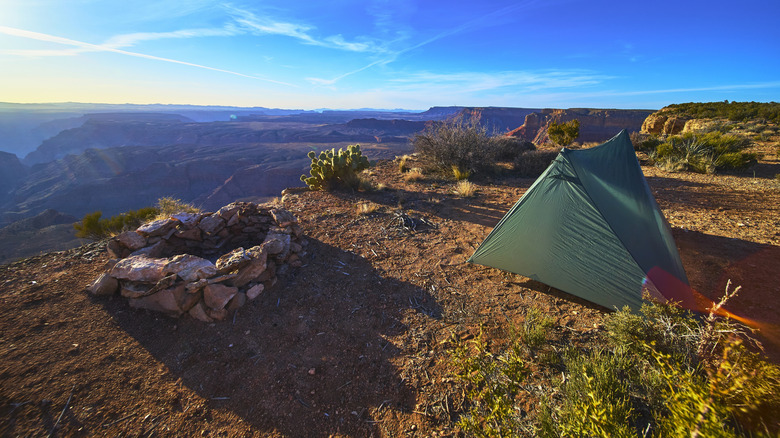
Camping is one of the most compelling ways to experience the vastness of Arizona's outdoors, including the over 70 million acres of natural landscapes across national parks, forests, and other public lands. Camping app The Dyrt lists more than 1,330 camping and recreational vehicle (RVs) sites across the Grand Canyon State, many located within renowned national and state parks. But while summer brings long daylight hours and unforgettable desert sunsets, it also requires careful preparation. To truly make the most out of a trip, you must be properly equipped to navigate heat conditions that can quickly become extreme — and potentially dangerous.
From June through early September, desert regions like the Sonoran lowlands regularly surpass 110 degrees Fahrenheit. This also includes the Phoenix area, home to Lost Dutchman State Park, where temperatures often remain above 86 degrees, even at night. This lack of nighttime cooling means heat tends to persist rather than reset throughout the day–night cycle, and poorly positioned tents or RVs can quickly turn into heat traps. The good news is that, with a bit of strategic planning and a few practical adjustments, you can still enjoy your camping trip in Arizona. For RV travelers, the most obvious strategy to fight the heat is to keep the air conditioning running, but that can significantly increase energy costs. Choosing the right camping location — and taking advantage of the state's peculiar geography — can make a major difference.
Best places to camp in Arizona during the summer heat
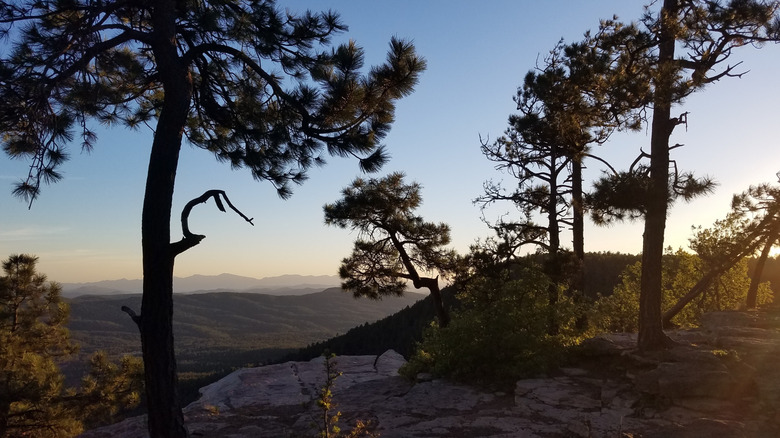
Arizona's sharp elevation shifts can work to your advantage when choosing where to camp in the state (here are some of the best lake camping spots in the Grand Canyon State, according to Dyrt and Google reviews). As a general rule, choose camping sites located at a higher altitude – in ideal weather conditions, temperatures lower by about 5.4 degrees Fahrenheit per 1,000 feet of elevation gain – or inside the northern portions of the transition zone. Here, the combination of dense forests and stream corridors is associated with higher moisture levels in the soil, which — in turn — helps prevent surface overheating.
For instance, the northern city of Flagstaff sits at about 6,900 feet, and experiences average summer night temperatures of roughly 50 degrees Fahrenheit. It is also one of the snowiest mountain towns in the United States. The surrounding area boasts some noteworthy "heat-proof" campgrounds, including fancier options like Village Camp, which features 5-star RV sites and an open-air swimming pool. Just south of town, the Lake Mary area, located within the Coconino National Forest, is a well-known corridor for dispersed camping.
Besides being home to one of northeastern Arizona's most scenic drives, the Mogollon Rim — the southern margin of the Colorado plateau, near the White Mountains — is another strong option if you are seeking an overnight escape from Phoenix's desert heat (it's just a two-hour drive away). Among the most beloved camping facilities is the Mogollon Campground, praised by guests for its prime location within the Apache-Sitgreaves National Forest, only a short walk away from the rim. Farther north toward the Grand Canyon, is the Kaibab Plateau — the North Rim, at almost 8,000 feet elevation, typically remains below 80 degrees Fahrenheit even during the daytime.
Tips for camping in Arizona with a tent or RV
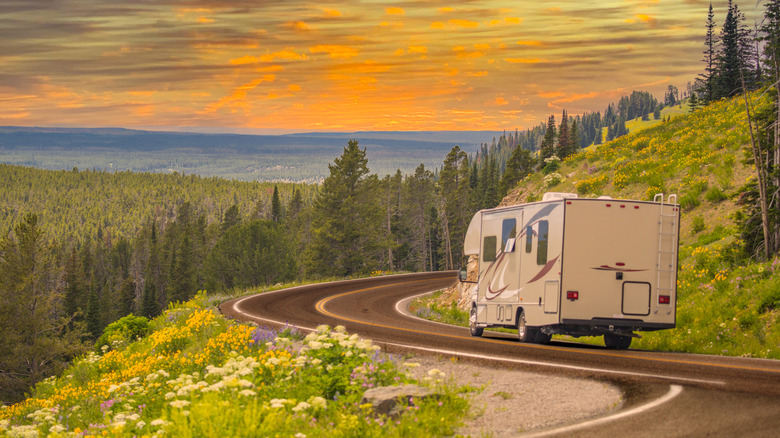
Beyond the obvious advice — arrive in the late afternoon and leave early in the morning whenever possible — a few less obvious strategies can make a real difference during Arizona's extreme summer heat. For RV travelers, access to electricity is essential for safely and consistently running air conditioning systems. Not every campsite offers electrical hookups, so it is worth checking ahead. Campgrounds such as Lyman Lake State Park in St. Johns and Homolovi State Park in the heart of Navajo County provide RV-friendly infrastructure in cooler parts of the state.
Still, relying solely on air conditioning is not always the most efficient solution. The system can draw an average of 30 kWh per day and struggle under sustained temperatures above 104 degrees Fahrenheit. A smarter approach is to address the issue at its root — i.e., reducing heat gain before it builds up inside the vehicle. Pre-cooling the RV during the early morning hours, using roof vent fans to improve airflow, and investing in proper insulation can all help limit heat infiltration. Under low-humidity conditions, evaporative cooling systems can reduce perceived temperatures by roughly 14 to 22 degrees by accelerating the dispersion of water into the air.
Orientation matters too, especially if you are sleeping in a tent (ideally, one with effective ventilation systems). Avoid direct west-facing exposure to reduce the exposure to late-afternoon sunlight, which is often the most difficult to recover from because they occur when the solar angle is low. On the other hand, east-facing tents stay cooler later in the day, though you should expect an earlier wake-up call from the sunrise.